
Second Sunday of Advent – Year A
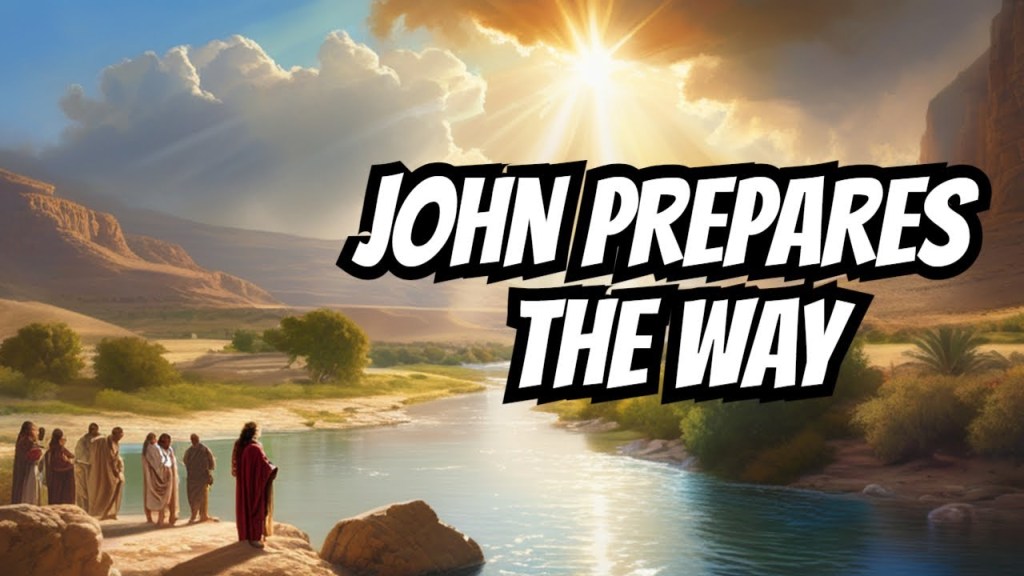
John the Baptist’s ministry was solely based at the river Jordan, probably located on the southern stretch just before it empties into the Dead Sea. The crowds from Jerusalem would have travelled nearly 20 miles through hot barren wilderness just to get there.
The river Jordan is more than just a river, it was a powerful symbol of hope and new life. In the Old Testament, God did many great things at the Jordan. He healed Naaman the Syrian from his leprosy, He took the prophet Elijah up to heaven in a fiery chariot at the Jordan. And most of all, God let the Israelites come across the river Jordan at the end of their 40 years journey in the wilderness from Egypt to the promise Land. So, the Jordan represented the climax of the exodus story and the fulfilment of God’s plan to bring Israel to the land of Canaan.
The wilderness itself brought to mind, hope for Israel’s future, in which God would rescue his people from their present-day persecutors. The ritual of baptism was a powerful symbolic action. John the Baptist was calling the people to journey out into the wilderness, to step into the Jordan river for Baptism. Thus, in this way, they could re-enter into the promise land, once again, free from all their sins.
The heart of John’s message is the challenge to repent. The Greek meaning here is to change one’s mind, and in the Jewish tradition the Hebrew word for ‘repent’ means to ‘turn around’.
John is asking for a complete change in conduct and thinking, a fundamental change of one’s life direction. As you know many Old Testament prophets turned away from their sinful ways, and repented by returning to the Lord.
We also heard, that John the Baptist wore clothing made from camel’s hair and had a leather belt around his waist. In Matthew’s Gospel, this is highlighting something central about John’s mission. Matthew the Evangelist was connecting John with Elijah, who was known for wearing something similar. This connection with Elijah is important, because the Jews were expecting the return of Elijah before the ‘great day of the Lord.’ Therefore, John’s appearance in the desert and looking like Elijah would have signalled to the Jewish people that he was playing the part of the long-awaited Elijah, preparing the way for the Lord’s coming.
John the Baptist speaks to the Jewish people who have come for baptism, by declaring that someone is coming who is mightier than he is, by saying: ‘He who is coming after me is mightier than I, whose sandals I am not worthy to carry.’ Out of all the tasks a servant would be required to do for his master, the most degrading of all tasks would have involved touching the master’s feet. Yet John the Baptist says, he is not worthy, even to do that.
John continues and says, the one who is to come, will baptise you with the Holy Spirit and Fire.
John the Baptist points us to the tremendous power of the Church’s Sacraments, especially Baptism and Reconciliation. Through these Sacraments God freely forgives all our sins and fills us with the gifts of the Holy Spirit, allowing us to become a member of a community that we could never earn on our own, by making us ‘Children of God’.
So, during this Advent season, let us take this opportunity to come closer to Christ, and deepen our relationship with him through prayer and the Sacraments of the Church, especially through the Sacrament of Reconciliation.
Let us hear and focus on the words of John the Baptist calling us to repentance, and as a result, allowing us, to open up the way for the Lord, so Jesus can enter into our hearts as we head towards our Saviours birth.
 Rev. Fr Philip Wrigley's Blog