
5th Sunday of Lent – Year A
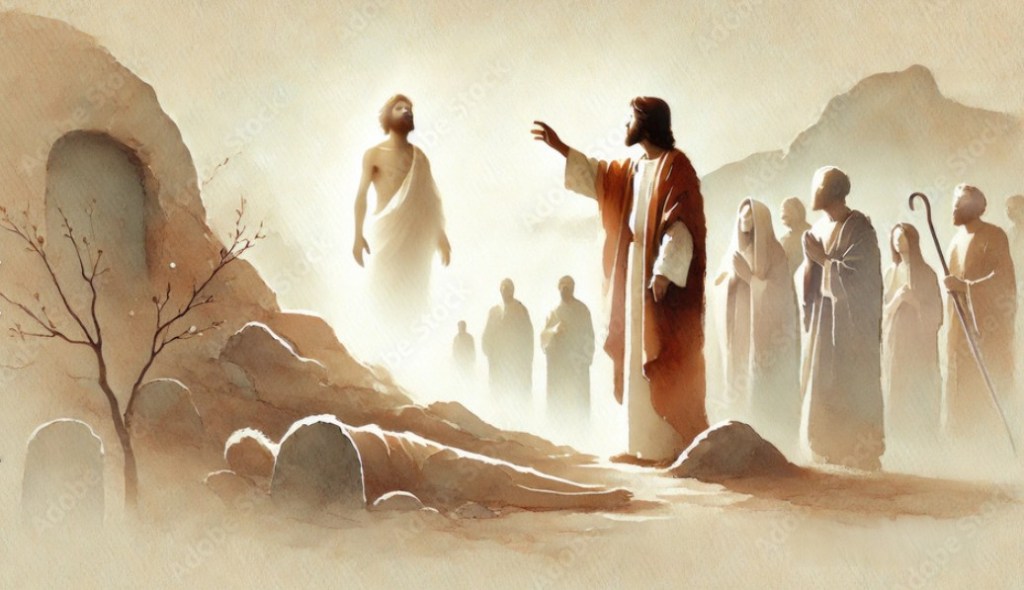
Jesus says: “I am the resurrection and the life.” We have arrived at the last part of John’s Gospel narrative, which is called the book the ‘signs.’ This shows the final events of Jesus’ public ministry and looks towards the ‘hour’ of His Passion and Death. Over the course of John’s narrative Jesus’ miracles or ‘signs’ have been increasing. Starting with the superabundance of good wine in Cana. Then healing the man who was paralyzed, followed by the feeding of the five thousand, and then the healing of the man blind from birth.
Now we hear Jesus’ greatest sign of His public ministry: He brings Lazarus who has been dead for four days, back to life. A ‘sign’ that reveals Jesus’ divine power over life and death, and many will come to believe in him as a result.
Most of us at some point have stood at a loved ones grave, so we know that pain and hurt that Martha and Mary felt at the loss of their brother. We can even sense Martha’s rebuke towards Jesus for not being there sooner. Echoes of anger, bitterness and resentment which many of us feel on the occasion of an un-timely death.
The death of a loved one brings into sharp focus the big question of the meaning of life. It makes us realise how frail our human bodies are, and lets us ponder about what the next life will be like.
People who have no faith, must be in a desperate state, not knowing of the hope that is out there.
However, we are people of the light, and we must not allow the darkness to overcome us. Death for a Christian, is the great moment of bodily change, when we receive our new heavenly bodies, free from all physical weakness and ailments. This hope and joy is rooted in the central truth of Christ’s Resurrection. It tells us that God is stronger than death and he will bring all, who are his, into eternal life.
The raising of Lazarus points out, that the life we are searching for is not an extension of physical life but eternal life with God. The law of nature indicates that we must all die at some point, but during our life here on earth we share it with God through our Baptism. At that moment we were given the power to start seeing Jesus as He sees, to love as He loves, and to follow Him to the right hand of God the Father.
In this story of Lazarus there is also symbolism. Lazarus represents the faithful Christian person. The one that Jesus loves, the one for whom He weeps for. The raising up of Lazarus symbolises the resurrection of the Christian person. We understand that whoever comes to Jesus in faith will never experience spiritual death.
St John in his narrative was also showing that Lazarus who was in the tomb for four days already, was definitely dead and not in a coma-tose state. Making it the longest time in any of the gospel accounts of a miracle to happen from death to life. It clearly shows Jesus’ power over physical death … and on another level, points to Jesus’ life-giving power.
Let us through these final days of Lent join ourselves to the passion and death of Christ by deepening our response in prayer, penance and acts of charity. So, at Jesus’ Resurrection at Easter, we may respond with Mary and Martha by saying: “Yes, Lord, I believe you are the Christ, the Son of God, the one who was to come into this world.”
 Rev. Fr Philip Wrigley's Blog