

25th Sunday in Ordinary Time – Year A
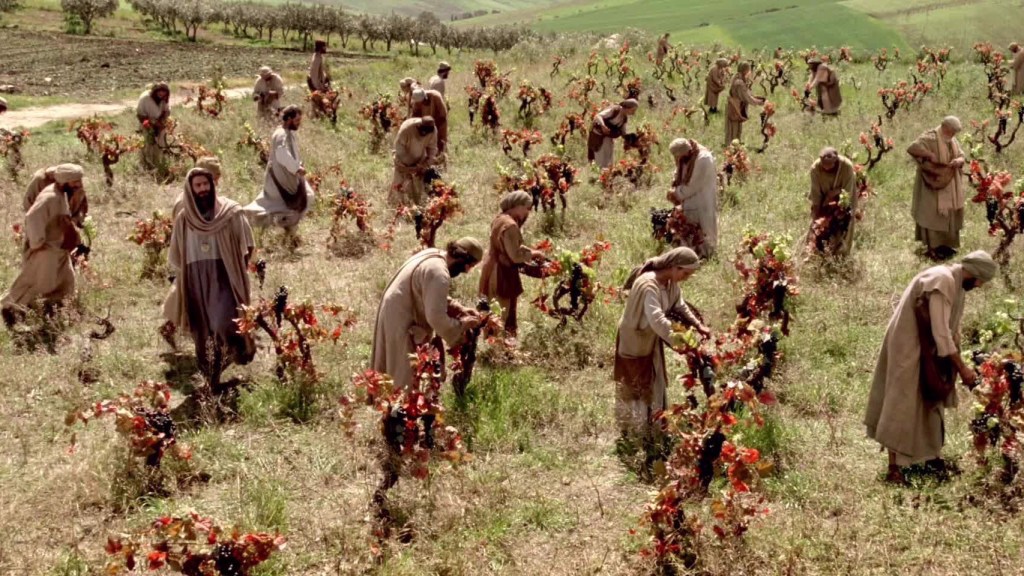
In today’s Gospel, Jesus presents us with a parable that sheds light on yet another mystery of the Kingdom of Heaven. Over the centuries, many different interpretations have been offered regarding its meaning. Some see it as a story about the final judgment, when the first will be last, and the last will be first. Others understand it as a summary of salvation history, where Israel faithfully served the Lord for generations before the Gentiles were welcomed into God’s covenant through Christ. Still others see it as a lesson about conversion, reminding us that some respond to God’s call early in life while others come to him much later on. Each of these interpretations contains valuable insights.
The parable itself moves between a vineyard and the village marketplace. The vineyard, a familiar biblical image for God’s people, is the place where work is to be done. Throughout the day, the landowner repeatedly returns to the marketplace in search of labourers. Beginning at dawn and continuing until the final hour before sunset, he invites workers into his vineyard and promises them a just wage. One denarius, which was the normal daily wage, was offered.
The surprise comes at the end of the day. Those who worked only one hour received the same payment as those who had laboured from dawn. Through the eyes of the world, this seems unfair.
Through the eyes of the Kingdom, however, it reveals something profound about God. The reward symbolises the gift of salvation, eternal life, and communion with God. These gifts cannot be earned by our own efforts; they are given through God’s grace.
Sometimes we can fall into the trap of thinking that our prayers, sacrifices, good works, or even years of faithful service somehow give us a greater claim on God’s blessings. While these things are important, they do not place God in our debt.
Isaiah reminds us, God’s thoughts are not our thoughts, nor are his ways our ways. Salvation is always a gift flowing from the abundance of God’s love and mercy.
This parable therefore carries both a theological and a moral lesson. The theological lesson is that God is extremely generous. He desires that all people to be saved, whether they come to him early or late. The moral lesson is a warning against envy and comparison. The workers who complained were not deprived of anything; they received exactly what had been promised. Their unhappiness came from comparing themselves with others, rather than rejoicing in what they received, through the goodness of the master.
How often can the same temptation arise within us? We can become focused on what others receive instead of giving thanks for what God has given us. Yet the Gospel invites us to celebrate every soul that comes to the Lord, whether after a lifetime of faith or at the very end of ones life. Heaven rejoices whenever a sinner turns back to God.
Today, therefore, let us approach the Lord with grateful and humble hearts. Let us thank him for the countless blessings we receive each day, blessings that we neither deserve nor can earn. Above all, let us be grateful for the gift of the Sacraments, especially the Holy Eucharist, through which Christ nourishes us with his very Body and Blood.
As we continue along our earthly pilgrimage towards our heavenly reward, may we never lose sight of God’s boundless generosity. May we learn to rejoice not only in the blessings given to us, but also in the grace and mercy that God freely pours out upon all his faithful children.

