
Now I say to you: You are Peter and on this rock I will build my Church. And the gates of the underworld can never hold out against it. (Matt 16:13-20)


Welcome to my blog, here you will find my personal reflections & homilies
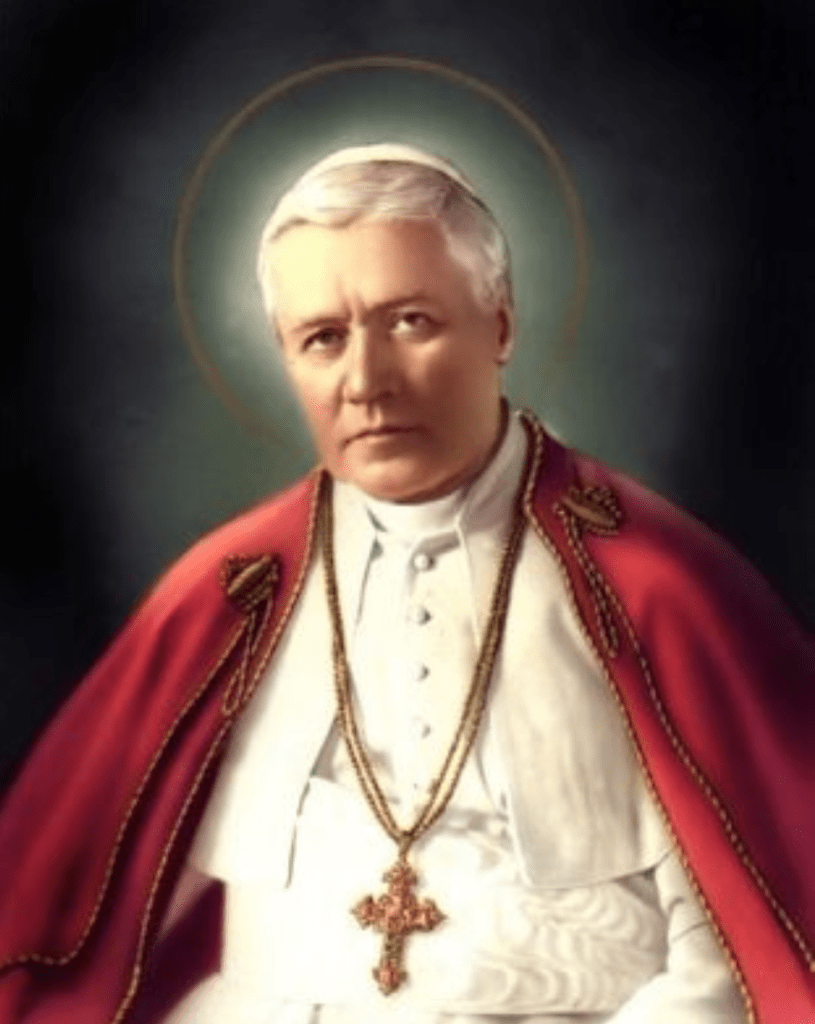
This great pope was born Joseph Sarto in 1835. He was the son of a mailman in Riese, Italy. Joseph was given the affectionate nickname of “Beppi.” When Joseph decided to be a priest, he had to make many sacrifices to get an education. But he didn’t mind. He even walked miles to school barefoot to save his one good pair of shoes. After he was ordained a priest, Father Sarto labored for the people in poor parishes for seventeen years. Everybody loved him. He used to give away everything he had to help them. His sisters had to hide his shirts or he would have had nothing to wear. Even when Father Joseph became a bishop, and then a cardinal, he still gave away what he owned to the poor. He kept nothing for himself.
When Pope Leo XIII died in 1903, Cardinal Sarto was chosen pope. He took the name Pius X. He became known as the pope of the Holy Eucharist. Pope Pius X encouraged everyone to receive Jesus as often as they could. He also lowered the age for children to be permitted to receive Holy Communion. Before that time, boys and girls had to wait many years before they could receive the Lord. He is also the pope of religious instruction. He believed in and loved our Catholic faith. He wanted every Catholic to share in the beauty of the truths of our faith. He really cared about every single person and their spiritual and material needs. He encouraged priests and religion teachers to help everyone learn about their faith.
When World War I broke out, St. Pius X suffered greatly. He knew so many people would be killed. He had said: “I would gladly give my life to save my poor children from this horrible suffering.” Toward the end of his life, he also said: “I have lived poor, and I wish to die poor.” He never kept anything for himself, right to the end of his life. Pope Pius X died on August 20, 1914.
Pope St. Pius X was proclaimed a saint by Pope Pius XII in 1954. He was the first pope to be canonized in 242 years.
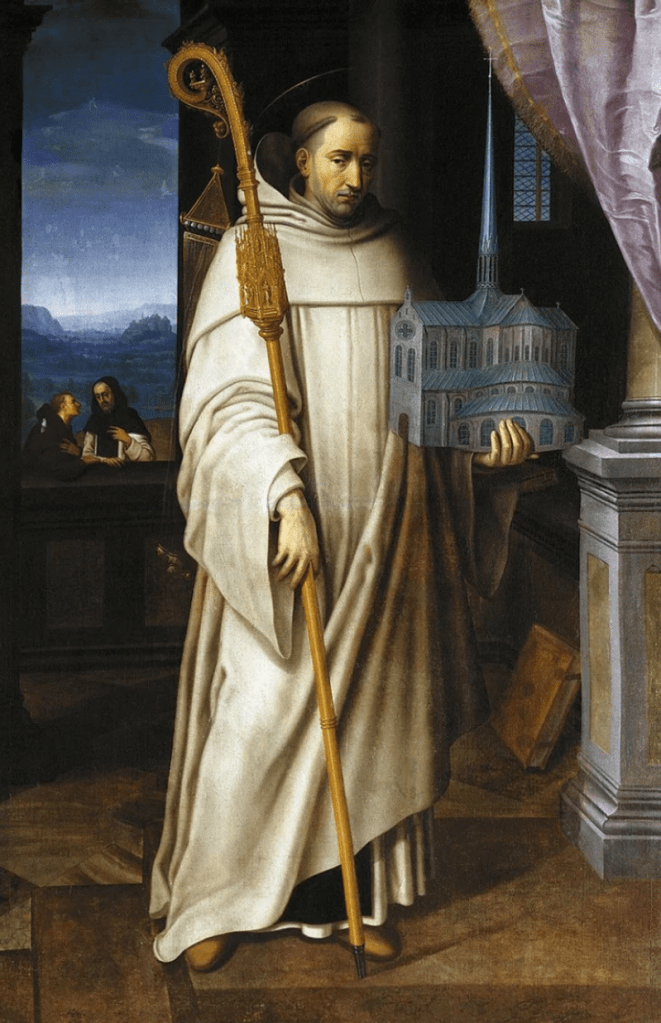
Bernard was born in 1090 in Dijon, France. He and his six brothers and sisters received an excellent education. When he was just seventeen, his mother died. He might have let sadness get the best of him had it not been for his lively sister Humbeline, who helped to cheer him up. Soon Bernard became very popular. He was good looking and intelligent, full of fun and good humor. People enjoyed being with him.
Yet one day, Bernard greatly surprised his friends by telling them he was going to join the very strict Cistercian Order. They did all they could to make him give up the idea. But in the end, it was Bernard who convinced his brothers, an uncle, and twenty-six friends to join him. As Bernard and his brothers left their home, they said to their little brother Nivard, who was playing with other children: “Goodbye, little Nivard. You will now have all the lands and property for yourself.” But the boy answered: “What! Will you take heaven and leave me the earth? Do you call that fair?” And not too long after, Nivard, too, joined his brothers in the monastery.
St. Bernard became a very good monk. After three years, he was sent to start a new Cistercian monastery and to be its abbot. The new monastery was in the Valley of Light and became known by that name. In French, the Valley of Light is “Clairvaux.” Bernard was the abbot there for the rest of his life.
Although he would have liked to stay working and praying in his monastery, he was called out sometimes for special assignments. He preached, made peace between rulers, and advised popes. He also wrote beautiful spiritual books. He became the most influential man of his time. Yet Bernard’s great desire was to be close to God, to be a monk. He had no desire to become famous. This saint had a great devotion to the Blessed Mother. He often greeted her with a “Hail Mary” when he passed her statue. It is said that one day, the Blessed Mother returned his greeting: “Hail, Bernard!” In this way, Our Lady showed how much his love and devotion pleased her.
St. Bernard died in 1153. People were saddened because they would miss his wonderful influence. He was proclaimed a saint in 1174 by Pope Alexander III. He was also named a Doctor of the Church in 1830 by Pope Pius VIII.
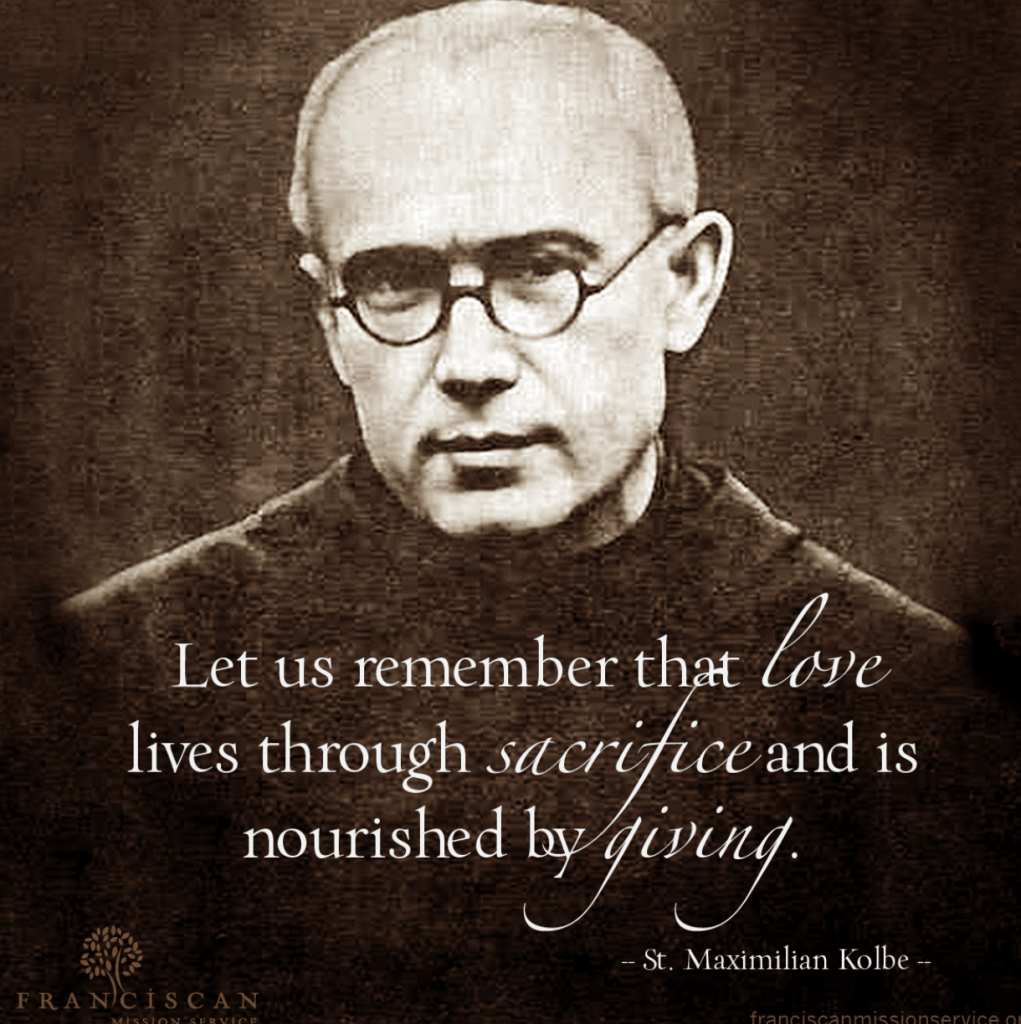
Raymond Kolbe was born in Poland in 1894. He joined the Franciscan Order in 1907 and took the name: Maximilian.
Maximilian loved his vocation very much, and he especially loved the Blessed Mother. He added the name “Mary” when he pronounced solemn vows in 1914. Father Maximilian Mary was convinced that the world of the twentieth century needed their Heavenly Mother to guide and protect them. He used the printing press to make Mary more widely known. He and his fellow Franciscans published two monthly newsletters that soon went to readers around the world.
He built a large center in Poland. This center was called “City of the Immaculate.” By 1938, 800 Franciscans lived there and labored to make the love of Mary known. Father Kolbe also started another City of the Immaculate in Nagasaki, Japan. Still another was begun in India. In 1939, the Nazis invaded the Polish City of the Immaculate. They stopped the wonderful work going on there. In 1941, the Nazis arrested Father Kolbe. They sentenced him to hard manual labor at Auschwitz.
He was at Auschwitz three months when a prisoner successfully escaped. The Nazis made the rest of the prisoners pay for the escape. They chose ten prisoners at random to die in the starvation bunker. All the prisoners stood at attention, while ten men were pulled out of line. One chosen prisoner, a married man with a family, begged and pleaded to be spared for the sake of his children. Father Kolbe, who had not been picked, listened and felt deeply moved to help that suffering prisoner. He stepped forward and asked the commander if he could take the man’s place. The commander accepted his offer.
Father Kolbe and the other prisoners were marched into the starvation bunker. They remained alive without food or water for several days. One by one, as they died, Father Kolbe helped and comforted them. He was the last to die. An injection of carbolic acid hastened his death on August 14, 1941. Pope John Paul II proclaimed him a saint and a martyr in 1982.
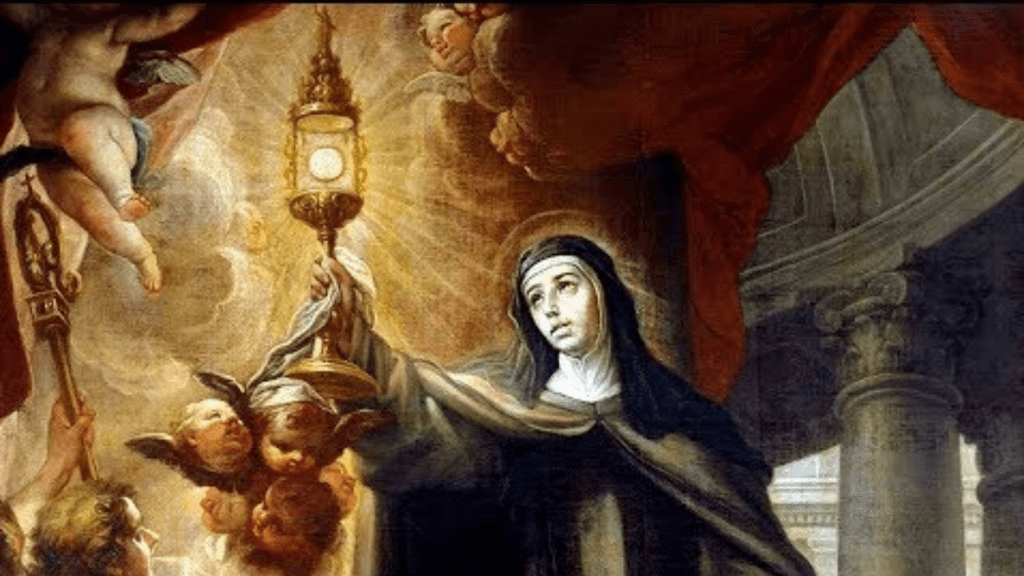
St. Clare was born around 1193 in Assisi, Italy. St. Francis of Assisi lived in the same town. Clare used to listen to Francis preach. Her heart burned with a great desire to imitate him. Like him, she wanted to live a poor, humble life for Jesus. But her parents would never agree to such a plan. So on the night of Palm Sunday, 1212, when she was eighteen years old, she left her comfortable home and her family whom she loved. In a little chapel outside Assisi, she gave herself to God. St. Francis cut off her hair and offered her a rough brown habit to wear. She stayed with the Benedictine nuns until more nuns would join her. Her parents tried in every way to make her return home, but Clare would not. Soon her fifteen-year-old sister Agnes joined her.
Other young women wanted to be “poor ladies” of Jesus, too. Before long there was a small religious community. They lived in a house at the church of San Damiano, which St. Francis himself had repaired. St. Clare and her nuns wore no shoes. They never ate meat. They lived in a poor house in an atmosphere of silent prayer. Yet they were very happy because they were living a life of poverty as Jesus had done. Once an army of rough soldiers came to attack the city of Assisi. Although very sick, St. Clare asked to be carried to the window. She had the Blessed Sacrament placed right where the soldiers could see it. Then she knelt and begged God to save the nuns and the city. “O Lord, protect these sisters whom I cannot protect now,” she prayed. And a voice within her seemed to say: “I will keep them always in my care.” At the same time, a sudden fright struck the attackers. They fled as fast as they could.
St. Clare was abbess of her convent for forty years. Twenty-nine of those years she was sick. But she said that she was joyful anyway because she was serving the Lord. Some people worried that the nuns were suffering because they were so poor. St. Clare spent most of her life defending what she called the “privilege of poverty.” The pope tried to soften her Rule’s requirement of poverty, but Clare convinced him that she and her nuns were called to live with no possessions, trusting completely in God. St. Clare died on August 11, 1253. Just two years later she was proclaimed a saint by Pope Alexander IV.
Sometimes we forget to give time to the Lord. We might be so concerned about certain things that we allow them to drown out the voice of Jesus. That’s when we can ask St. Clare to show us how to keep Jesus as the center of our lives and hearts.
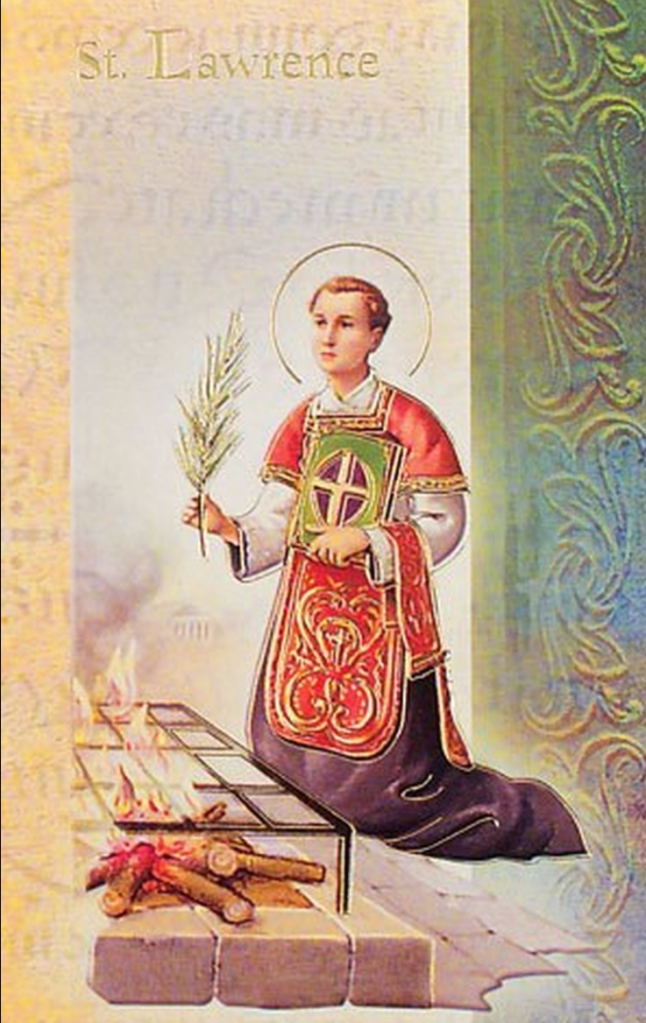
This famous martyr of Rome lived in the third century. He was one of seven deacons who were in charge of giving help to the poor and the needy. When a persecution broke out, Pope St. Sixtus II was condemned to death. As he was led to execution, Lawrence followed him weeping. “Father, where are you going without your deacon?” “I am not leaving you, my son,” answered the pope. “In three days you will follow me.” Full of joy, Lawrence gave to the poor the rest of the money he had on hand. He even sold some of the Church’s possessions to have more to give away.
The prefect of Rome, a greedy man, thought the Church had a great fortune hidden away. He ordered Lawrence to bring the Church’s treasure to him. The saint said he would, in three days. Then he went through the city and gathered together all the poor and sick people who were being supported by the Church. He showed them to the prefect and said: “This is the Church’s treasure.” The prefect was furious. In his anger he condemned Lawrence to a slow, cruel death. The saint was tied on top of an iron grill over a slow fire that roasted him. God gave him so much strength and joy that Lawrence is said to have instructed his executioner, “Turn me over. I am broiled enough on this side.” Before he died, he prayed that the city of Rome might be converted to Jesus. He prayed that the Catholic faith would spread all over the world.
Lawrence died on August 10, 258. Devotion to him spread throughout Italy and northern Africa. Emperor Constantine built a beautiful basilica in Lawrence’s honor. St. Lawrence is among the saints mentioned in the First Eucharistic Prayer at Mass.
When we’re inclined to complain about something that bothers us, we can ask St. Lawrence to help us be patient. The martyrs had the grace to be faithful to Christ in terrible circumstances because they had been faithful to him in the little everyday situations that we all face.
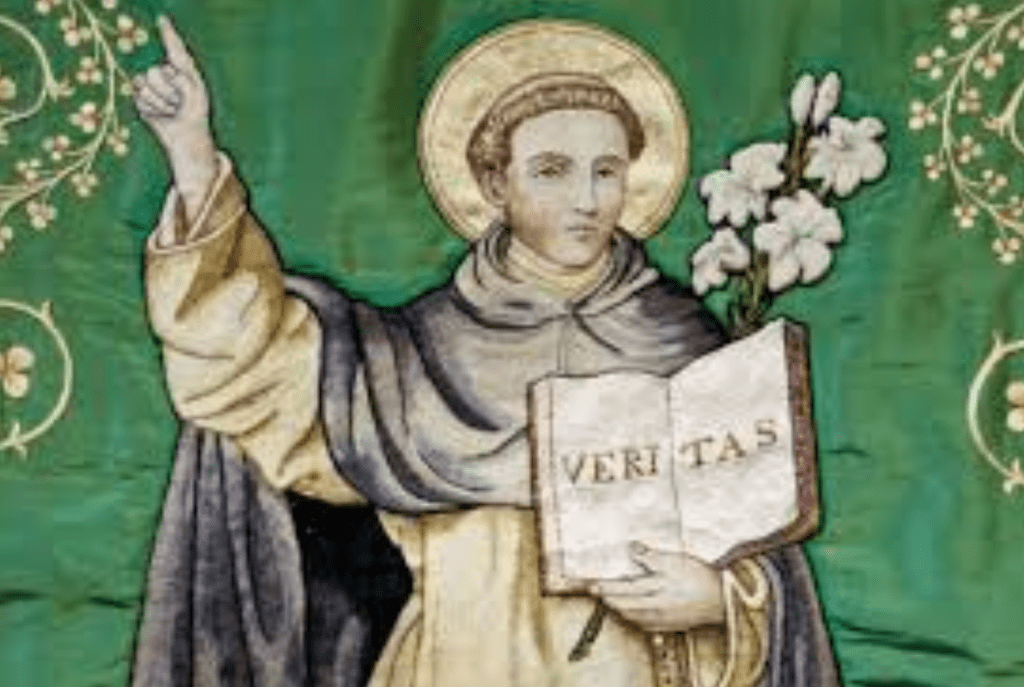
St. Dominic was born in Castile, Spain, in 1170. He was a member of the Guzman family and his mother is Blessed Joan of Aza. When Dominic was seven, he began to go to school. His uncle, a priest, directed his education. After years of study, he became a priest too. Dominic lived a quiet life of prayer and obedience with other virtuous priests. But God had a special plan for Dominic. He would begin a new religious Order. It would be called the Order of Preachers, or Dominicans.
The Dominicans preached the faith. They helped correct false teachings called heresies. It all began when Dominic was on a trip through southern France. He realized that the heresy of Albigensianism, a false teaching, was doing great harm. St. Dominic felt such pity for the people who were being misled by it. He wanted to help them. The Dominicans helped to spread the truth with preaching and prayer, especially the Holy Rosary. Dominic also encouraged the people to be humble and to make sacrifices. Once someone asked St. Dominic what book he used to prepare his wonderful sermons. “The only book I use is the book of love,” he said. He always prayed to be filled with true love of neighbor. He urged the Dominicans to be devoted to the study of the Bible and to prayer. No one did more than St. Dominic and his preachers to spread the beautiful practice of saying the Rosary.
St. Dominic and St. Francis of Assisi were close friends. Their two Orders of Dominicans and Fran-ciscans helped Christians become holier. Dominic’s friars opened centers in Paris, France; Madrid, Spain; and Rome and Bologna, Italy. He lived to see his Order spread to Poland, Scandinavia, and Palestine. The friars also went to Canterbury, London, and Oxford, all in England. Dominic died in Bologna on August 6, 1221. His great friend, Cardinal Ugolino of Venice became Pope Gregory IX. He proclaimed Dominic a saint in 1234.
We can ask St. Dominic to help us grow in our love for our Catholic faith. We can also ask him to teach us to be as devoted to the Rosary as he was.
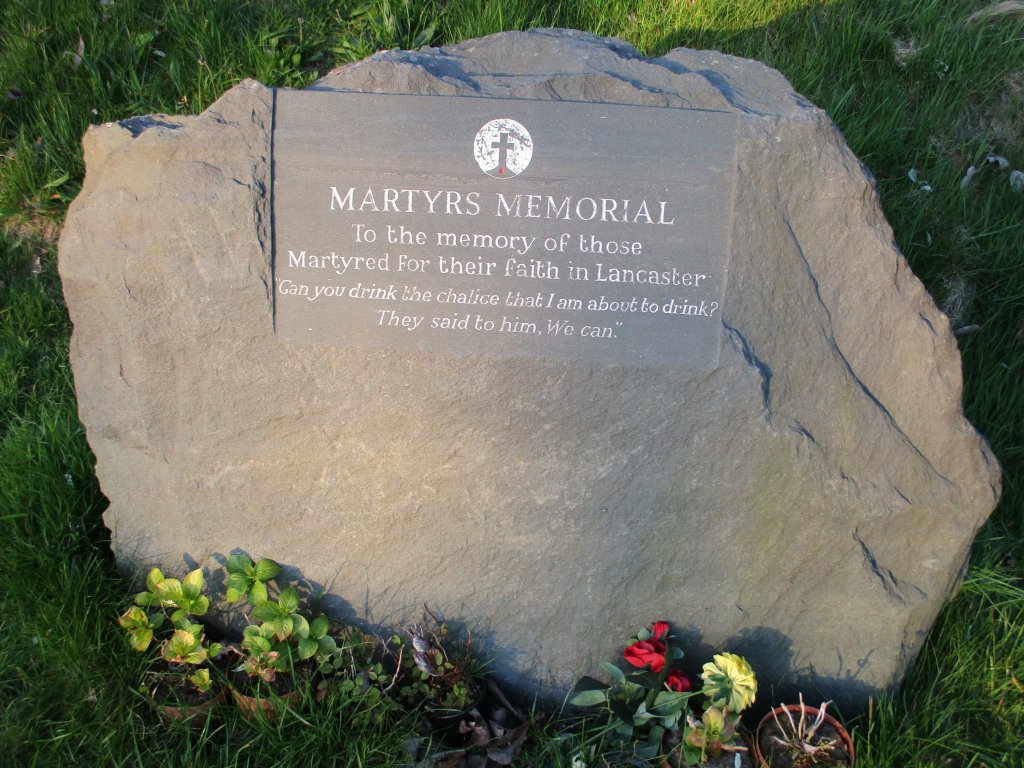
Today we remember fourteen martyrs who were martyred at Lancaster on the hill above the Cathedral including St. Edmund Arrowsmith S.J., St. Ambrose Barlow OSB & Blessed James Bell, & John Finch, layman, Richard Hayhurst, Robert Nutter O.P., & Edward Thwing, Thurstan Hunt & Robert Middleton S.J., John Thules & Roger Wrenno, layman, plus Edward Bamber, John Woodcock O.F.M., & Thomas Whitaker (these last three being the last group of Lancaster martyrs on this day, 7th August 1646).
We pray that our witness to Christ may be strong and faithful and pray for vocations to the priesthood in the footsteps of our martyrs.
 Rev. Fr Philip Wrigley's Blog