Homily – Luke 9:11-17

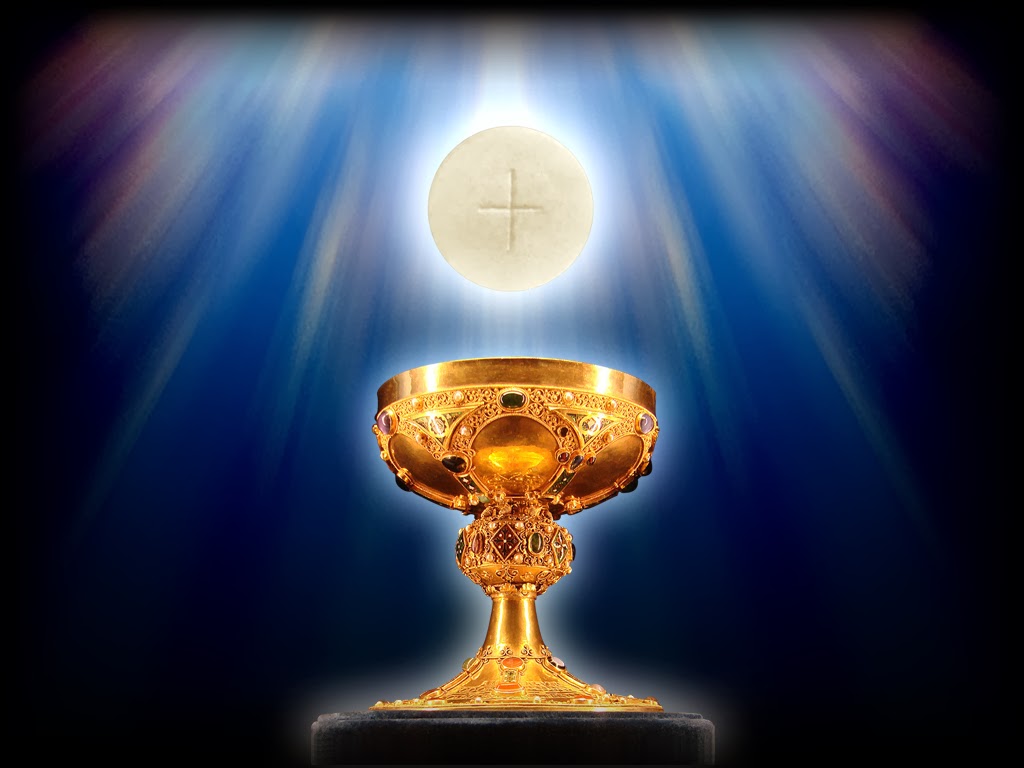
Today we pay special homage to the real presence of Jesus Christ in the Eucharist.  A great opportunity to reflect upon God’s gift to us and to deepen our appreciation of the real presence of Jesus.  He is the living bread sent down from heaven, food for our souls and to satisfy our deepest spiritual hunger. 

We are pilgrims on our life’s journey, and on this road, we suffer from many hungers, but the greatest hunger of all is the yearning for a deeper meaning to life itself.  In our daily battle, we find our purpose in the Eucharist, as we are invited to follow in the footsteps of Jesus.  The Holy Eucharist is the ‘source and summit of the Christian life.’  It is the real presence of Christ amongst us, Body and Blood, Soul and Divinity.  Not only does the Eucharist unite believers to Christ, but it also unites us to one another. 

Henri de Lubac writes “The Eucharist makes the Church.”  So, if the Holy Spirit is the soul of the Church, then the Eucharist is its ‘beating heart’, pumping Christ’s blood through the members of his Body, the Church. 

By receiving of the Most Holy Body and Blood of Christ we are uniting our souls with Christ himself.  Through our Baptism, we become members of his Body, and we receive His out pouring of love and grace.  A grace that restores our health and gives us joy in our hearts.

Pope Urban says: “In this sacrament we celebrate in thanksgiving the memory of our Saviour, we are drawn away from evil, we are strengthened in what is good, and we advanced and increase in virtue and in grace.”  

So, what was the true reason behind Jesus’ institution of this precious gift?  Jesus has poured out in Sacramental riches, His Divine Love for each one of us, causing His wonderful works to be remembered and celebrated in his memory.  By doing so, we are proclaiming His Death until He comes again to judge the world. 

This precious Sacrament is to be received as our spiritual food for our soul journey, which will nourish and strengthen us.  The Sacrament will become a remedy to free us from our daily faults, and to be a pledge of our future glory of everlasting happiness in Heaven.  

With Jesus being our ‘Head,’ and we as members of his Body, we are linked by the closest of bonds, of faith, hope and love.  Since He is the ‘True Vine, and we are the Branches’, this enables us to pronounce the same faith in one unison of exultant praise.

If we are ready to grow in holiness and love, we must make the Eucharist the centre of our being, because in doing so, we make Christ the centre of our lives.  If we receive and worship Christ worthily, He will fill us with His grace and enlarge our hearts to love and serve humankind more perfectly. 

Let me finish by quoting St Teresa of Calcutta: “If we truly understand the Eucharist; if we make the Eucharist the central focus of our lives; if we feed our lives with the Eucharist, we will not find it difficult to discover Christ, to love Him, and to serve Him in the poor.

Let us take these words into our hearts today, and to go out touching the lives of others with God’s love, to be the healing presence, the helping hand, the sympathetic voice, and the words of encouragement when people need it the most.  In this way we will shape ourselves by what we receive in our daily food.  Jesus Christ Himself.

Homily – John 16:12-15

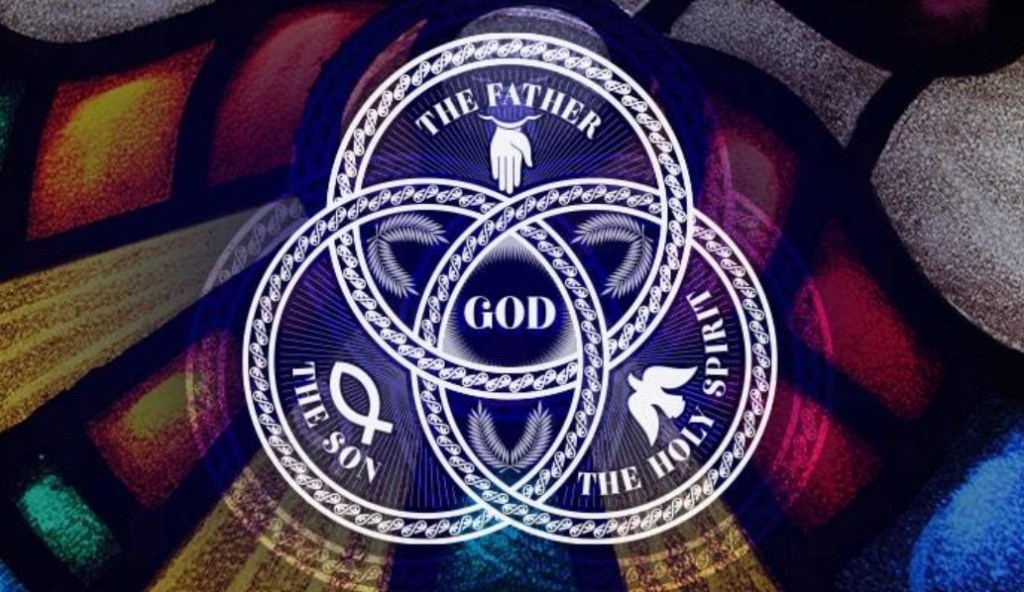
Today, we come face to face with the inner mystery of God as a family of three persons.  Father, Son and the Holy Spirit.  A complete harmony of love. 

When you hear the word ‘God’ who do you immediately think of?  How do you visualise God?  Do you automatically think of the Trinity, or just one person in the Trinity?  I remember one of my interview questions for the priesthood was: ‘Who do you pray to?’  That was an interesting question, a question that caught me off guard, something I had to ponder upon.  Who do I pray to?  For me, in my private prayers, it will be probably be Jesus Christ, however, in other areas in my priestly ministry, it will be a mixture of praying to God the Father, and also to the Holy Spirit.  

The word ‘God’ is the most used and also abused word in the human language.  The challenge for us, is to always speak rightly about God and his Holy Name, with honour, praise and worship, being extremely careful not to be disrespectful by using the Lord God’s name in vain, in anyway shape or form.

The Trinity is central to the Liturgy of the Mass, even by our first action entering the church we make the ‘sign of the cross’ with Holy Water, as we remember the Trinity, through our Baptism of the Faith.  Then the Trinity pops up again at the general greeting by the Priest, using this formular of words:  ‘The grace of the Lord Jesus Christ, the love of God, and the communion of the Holy Spirit be with you all.

The central part in the Mass where the Trinity is recalled is during the Eucharistic Prayer.  With the priest being ‘in persona Christi’ – the ‘person of Christ’, Jesus offers up the gifts of bread and wine to God the Father, and calling down the Holy Spirit upon them, during the laying on of hands over the gifts, which is called the ‘Epiclesis’.  Through the words of Christ in the Eucharistic Prayer, the gifts are changed in substance into the Body and Blood of Our Lord, Jesus Christ. 

So, you can see the three persons of the Trinity at work here.  Jesus is offering the gifts to the Heavenly Father, and the Holy Spirit is changing them into our Eucharistic food.    

In our daily lives we also need to remember how important the Trinity is to us.  We are children of God, a Father who cares for us, and in Jesus Christ we have a brother, who died for us.  In the Holy Spirit we possess a friend and a comforter, who strengthens and protects us. 

The Trinity is our personal invitation to discover and deepen our relationship with God.  We are made in the image and likeness of God, and so we should strive to become like him as much as humanly possible.  Since our destiny from this life, is to be with God, eternally in Heaven, where we will see our Creator face to face.

The Trinity is so important in the faith of the Church.  We are Baptised in the Name of the Trinity.  We profess the Trinity in the Creed each Sunday:

‘I believe in one God, the Father Almighty …’. 

‘I believe in one Lord Jesus Christ, only begotten Son of God…’ 

‘I believe in the Holy Spirit, the Lord, the giver of life…’ 

To embrace the Creed, we enter into communion with the Holy Trinity and also with the whole Church.  The Creed is our spiritual seal, our hearts meditation, and a treasure for our souls, allowing us even more, to come closer to God the Almighty. 

So, let our Christian lives mirror the life of the Trinity today, allowing the grace of our Lord Jesus Christ, the love of God, and the Communion of the Holy Spirit, to govern our words, actions, and deeds. 

Through our Baptism we have pledged to live our lives under the protection of the Most Holy Trinity, allowing the Spirit to inspire us, by bring us closer each day to the knowledge and love of God, since the Father sent his Son, so that through Him the world might be saved.

Homily – Acts of the Apostles 2:1-11

Acts 2:1-11

We are here on this wonderful occasion, a birthday celebration of the Church.  I feel we should have party poppers to mark the celebration, but I feel the church cleaning team, will never forgive me. 

As we have heard in our scripture readings, that the early disciples of Christ who were around 120 men and women were all gathered in prayer in the upper room.  Now the mission of Jesus, to be the light for the Gentiles and the glory for God’s people, is now to be given to his followers, by the empowerment of the Holy Spirit. 

This powerful roaring wind, rushing through the windows and doors of the house that that descended upon the disciples, must have been terrifying to behold.  However, the Holy Spirit gave these timid and frightened followers the courage to rush out into the streets and fearlessly preach the ‘Word of God’ to friends and foe alike, about the Passion, Death, Resurrection & Ascension of Jesus Christ, the Messiah. 

At that time, Jerusalem was packed with visiting people, because it was the Jewish Feast of Weeks, that was celebrated 50 days after Passover.  It was a commemoration of God giving them the covenant and the law on Mount Sinai.  For us Christians, the coming of the Holy Spirit at Pentecost fulfils this. 

The Lord’s gift of the law on Mount Sinai, now embraces the giving of the New Law in the Spirit, that is firmly written in our hearts as Baptised Children of God. 

The visible sign of ‘tongues of fire’, should also help us recall the words in scripture from the lips of John the Baptist’s prophecy about the One who is to come: ‘He will baptise you with the Holy Spirit and with fire.’  Now, with the visitors in Jerusalem, out in the streets, they were all astounded, and couldn’t understand what was happening.  The countries that were mentioned in the Act of the Apostles covered most of the world that was known to first century Palestine.  This symbolises the fact that the Christian Church will embrace the whole world, transcending all barriers of race, class, and nation.  They include the regions of Israel’s historic enemies like Mesopotamia which was the centre of the Assyrian and Babylonian Empires.  This is to fulfil God’s promise, that Israel’s enemies would one day turn and acknowledge the God of Israel as the true and only God.

We as Christians, who are grounded firmly by the Holy Spirit, can see how indispensable the Spirit is to us, in faith and salvation.  The indwelling of the Spirit bestows on us the theological virtues of faith, hope and love, from which all other Christian virtues and actions follow.  The Holy Spirit produces a particular kind of fruit within us, that fruit being the character and person of Jesus Christ Himself.

The descent of the Holy Spirit at Pentecost transformed the first disciples, who had previously hidden away in fear and unable to understand God’s plan for the crucified Messiah.  After receiving of the Spirit, they understood God’s saving plan and were bold enough to preach the Good News, even at the cost of beatings, imprisonment, and martyrdom. 

The disciples were filled with joy and praise, so, let us also be joyfully today, empowered and recharged by God’s gracious gift of the Holy Spirit.  May we become fruitful in our lives by bringing God’s message to the world with no fear or hesitation.

We are God’s One, Holy, Catholic and Apostolic Church, formed 1,992 years ago, and we are still going strong with around 2.4 billion Christians worldwide.  So, let us praise the Lord for his promise to Abraham, our Father in Faith, as he said:  “I will make your descendants as numerous as the stars of heaven and grains of sand on the seashore.”  

Homily – John 17:20-26

First Reading from Acts 7:55-60

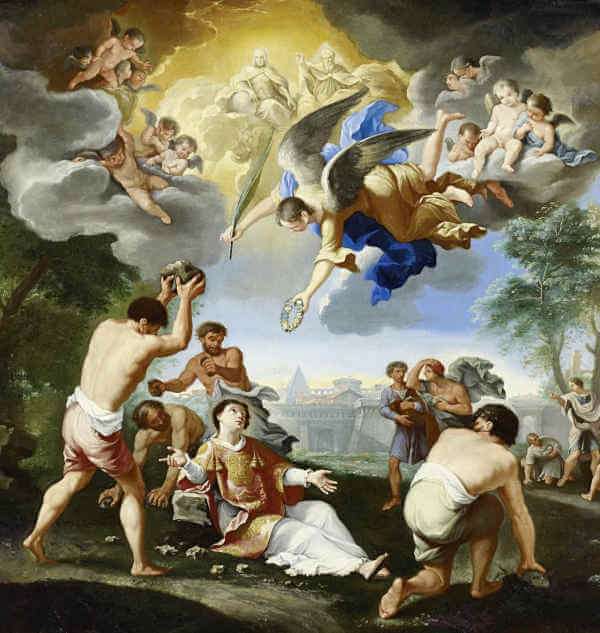
In our first reading we heard of the Martyrdom of St Stephen, who was filled with the Holy Spirit.  However, the Jews were infuriated with Stephen’s teachings of the Good News, they ground their teeth at him in a murderous rage.  They dragged Stephen out of the city, where he looked up, and could see the ‘Glory of God’ with Jesus standing at the right hand of the Father.  Stephen saw God’s Glory rather than seeing God directly, face to face, since in Old Testament it says: no man sees me and still lives.  However, Stephen did look directly upon the glorified Jesus, shining with his heavenly countenance. 

Some of what Stephen saw, the Sanhedrin would have expected to see from heavenly visions, the ‘Glory of God’.  However, the challenging part for them, was Jesus Christ, the Son of Man, standing at the right hand of God the Father, implying that Jesus was the Messiah and King after all, to whom God has given everlasting dominion to him.

However, Stephen’s martyrdom and all the following persecutions of Christian people, did not stop the spread of Word of God, far from it.  But, actually accelerated Christianity with the mission of spreading the Good News, to the four corners of the world.

St. Stephen’s martyrdom has remarkable parallels to the Passion of Jesus.  Like Jesus, Stephen was filled with the Holy Spirit and undergoes a transfiguration before his passion.  He charges the leaders of Israel for their hardness of heart, he was cast out of the city where Stephen begs forgiveness for his murderers, and at the final moment of his death, echoes the words of Christ, to Jesus himself, ‘Receive my Spirit.’  These parallels show us that the ultimate work of the Holy Spirit is to reproduce in us, as Christians, the life of Jesus, conforming us more and more closely to Jesus himself in both life and death.

In the Gospel we have just heard Jesus praying aloud to his Father the innermost concerns of his heart.  With great intimacy and confidence he pours out his deepest feelings about the future mission of the disciples, within his newly formed Church.  Jesus appeals to the Father to carry out his plan for the world, which will draw all people together in a common bond of love and unity.  A unity which will form the pattern for Christianity for all ages.  The more we grow like Christ, the more we grow like one another in love.  Only by a strong bond of unity of believers, can knowledge, wisdom, understanding and tradition be passed on from one generation to another. 

It goes without saying that the current Christian Church has formed many dividing groups, of different denominations over the years, all with slightly varying interpretations of the Bible.  However, we are living stones in the Catholic faith, of which there is only one foundation stone, Jesus Christ our Lord. 

Through our Baptism we are called to bear witness making Jesus known to the world, like St Stephen, allowing the Holy Spirit to work through us, especially in our words and actions. 

Our love should extend generously to our family, friends, work colleagues, strangers, even to our enemies.  If Christ’s prayer of unity is to be realised, our oneness in the Lord must be visible, and not hidden away.  Since is says in scripture:  ‘No one lights a lamp and puts its in a place where it is hidden, under a bowl.  Instead they put it on a lampstand, so that those who come in may see it.’ 

Same with us, through our Baptism we have received the ‘Light of Christ’, our Baptism candle is always kept burning within our hearts, so to speak.  Let us not hide ourselves away, but be bold, full of zeal for the Lord, and filled with the Holy Spirit.  We can make a difference, we can bring people to the Lord.  As we allow the Holy Spirit to work within us, and we will, like St Stephen, see the ‘Glory of God’ in our final vision, as we are taken away by the hand with all the Angels and Saints.

Homily – Luke 24:46-53

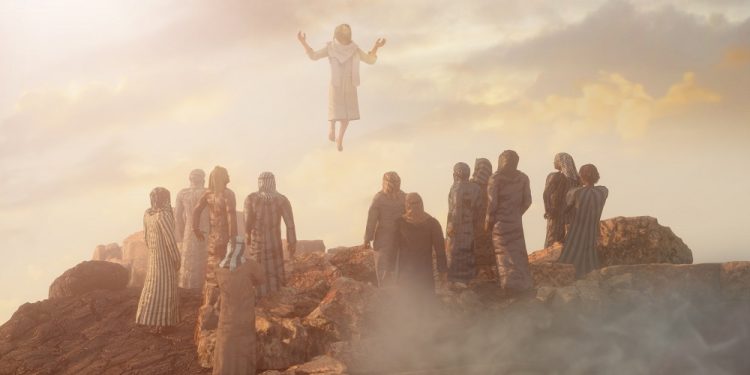
By virtue of our calling as Christians through our Baptism, we are meant to be an optimistic people, full of hope and rooted in confidence about our future and death in Christ Jesus.  The Ascension proclaims that Jesus, who spent his life in Jerusalem and the surrounding countryside of Galilee, has achieved the work he was sent to do, and now in Heaven seated at the Right hand of God the Father, the highest honour that is assigned for a King, since He is enthroned as King and Lord of the Universe.  His Resurrection has now been fully revealed showing His Divine Sovereignty, fulfilling the prophecy that was said to the Sanhedrin during Jesus’ trial.

‘Are you the Messiah the son of the Blessed one? The High Priest asked him.  Jesus answered, ‘I am’ and you will see the Son of Man seated at the right hand of the Power and coming with the clouds of heaven.’

Jesus’ enthronement in Heaven however, does not imply that his absence here on earth will cease.  No, because Jesus is no longer bound by the limits of space and time, and therefore he can be present to His disciples in an infinitely and more intimate way, through the Holy Spirit than he could ever have been before while on earth.  Jesus is not only with us, but also in us.  Where Christ has gone, we hope to follow, once our earthly journey has ended. 

The Ascension assures us that the longing for happiness and fullness of life which is deeply imprinted within every person’s soul can ultimately be realised. 

The Ascension rather speaks of a new era.  For the Apostles their period of training is over, and the time has arrived for the beginning of their mission, ‘to go out to the whole world and proclaim the Good News.’  At the Lord’s departure the disciples stood motionless, transfixed by what had happened.  However, their mission was not to stand around looking upwards all day, waiting for something to happen.  In Christ’s absence they were to be his messengers. 

The Ascension of Jesus and His Glory to the Father gives us a glimpse of the great future to which we have been called to, by becoming His Saints in Heaven.  Like the Apostles, Christ commands us to be his witnesses in preaching the Good News.  As you know, this is a daunting task, but through the Holy Spirit we can all do it, by witnessing to our faith each day, and allowing the Spirit to talk through us. 

Life is often called a pilgrimage and we are travellers on that rocky road, through life’s many up’s and down’s.  We can be weakened by the many trails that come our way, our sufferings and disappointments.  However, the Ascension assures us that there is a purpose to life, a plan, that our journeying, however difficult, will take us back to the Father one day. 

We all live in hope, in the expectation for the Lord’s return on the last day.  May our hearts be ready, as we await for the Bridegroom’s return, as we take his Words to heart:  ‘Where I am, you shall be too.’ 

Homily – John 14: 23-29

We are now in the sixth Sunday of Eastertide, after celebrating the Lord’s Resurrection, and we find ourselves back listening to the farewell discourse, Jesus’ departing words to his beloved disciples.  We are told about the new commandment, from last week Gospel account, ‘to love one another as I have loved you’.  During this farewell discourse Jesus announces many things that will happen to the disciples, especially the realities that are to be revealed at the Resurrection, with the future arrival and teachings of the Holy Spirit.  It will be the Holy Spirit who will dwell in the disciples and will teach them everything they need to know, helping them to recall all that Jesus had told them.  It was not simply a recollection of the past, but a deeper understanding of Jesus and his works through the Spirit, making it come alive and active for them.

As you know, the Holy Spirit has a couple of different names, the Advocate and the Paraclete.  From the Greek word meaning ‘to call to one’s side’.  Since a paraclete in the Roman courtroom would be someone who could provide help and assistance in a trial, giving counsel, pleading for someone’s cause, interceding with the judge on their behalf.  As the Holy Spirit the Paraclete, he serves as a counsellor for the disciples, give them comfort and help when the disciples are in hostile situations.  The Spirit dwelling in the disciples, will lead them to a deeper understanding of Jesus, and enable them to bear witness to Jesus as Messiah and King. 

Among Jesus’ promises was his peace, a blessing of reconciliation that God promised to bestow upon his people.  Jesus’ peace is a supernatural peace that arises from a the total love of his Father and therefore it is unlike any other peace seen in this world. 

Repeating Jesus words of reassurance he calls the disciples to have a trusting faith, that comes from obeying the Father.  A faith that we should inspire to have, in humble obedience to the Father’s will. 

Jesus tells the distressed disciples, the promise that ‘I will come back’.  He will return to them not only after his Resurrection, but at his second coming at the end of time.  While this was hard for them to grasp, the disciples should be thankful and rejoice that Jesus is going to the Father.  Since, it is due to Jesus’ entrance into heavenly glory, that the doors are open to us, for our salvation and eternal life with the Father. 

Now little time remains for Jesus, before the ruler of the world, the devil, is coming.  Satan has already taken possession of Judas who has gone out into the darkness and will next appear leading a band of soldiers representing all of sinful humanity against Jesus.  But Satan being a created creature, has no power over him, the incarnate Word through whom all creation came to be, who was sinless, has total sovereign control over his own destiny. 

The cross reveals the depths of Jesus’ love for the Father, which is so intense that he willingly embraces the horrible death of crucifixion to accomplish the work of the Father for our salvation.     

So, today as we are leading up to Jesus’ Ascension on Thursday and Pentecost next week.  Let us allow the Holy Spirit to fill our lives with God’s Love, Hope and Peace.  Since, we are his adopted children, and through our own Baptism in love and obedience to the Father, may we imitate Mary our Mother, the Apostles and Saints, in spreading the Good News in Jesus’ mission to the world, for the salvation of souls. 

Homily – John 13:34

In our first reading we hear the end of the first Mission of the disciples.  St Luke provides us with a glimpse into the missionary method of Paul and Barnabas.  We might wonder how Paul can return to the same cities from which he has just been expelled or fled from, in fear for his life.  One reason is that, Paul and Barnabas were persecuted for publicly preaching to unbelievers, but now they are ministering privately to the new Church of Christians.  Without these follow up visits, the new converts could easily return back to their previous beliefs or patterns of misconduct.  They are in need to be reinforced in their new faith, having extensive instruction, and encouragement, to remain constant in the difficulties they will expect to face. 

Paul and Barnabas repeat the sober warnings that Jesus had given to his followers, that by following him, is a narrow and difficult path.  This means, suffering and hardship.  The risen Christ teaches:  ‘Was it not necessary of salvation, that the Messiah should suffer these things, and enter into his glory?’  Now providing local leadership, the apostles Paul and Barnabas give guidance to the new churches.  They provide Bishops and Priests, probably from the group of Jewish believers, whose knowledge of Scripture and biblical morality would have been more advanced.  However, it is still through the Holy Spirit that guidance was given in commissioning these men who were chosen. 

They commended these new leaders to the Lord, since the successful ministry of the Church ultimately depends on the risen Christ Jesus himself.

In the Gospel with the departure of Judas, the events leading to Jesus hour on the cross has begun.  The focus now shifts to Jesus and his faithful disciples, with the final Farewell discourse. 

The cross is Jesus’ moment of glorification because in the cross God is revealing his self-giving love.  The Father loves the Son, and gives him for the salvation of the world, and the Son in turn makes his life a perfect gift of love and obedience to the Father.  The love between the Father and the Son is revealed on the cross, and through the wondrous event of the Resurrection, Jesus shows his marvellous divinity to the whole world.

Jesus gives his disciples a new commandment, to love one another.  Jesus’ love is the gift of himself, which symbolically was shown in the foot washing with his disciples.  The disciples love for one another, will make known to all the people, that they belong to the Lord.  The Catechism (CCC 2842) teaches us that:  ‘there has to be a vital participation, coming from the depths of our heart, in the holiness, the mercy, and the love of our God.’  Through our loving actions, we become a living testimony and witness to the Father’s love, that was revealed on the cross.

Love finds its source in God, and this new Commandment in which we are called – to base our every action upon, is the root and very core of the Gospel message. 

Love has the power to give meaning to the impossible situations in life, to bring light into darkness, to inspire people, fill them with hope and give them the courage to continue on the road ahead.  The Good News we have chosen, are instruments of Jesus’ grace in our lives.  A smile, a hug, a handshake costs nothing, but means so much, because it comes from the heart.  When we fail as a Christian, it is probably down to the failure to love, that we haven’t given in that moment of time.

We are invited and encouraged to look into our hearts today, and see how we are answering God’s call to love, within our families, friends or in the workplace.  The real test of love is how we respect others including our enemies.  No one can be a friend of Jesus who does not love his neighbour as himself.  Let us ask the Lord today for the grace to have our hearts opened, filled with God’s divine love, with the inspiration and wisdom of all the Saints, to share fruit abundantly, fruit that will last, with all of humanity.

Pastoral Letter – John 10: 27-30

APPOINTED TO BE READ AT ALL PUBLIC MASSES IN ALL CHURCHES AND CHAPELS IN THE DIOCESE OF LANCASTER ON THE WEEKEND OF 10 & 11 MAY 2025

My dear people,

In these days after the Easter celebration of Jesus rising from the dead, we experience a hope for a share in this risen life, safe, beyond the reach of all harm.  The death of our Holy Father, Pope Francis, casts no shadow across our Easter lives.  Yes, it serves to remind us all of our mortality, that the days are passing and that the things of this world are also passing, but as he served the Lord with his life, we believe that his death also serves the Lord.  When someone we love dies, they take something of ourselves with them but also leave with us so much of themselves, in the good they did, the example they have given. May his soul and the souls of all the Faithful departed, rest in peace.

By the time this letter is being read in your parishes we may already have a successor to Pope Francis, a new name, a new face, a new Saint Peter.  Even if this is the case, we have the same Good Shepherd, speaking the same words to us:

‘My sheep hear my voice,

And I know them,

And they follow me.’

These words give us comfort and reassurance in these times that Christ has not ‘sub-contracted’ His work to others.  He remains our Good Shepherd and always will.

When Christ instituted the Sacred Priesthood, choosing some men to become Priests of His New Covenant, He did so knowing us to be imperfect, still prone to selfishness, fear, misunderstanding and temptation.  Such risks did not prevent Him acting as He did.  He believed that every vocation planted in the heart of the believer must grow like wheat amongst briars.  He had confidence in the wheat, the soil and the expertise of those who would harvest, to select the good.

On this Good Shepherd Sunday let us thank God heartily for all vocations, and particularly today for vocations to the Priesthood, and let us pray confidently for men to hear His voice and answer His call.  Chosen men sounds a rather arrogant expression and can disturb us if it is not identified with the voice of our Saviour and the will of the Father.  For some, it is their way to heaven, so long as they do what they are told! Priests are to be Shepherds formed by the heart of Christ.  This is not our doing: it is the work of the Spirit.

May your families be places where the voice of Jesus is heard, especially by creating silence for prayer.  May your works of charity create a culture where the young can begin to recognise the voice of Jesus, calling them by name, and loving them.  May they grow to love that voice and hear it daily, keeping them from all harm, as a Shepherd guards His flock, and leading them to pasture, through the ministry of good priests.

Upon the election of Pope Leo XIV. May 8th 2025

Together with the Universal Church, and with all people of good will, the Catholic Diocese of Lancaster in the UK welcomes and commends to the grace of Almighty God Cardinal Robert Prevost OSA as Pope Leo XIV, the successor of St Peter.  Pope Leo comes to this universal ministry after many years of professed and ordained life as deacon, priest and as a bishop, as a religious, and as a teacher.  

As with his predecessors we hold the Holy Father in our prayers and take courage already from the words of his inaugural address with its call for peace across humanity.

The times we live in, cry out for a fundamentally different approach to serve the world order, one led by Christ.  I ask you to do all you can in your parishes and homes to ensure that our loyalty to the Holy Father is Gospel led, not media led.

May we also rejoice in learning that, as Father General of the Order of Saint Augustine, Father Prevost was present in our Cathedral of Saint Peter for the Episcopal Ordination of my predecessor, Bishop Michael Campbell OSA on 31st March 2008.

Mary the Mother of God.  Pray for him.

St Peter.  Pray for him.

St John Paul II.  Pray for him,

Pope Saint Leo the Great, pray for him.

With my blessing,

+ Right Rev Paul Swarbrick

Bishop of Lancaster

Homily – John 21: 1-19

Today we start chapter 21 as we come to the end of the Gospel of John.  We now hear, the mission of the church through the Apostles in relationship with the risen Lord. 

It opens up with a paragraph about the failure of the disciples, since they caught no fish during the night.  However, we have seen, that night and darkness often symbolise a separation from Jesus, so it is not surprising that the disciples didn’t catch anything that night.  They can only be fruitful in their duties during the daylight, when Jesus is with them, since he is the light of the world.

How often do we, like the disciples, seem to be ‘at sea’, when we have no thought of Jesus in our minds and hearts, frustrated by our efforts when things go wrong or go pear shaped. 

Suddenly, Jesus who was standing there all the time, within an earshot, gives us a sign of his presence.  Then we come to realise it is the Lord welcoming us back, as we are nourished with our Eucharistic food.

Today the church’s mission comes to light, as the disciples, whom are told to go and bear witness, mirrors their devotion on going fishing.  But they are to become ‘fishers of men’.  However, without Jesus’ assistance they will fail in their mission, but if they are obedient to him and cooperate with the Holy Spirit, they will bring many others to faith in Jesus Christ.

Today we also hear Jesus having a very personal dialogue with Simon Peter.  It takes place after breakfast, and recalls Peter’s threefold denial in the High Priest’s courtyard during the Passion.  His denial thereby removing his own status as a disciple of the Son of God.  Therefore, Jesus does not address him as ‘Peter’ but as Simon, son of John, which was his name before becoming a disciple.  Moreover, when Jesus asks Peter if he loves him more than these, Peter is reminded about his promise to willing lay down his life for him.  Now Jesus invites Peter to repent his love three times, in order to undo the three counts of denial and by doing so, restoring their relationship between themselves. 

Jesus’ mercy is so complete that he does not hold onto Peter’s past sins, using it against him.  No, instead, Jesus gives Peter the honour and responsibility of serving as the delegated Shepherd of his flock.

No matter how serious or how many sins we have committed, the love and mercy of Jesus is far greater.  He seeks us out and invites us to return home to the Father.  Through this Gospel passage it should give us confidence that when we seek reconciliation through the Sacraments of the Church, Jesus forgives us completely. 

As we wait for a new Pope to be chosen, let me finish with the words of our Late Holy Father, Pope Francis.  He says:  ‘God does not tire of forgiving us, if we are able to return to him with a holy and contrite heart.

So, today, let us not be afraid to cast our nets to the other side, and to listen to the promptings of the Holy Spirit within our hearts.  Jesus is always standing by, waiting to help.  We just need the quietness of the day to listen to his voice, with open and contrite hearts. 

Let us place all our worries and concerns upon the altar, as we offer them up, in love and thanksgiving to the Lord, during our Eucharistic feast this Easter season.

Homily – John 20: 19-31

Jesus said to Thomas ‘Give me your hand, put it into my side, doubt no longer but believe.’  Today we hear the encounter between Jesus and Thomas, the doubting disciple.  We shouldn’t dismiss Thomas as a man of little faith.  Who could really blame him for not believing.  After the events on Good Friday, Thomas had seen the Lord, whom he loved, die the death of a criminal, crucified between two thieves and witnessed Peter denying him three times, even after Peter promised loyalty towards Jesus hours earlier.  Thomas was disheartened, disillusioned and angry, which made him have a harden heart and unwilling to accept the words of others, even about seeing the Risen Lord.

Today is Divine Mercy Sunday, a devotion that was permitted by St. Pope John Paul II after reinvestigating St Faustina’s visions.  St Faustina was a Nun of the ‘Sisters of Our Lady of Mercy’. On the 22nd of February 1931, she had a vision from the Lord.  Jesus appeared to her bringing a message of Mercy.  She recalls in her diaries, that Jesus was dressed in white with His right hand raised in blessing, and the other hand touching his heart.  Two large rays came forth from his heart, one red and one white.  This image was painted and the words ‘Jesus, I trust in You’ were written below.  In another vision Saint Faustina was told about the teaching of the Chaplet of Divine Mercy, praying for the conversion of sinners throughout the world.

But, let us return back to the image of Christ, especially the ‘side of Christ’, where Thomas placed his hand, and where St Faustina saw two rays of red and white.  What do we understanding of the importance of Jesus’ pierced side, what can it teach us?  We know that it points to Jesus’ crucifixion when his side was pierced by the Roman Soldier, and Blood and Water gusted forth from his wounded heart.  This is a reminder that life emerges from death, through the Sacraments of the Church.  Blood and Water being Catholic symbols for the Sacraments of Baptism and the Eucharist.

The piercing of Jesus’ side is unique to John’s Gospel, and it fulfils a twofold prophecy.  ‘None of his bones shall be broken, and they will look on the one whom they have pierced.’ 

There is symbolism here of Jesus being the New Temple.  There is an ancient document called the Mishnah.  This document explains that there were two drain holes at the south-western corner of the Altar in Jerusalem , this was to drain away all the blood from the sacrificed lambs.  It would have come out of the side of the temple mount, mingled with water flowing down into a stream in the Kidron valley.  For a first century Jew, it would have been a very familiar sight.  John the evangelist would have recognised this parallel link to Jesus’ pierced side when blood and water gushed forth on the cross.  Jesus’ body is now the New Temple.  We hear in Jesus’ own words saying: ‘Destroy this temple, and in three days I will raise it up.’  The Jewish Temple mount has now been replaced with a New Temple, that is Jesus’ body, that comes forth the Sacraments of the Church. 

We might have doubts in our faith from time to time, but searching for the truth is nothing to be ashamed from.  It helps us grow stronger in our faith.  In many ways Thomas echoes our moments of uncertainty.  Our vision of God gets blurred by clouds of doubt.  But it is only through the Risen Christ that we enter into a personal relationship with him, that allows us to enjoy the New Life which he offers. 

When we have moments of despair and all else seems to fail.  Fall back on your faith, say a prayer similar to:  ‘Jesus I trust in you’, and He will help and support you in your time of need.  ‘Doubt no longer, but believe.’