Homily – Matthew 11:2-11

The joy of Advent shines forth with an inspiring message of hope and encouragement in today’s readings, urging us to rejoice and be happy because the Lord is near. 

It tells us of our Christian vocation to radiate this joy, however, rejoicing is not normally the hallmark of being a Catholic.  A lot of the time we associate the Gospel message of Jesus carrying His Cross and remembering His Passion of pain and suffering.  However, what did Jesus say just before His Ascension into Heaven, ‘all these things I have spoken to you, that my joy might be in you, and your joy be complete.’ 

We were all created for happiness.  It is why we spend our lives searching and striving to attain it.  Sometimes this happiness seems to escape us as we go searching for it in the wrong places.  Our greatest mistake is to look for it in material things, but all the money in the world cannot purchase happiness.  Christian joy is something deeper and richer, it comes from an awareness that God is with us and produces a contentment of inner peace that cannot be taken from us.  Friendship with God is the source of Christian joy.  No trials can drown this joy since it is born of faith.  On the first Christmas day when God came down in the flesh, Jesus filled the world with glad tidings of great joy.  His life was geared towards God the Father in joy, prayer and thanksgiving.  We can be caught up with all our daily problems and fail to reflect upon the joy of that marvellous truth that: ‘God so loved the world that he gave his only Son and whoever believes in him, might not die, but may have eternal life.’ (Jn 3:16)

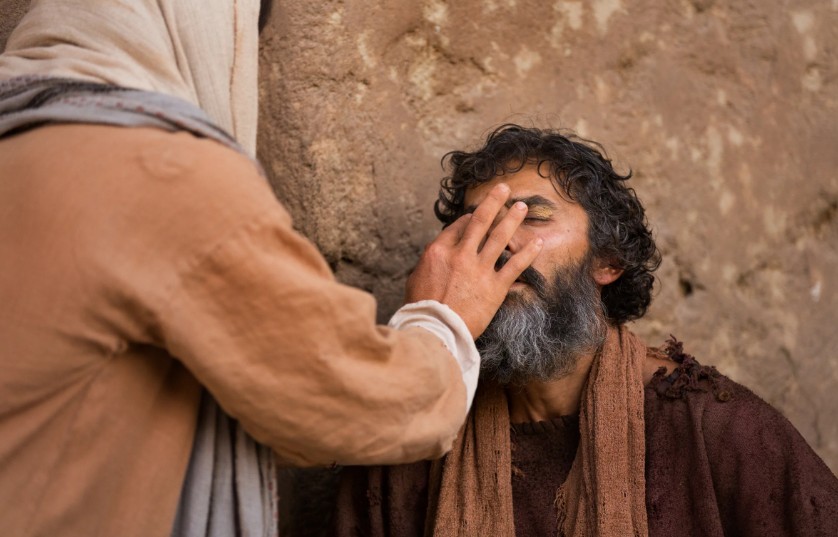
In the Gospel today, Jesus tells John’s disciples what do you hear and see?  ‘The Blind receive their sight, the lame walk, lepers are cleansed, and the deaf hear, the dead are raised up, and the poor have Good News preached to them.’  John’s Disciples went back rejoicing because Jesus has confirmed that ‘He is the Christ, the one who is to come.’ 

As we know, charity is so important at this time, as there is no greater proof of love than to give ourselves to others who are in need.  Christmas joy cannot be complete unless we show love and charity, especially to those who have nothing to give back to us in return. 

The happiest of people are those who are doing the most for others, and the day will arrive when they will be greeted by the Lord with these words:  ‘Well done good and faithful servant, come and join in my master’s happiness.

I would like to end with the words from one of our favourite comedians of the past, Ken Dodd.  These words were always sung at the end of his shows, and I feel they are appropriate for us today:  “Happiness, Happiness, the greatest gift that I possess, I thank the Lord that I’ve been blessed, with more than my share of happiness.”

Homily – Matthew 3:1-12

John the Baptist’s ministry was solely based at the river Jordan, probably located on the southern stretch just before it empties into the Dead Sea.  The crowds from Jerusalem would have travelled nearly 20 miles through hot barren wilderness just to get there. 

The river Jordan is more than just a river, it was a powerful symbol of hope and new life.  In the Old Testament, God did many great things at the Jordan.  He healed Naaman the Syrian from his leprosy, He took the prophet Elijah up to heaven in a fiery chariot at the Jordan.  And most of all, God let the Israelites come across the river Jordan at the end of their 40 years journey in the wilderness from Egypt to the promise Land.  So, the Jordan represented the climax of the exodus story and the fulfilment of God’s plan to bring Israel to the land of Canaan.

The wilderness itself brought to mind, hope for Israel’s future, in which God would rescue his people from their present-day persecutors.  The ritual of baptism was a powerful symbolic action.  John the Baptist was calling the people to journey out into the wilderness, to step into the Jordan river for Baptism.  Thus, in this way, they could re-enter into the promise land, once again, free from all their sins. 

The heart of John’s message is the challenge to repent.  The Greek meaning here is to change one’s mind, and in the Jewish tradition the Hebrew word for ‘repent’ means to ‘turn around’. 

John is asking for a complete change in conduct and thinking, a fundamental change of one’s life direction.  As you know many Old Testament prophets turned away from their sinful ways, and repented by returning to the Lord. 

We also heard, that John the Baptist wore clothing made from camel’s hair and had a leather belt around his waist.  In Matthew’s Gospel, this is highlighting something central about John’s mission.  Matthew the Evangelist was connecting John with Elijah, who was known for wearing something similar.  This connection with Elijah is important, because the Jews were expecting the return of Elijah before the ‘great day of the Lord.’  Therefore, John’s appearance in the desert and looking like Elijah would have signalled to the Jewish people that he was playing the part of the long-awaited Elijah, preparing the way for the Lord’s coming. 

John the Baptist speaks to the Jewish people who have come for baptism, by declaring that someone is coming who is mightier than he is, by saying:  ‘He who is coming after me is mightier than I, whose sandals I am not worthy to carry.’  Out of all the tasks a servant would be required to do for his master, the most degrading of all tasks would have involved touching the master’s feet.  Yet John the Baptist says, he is not worthy, even to do that.

John continues and says, the one who is to come, will baptise you with the Holy Spirit and Fire. 

John the Baptist points us to the tremendous power of the Church’s Sacraments, especially Baptism and Reconciliation.  Through these Sacraments God freely forgives all our sins and fills us with the gifts of the Holy Spirit, allowing us to become a member of a community that we could never earn on our own, by making us ‘Children of God’. 

So, during this Advent season, let us take this opportunity to come closer to Christ, and deepen our relationship with him through prayer and the Sacraments of the Church, especially through the Sacrament of Reconciliation. 

Let us hear and focus on the words of John the Baptist calling us to repentance, and as a result, allowing us, to open up the way for the Lord, so Jesus can enter into our hearts as we head towards our Saviours birth.

Bishop’s Pastoral Letter

A PASTORAL LETTER

FROM THE BISHOP OF LANCASTER

For the First Sunday of Advent 2025

APPOINTED TO BE READ AT ALL PUBLIC MASSES IN ALL CHURCHES AND CHAPELS IN THE DIOCESE OF LANCASTER ON THE WEEKEND OF 29th/30th November 2025

My dear people,

As we begin the Holy Season of Advent my thoughts turn to Mary, our Blessed Lady, beginning the final month of her pregnancy.  She is carrying Life.  For eight months she has sensed this child growing within her, this child given to her, and taking from her.  As unborn children we feed on our mother’s blood, warmth, nourishment.  It is as though the mother says to her child, ‘Take and eat, this is my body for you. Take and drink, this is my blood for you, that you may have life from me.’  In her case of course this nourishment is of a created type.  Many years ahead, she would receive food given her by her Son, food of a different type, giving her eternal Life.

Let us reflect on this young pregnant woman as she offers us a way into this new Advent.  She is expecting, preparing and waiting.  She invites us to take on these same tasks in our own times by spending time meditating on her as she approaches the end of her pregnancy. We are so easily tempted to rush on to the events of the 25th of December, counting down the days, but that is to miss so much, as if we are so taken by the gift that we completely overlook the care taken by the giver of the gift.  

The gift has been chosen for us, prepared for us, brought to us, shared with us.  None of this should be taken for granted.

Before the shepherds are disturbed at night, before angel choirs fill the skies, before the Magi leave their homelands, and whilst Herod remains in the dark concerning world events, this young woman carries in her womb the Lord of Life, already started on His work of Salvation.  Even before her delivery she has so much to share with us. For her the Word became flesh nine months before Christmas, on the Solemnity we barely notice these days, the Annunciation of the Lord. She knows Him best of all.

What a precarious approach the Giver of Life has taken.  From her village life Mary would be well acquainted with the risks of pregnancy.  She would know of women who died in childbirth, of babies lost.  She would know of difficult deliveries and infection risks.  Added to that she now has an unwelcome 80-mile journey to make from Nazareth to Bethlehem and it has come at exactly the wrong time.  St Joseph may be a good carpenter, but he is no midwife. While in Nazareth she was amongst her own people and could count on the care and support of devoted family and neighbours experienced in these matters, and she had the comfort of familiar surroundings. Now however, she is to be at the mercy of strangers, in a place unknown to her, full of uncertainties.  It seems circumstances conspired against her and this little blessed life she carried within her. Thank God, with St Joseph by her side, she was able to trust in God’s protection for herself and for the child in spite of the odds.

We need to reflect on this because we live in a culture which is increasingly losing sight and understanding of the gift of life and losing sight of the Giver of Life.  Sadly, for all the advances in society, in healthcare and useful technology, there is much in our contemporary culture that works against life, particularly vulnerable life.  Unborn children are severely and increasingly at risk.  Each year hundreds of thousands are killed.  The elderly are facing increasing pressure to effectively end their own lives.  In hospitals DNR (Do Not Resuscitate) is often put on the records of disabled and sick by medical professionals without any reference to family.  It is becoming an ‘undisclosed policy’.  Government chooses to cut Development-aid in favour of Defence budgets.  The lives of millions of the poorest are adversely affected.  From my years in Zambia and my visits to Ethiopia, South Sudan and Kenya I have seen what a difference it makes to the people whose living conditions are little different from those that the Mother of our Redeemer would have experienced.  It seems that those who are born disadvantaged are subject to ever-increasing disadvantage.  I strongly recommend to you Pope Leo’s recently published first Apostolic Exhortaion, Dilexi te (On love for the poor).

There is another event and another date that remains hidden from us, brought to our minds every Advent; the Second Coming of Christ.  He promised to come again, and He keeps His promises.  It will happen at an hour we do not know, but we must expect and prepare and wait.

The Centenary year is over.  The year of Jubilee will soon be completed.  This has been a rich year of Grace and Blessings for us. Blessings are more than favours or tokens of approval from a kind Lord.  They are given as ‘cage-rattlers’ to wake us from sleep and pull us back from our distractions.  They are given as tonics to strengthen us for what still remains to be done if we are to complete our journey of faith.  They are given to enable us to expect, prepare and wait.  Like Mary, I am called to be a guardian of creation, a guardian of life by becoming a guardian of ‘The Life’.  If I fail in this, whatever else I may achieve will count for nothing.

With my blessing on you and your families,

+The Right Reverend Paul Swarbrick

Bishop of Lancaster

Homily – Luke 23:35-43

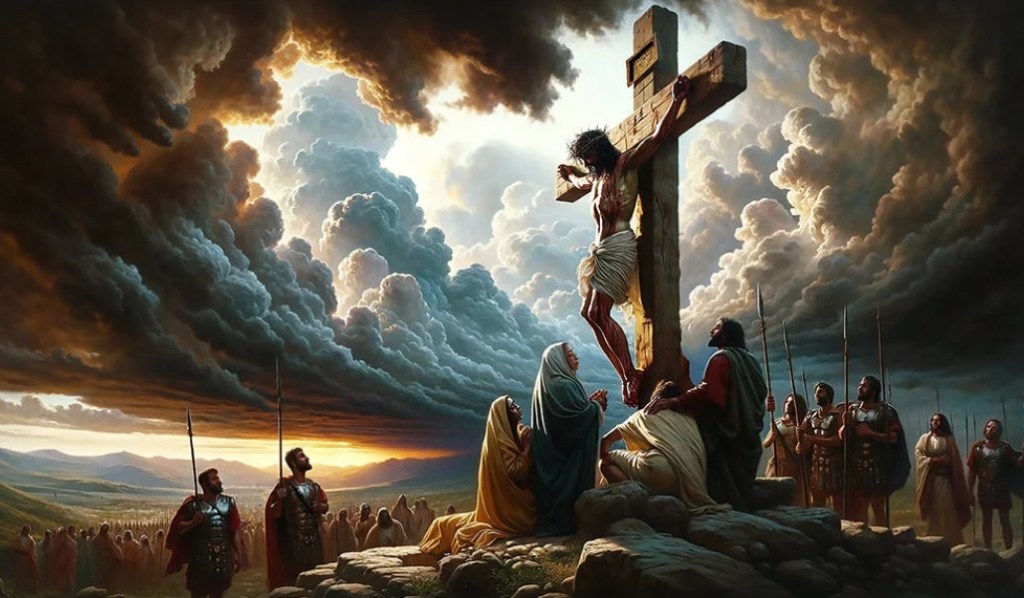
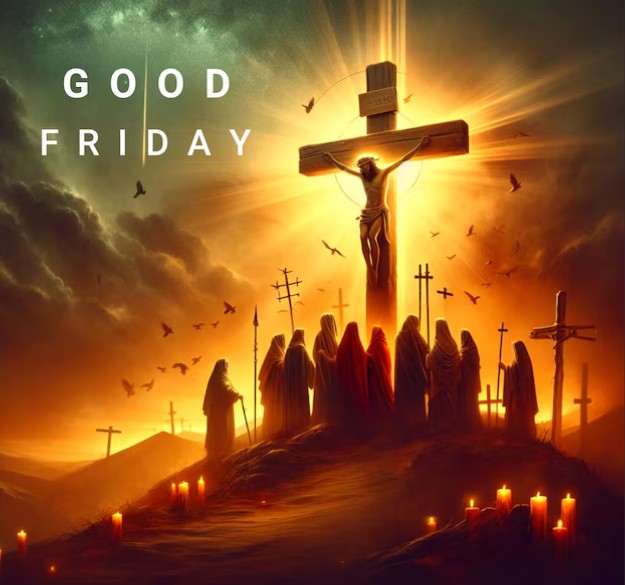
Above him there was an inscription: ‘This is the King of the Jews.’”  The technical term for this inscription is called the ‘Titulus Crucis’, and according to Roman custom it was a board that was carried in front of the condemned person or sometimes put around their neck, so it could be easily be attached to the cross. 

We know from scripture that Pilate was responsible and took the initiative in writing these words, while it would have normally been a scribe to commission this type of work.  This inscription was written in three languages, Hebrew, Latin and Greek which were the great languages of the cultured world at that time in the Roman empire. 

Every nation had something to teach the world.  In Greece they taught the world – Philosophy.  Rome taught the world – The law and right government, and the Hebrews taught world – religion in worshipping the one true God. 

Since Jesus was ‘The law of God’ and the ‘image of God’, it is symbolic that the great nations of the world should claim Him King.  Jesus’ Kingship was universally proclaimed to all passers-by, through this multi-lingual announcement, indicating that Jesus was drawing all people to himself. 

The ‘Jews’ as you can imagine, rejected this title and insisted that Jesus was only a pretender to these claims.  However, Pilate replied, ‘What I have written, I have written,’ and he would not allow the inscription to be altered. 

While, Pilate seemed to crumble under the pressure at Jesus’ trial by the High Priest and Pharisees’, Pilate now is reasserting his authority, forcing the Pharisees’ to live with his decision, to a title of honour, confirming Jesus’ Kingship, that the ‘Jews’ were very keen to stamp out from the very beginning.

As we know, Jesus was crucified close to the city walls, and as a result, the Titulus inscription publicly became a talking point among the people.  The advantage of it being written in three languages, was to help formally announce ‘Jesus as King’ across the whole world. 

Originally the Titulus inscription was to charge Jesus as a royal pretender.  But now this real enthronement on the cross shows Jesus’ Royal Sovereignty and Kingship which is now acknowledged for all time.  Heralded by Pilate as a prophecy, who represented the greatest political power in the world, written in the sacred and secular languages of the era, shows the event of Jesus’ ‘hour’ on the cross, his only sacrifice as High Priest, Prophet and King as an important divinely event that concerns the entire world, giving humanity a last chance of salvation, to repent and believe.

We read in the first chapter of John’s Gospel, the ‘Word became flesh, and dwelt amongst us.’  Jesus is the Word of God; He came to earth over 2000 years ago as a child. 

However, Jesus existed longer than that.  He has no being and no end, like the Father & the Holy Spirit. 

They are the Alpha and the Omega, being with God the Father from the very beginning.  When creation of the universe began, Jesus was there as God’s Word, making everything come into reality.  Jesus is truly the King of the Universe.

Jesus has now opened the doors to everlasting life, through his ‘Hour’ of Glorification and Exaltation on the cross.  Through our Baptism in his Death & Resurrection, may we too enjoy his Kingship as anointed ‘Children of God’, as we continue to sing God’s praises with all the angels and saints during our liturgy of Holy Mass.

Homily Luke 21:5-19

(Short Homily due to additional letter to be read out for the Parish)

Today’s readings remind us of something we often prefer to avoid: the reality that this world will not last forever. In the Gospel of Luke, Jesus speaks of the destruction of the Temple and warns of trials, persecution, and upheaval.  However, these words are not meant to frighten us but to awaken us to what truly matters.

We live in a world that values security and durability, yet Jesus tells us that even the most solid of structures will fall.  What endures is our faith and our relationship with God. “By your perseverance will secure your lives” Jesus says.  Perseverance is not passive waiting; it is active loyalty, holding fast to Christ when the world shakes.

In our first reading from Malachi, it speaks of the day of the Lord: for the evildoers, there will be fire; however, for those who fear God, there will be healing.  This is not about fear but hope.  God’s justice will prevail, and His mercy will heal.  

In these final weeks of the liturgical year, the Church calls us to look beyond the present moment.  The end times are not about predicting dates but about living every day, ready to meet the Lord.  That means prayer, charity, and trust, even when life feels uncertain.

So, as we approach Advent, let us renew our commitment to Christ. The world may tremble and shake, but if our hearts are anchored in Christ, we will have nothing to fear.  For He is our hope, our strength, and our eternal reward.

Prayer for all the Dead.

O God, who willed that your Only Begotten Son,

having conquered death,

should pass over into the realm of heaven,

grant, we pray, to your departed servants

that, with the mortality of this life overcome,

they may gaze eternally on you,

their Creator and Redeemer.

Through our Lord Jesus Christ, your Son,

who lives and reigns with you, in the unity of the Holy Spirit,

God, for ever and ever.

Eternal rest grant upon them O Lord,

and let perpetual light shine upon them,

may they rest in peace.

Amen.

Lancaster Town Hall Remembrance Day Service 2025

Homily John 2:13-22

The most important temple is the temple of a person’s soul because God dwells within each one of us, in the most secret centre of our being. 

In addition to the temple of the soul, there are many sacred places throughout the world.  There are shrines, churches, basilicas, grottos, cathedrals, and other holy places that are set aside for the sole purpose of worshipping God.  They are to be a Heaven on earth, a place where we join with the Seraphim and Cherubim singing praises to the Most Holy Trinity.  Today’s feast commemorates one such a place.  In the city of Rome, there are four major basilicas.  St John Lateran is one of them and it is the oldest and most important, because it is the Pope’s cathedral.  Not the Vatican which most people think about. 

This means St John Lateran Basilica is not only the mother church of the Archdiocese of Rome but also the mother church of the entire Catholic Faith.

In 312 when ‘Constantine the Great’ became ruler of the Western Roman Empire, he took possession of the Lateran Palace and gave it to the Pope.  The construction of the first Basilica in Rome began.  Upon its completion in the year 324, it was dedicated by Pope Sylvester and given the name the ‘House of God’, with a special designation to Christ the Saviour.  ‘Constantine the Great’ did much to help the Catholic Church flourish after legalising its practice.  He saw to it that the Lateran Basilica was beautifully decorated. 

Up until that time, the Church had suffered greatly, always fearing persecution and death.  Now it has its first cathedral in the heart of Rome, with the Roman Emperor’s full support.

In the Gospel, we witness Jesus entering the Temple in Jerusalem and driving out the money changers.  His zeal for His Father’s house is striking: “Take these things away; do not make my Father’s house a house of trade.”  This moment is not just about cleansing a physical space, it’s a prophetic act pointing to a deeper truth.  When challenged, Jesus says, “Destroy this temple, and in three days I will raise it up.” St. John tells us He was speaking of the temple of His body, when he laid in the tomb for three days before His Resurrection.

The Lateran Basilica stands as a symbol of unity in the Church. We worship in many parishes and chapels, we are one Church, one Body in Christ.  This feast reminds us of our communion with the Pope and with one another.  It is a call to build up the Church not just with bricks, but with lives of holiness, charity, and fidelity.

As we celebrate the dedication of this ancient basilica, let us renew our dedication to being living temples of God.  

May our hearts be places of prayer, our lives signs of unity, and our communities reflections of the holiness of the Church.

And may Christ, who zealously cleansed the Temple, purify us so that we may truly be His dwelling place.

Today, we also pray for our own Diocese of Lancaster and Bishop Paul, all the religious orders throughout the UK, and the Universal Church in general. 

Our churches are sacred places that exist to be places where we can come to encounter the Lord.  So, we pray especially for the Pope Leo today, asking the Lord to help him and support him, in mind, body and soul, may he receive many blessing on his Papal See. 

Homily – Luke 7:11-17

Today, as we commemorate All Souls’ Day, we bring before the Lord the memory of all our departed loved ones.  We pray for their eternal rest, trusting in the mercy of God who is the Lord of life.

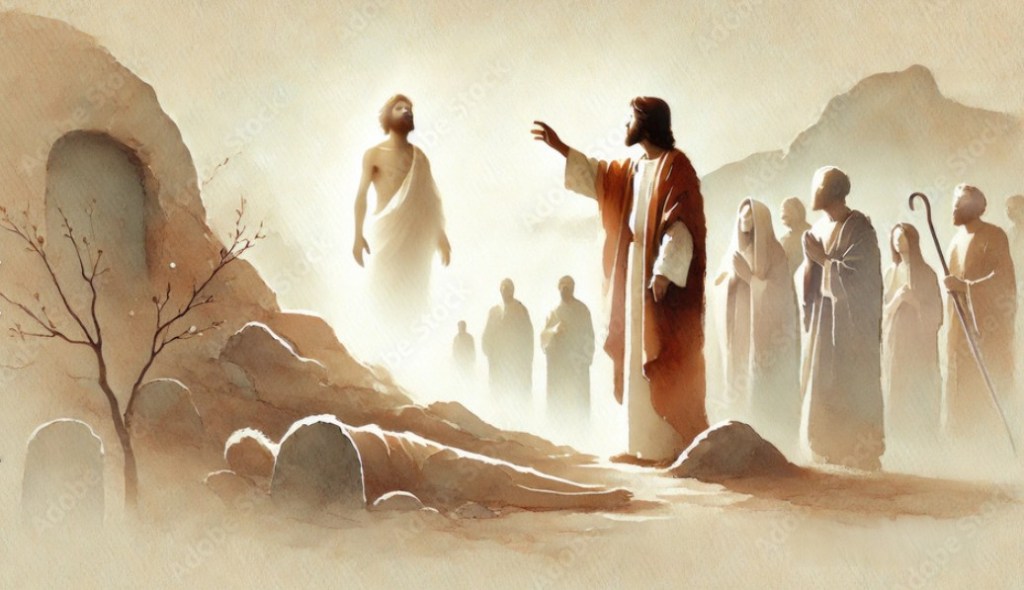
In the Gospel, Jesus comes to a town called Nain, a small village about six miles from Nazareth.  He sees a funeral procession of a young man who had died, and his mother, a widow, is heartbroken.  She had lost her only son and without a husband she has lost all means of support.  Jesus can see her pain and was deeply moved.  This moment shows us the heart of Jesus, perhaps He sees in the situation a foreshadowing of the sorrow of his own mother, at His pending death on the cross.  As the Lord of life, He doesn’t ignore the situation, He steps into it.  He brings comfort, healing, and hope.  His word brings life, even in the face of death.

Today, we remember that death is not the end.  Jesus has conquered death through His Resurrection.  The raising of the widow’s son reminds us that Jesus has power over death and He promises eternal life to those who believe in Him.

On this feast of the Commemoration of the Faithful Departed, we pray for all the souls who are on their final journey towards Heaven. 

We ask the Lord to guide them, and to bring them to the doors of paradise through the intercession of All the Saints, especially the Blessed Virgin Mary.

We remember all our loved ones who have died, also for all the Holy Souls who have no one to pray for them.

As Christians we all belong in the One Body of Christ, a community that is visible and invisible.  Our prayers for the dead are always heard, and it helps them to move closer to the Lord, bringing them peace and eternal rest to their immortal souls. 

During our Mass today, we place all our petitions upon the altar, remembering all the people currently listed in our Holy Souls box, our family members, friends, teachers, work colleagues, our war dead and all the parishioners in our diocese who have gone before us, they will always remain with us, in the depths of our inmost hearts.

Let us spend a moment of silence today as we bring our thoughts to mind, remembering the old good times, the happy times, when they were still with us, memories that we will always treasure and hold most dear. 

Eternal rest grant unto them, O Lord, and let perpetual light shine upon them, may they rest in peace.  Amen.

Homily – Matthew 5:1-12

Today, the Church celebrates the Solemnity of All Saints, a feast that lifts our eyes to heaven and reminds us of our true destiny. It is a day of joy, hope, and deep spiritual reflection. We honour not only the canonised saints whose names we know within the Canon of the Church, but also the countless unnamed saints who lived holy lives in the sight of God.  They are our ancestors, our neighbours, perhaps even our family and friends.  Today, we celebrate the great multitude “from every nation, race, people, and tongue” who now rejoice in the presence of God.

The Saints, show us the way of God’s divine path, that long straight, narrow path, that many of us fall and trip upon, but we need to have the courage and the faith to climb back onboard, and carry on.  The examples of the Saints encourage us and spurs us on, telling us that our future is with God, since we are his adopted children.

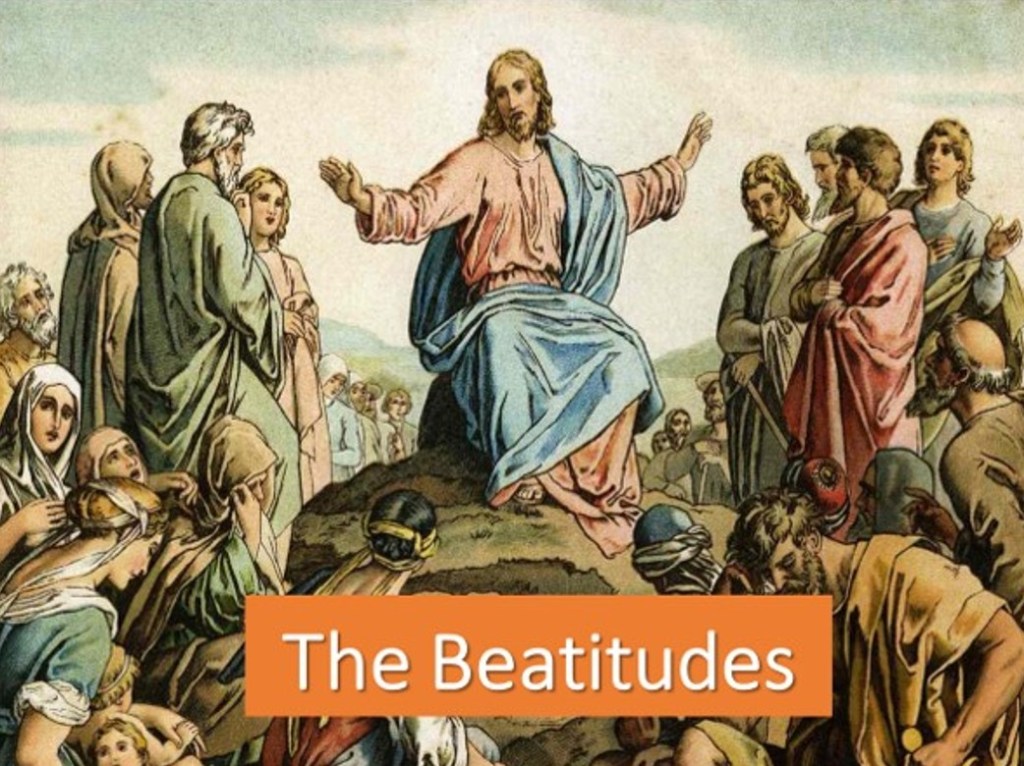
The Gospel today was the beginning of the Sermon on the Mount, the Beatitudes.  These words of Jesus are at the very heart of the Christian life.  They describe the character of the saints and the path to holiness.  In a sense they portray Jesus Christ Himself.

Blessed are the poor in spirit:  To be poor in spirit is to recognise our dependence on God.  The saints were not self-sufficient; they were humble.  They knew that everything they had was a gift.  St Teresa of Calcutta, for example, lived among the poorest of the poor, yet she radiated joy because she relied entirely on God’s grace and love.  

Blessed are those who mourn:  The saints were not indifferent to suffering.  Think of St Monica, who wept for years over her son Augustine until he turned to God.  Mourning in this sense is not despair, but a deep compassion and longing for God’s redemption.

Blessed are the meek:  Meekness is not a weakness.  It is a strength.  The saints were not aggressive or domineering; they were gentle and patient.  Jesus Himself said, “Learn from me, for I am meek and humble of heart.”  Meekness allows us to respond to others with love. 

Blessed are those who hunger and thirst for righteousness:  The saints were passionate for justice, truth, and holiness.  They did not settle for  common ground.  They longed for God’s will to be done here on earth.  This hunger drove them to prayer, to service, and to sacrifice.

Blessed are the merciful:  Mercy is the beating heart of the Gospel.  The saints were merciful because they had experienced God’s mercy themselves.  They forgave, they healed, they welcomed.  St John Vianney spent hours in the confessional, offering the mercy of God to sinners, giving people spiritual comfort.

Blessed are the pure in heart:  Purity of heart means having a single focus, a focus on the Lord.  The saints were not divided in their loyalties.  Their hearts were undistracted by worldly ambition.  They saw God in prayer, in the poor, and especially in the Eucharist.  Purity opens our eyes to the divine presence of all those around us.

Blessed are the peacemakers:  Peacemakers are not just those who avoid conflict, but those who actively build bridges.  The saints reconciled enemies, healed divisions, and brought unity.  They were children of God because they reflected the Father’s love for all His children.

Blessed are those who are persecuted for righteousness’ sake:  Many saints suffered greatly, some even gave their lives.  However, they did so with joy, knowing that their reward was in Heaven.  Persecution did not defeat them; it purified them.  Their witness inspires us to remain faithful, even in our darkest of moments.

The Beatitudes are a way of life.  They are the path to Sainthood.  Sainthood is not reserved for a few extraordinary souls.  It is the universal call, our common vocation of every Christian.  

Let us thank God for giving us ‘ordinary folk’, the ability to become Saints in the Kingdom of Heaven.    

May we one day join that great multitude of Angels and Saints in Heaven, as they sing in one chorus of exultant praise, to the Lamb of God.