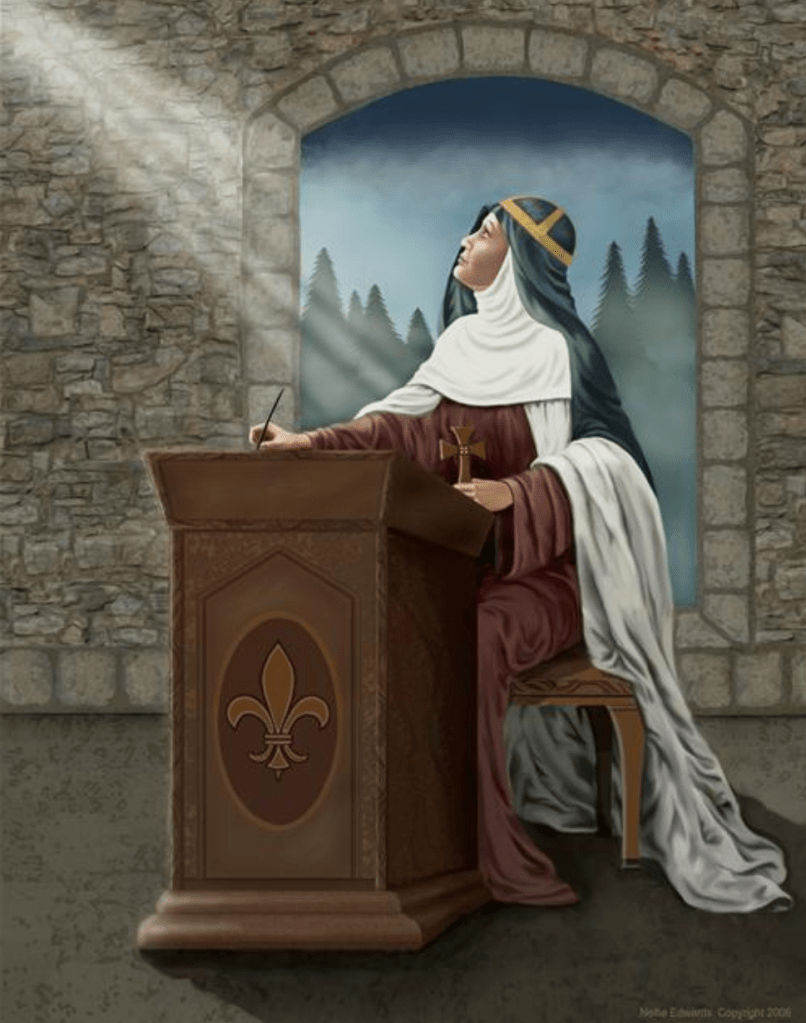
Solemnity of the Most Holy Trinity.

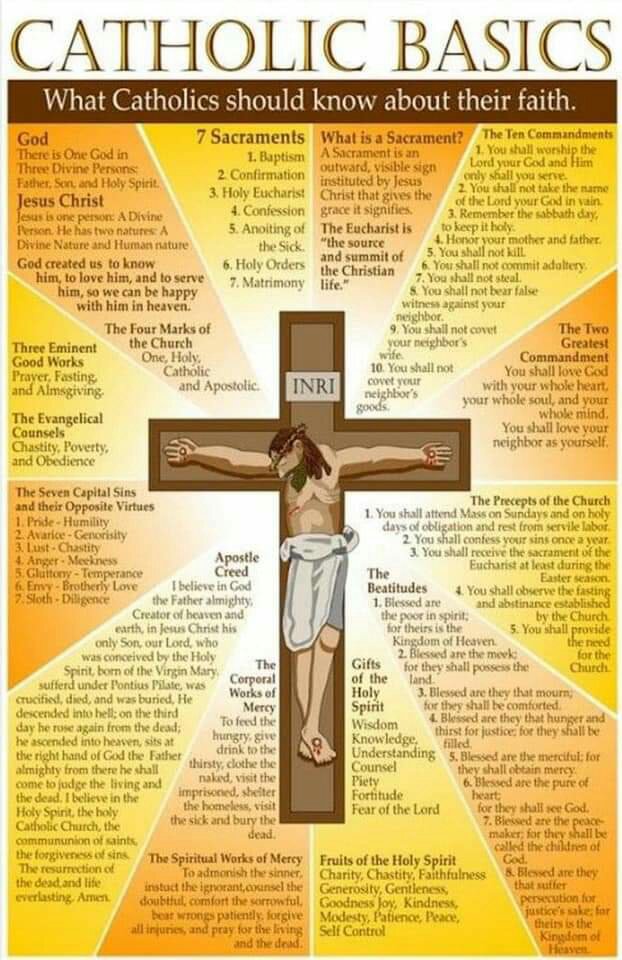
We acknowledge the Trinity, holy and perfect, to consist of the Father, the Son and the Holy Spirit. In this Trinity there is no intrusion of any alien element or of anything from outside, nor is the Trinity a blend of creative and created being. It is a wholly creative and energising reality, self-consistent and undivided in its active power, for the Father makes all things through the Word and in the Holy Spirit, and in this way the unity of the holy Trinity is preserved. Accordingly, in the Church, one God is preached, one God who is above all things and through all things and in all things. God is above all things as Father, for he is principle and source; he is through all things through the Word; and he is in all things in the Holy Spirit.  When we share in the Spirit, we possess the love of the Father, the grace of the Son and the fellowship of the Spirit himself.

God our Father,
you revealed the great mystery of your godhead to men
when you sent into the world
the Word who is Truth
and the Spirit who makes us holy.
Help us to believe in you and worship you,
as the true faith teaches:
three Persons, eternal in glory,
one God, infinite in majesty.
Through our Lord Jesus Christ, your Son,
who lives and reigns with you in the unity of the Holy Spirit,
one God, for ever and ever.
Amen.

St. Norbert – 6 June

Norbert, the son of Count Heribert, was born in Germany around the year 1080. He was a good child and teenager. But when he went to live at the court of Emperor Henry V, Norbert really changed. He was anxious to be given positions of honor. He was the first to arrive at parties and celebrations. All he ever thought about was having fun.

Then one day, while Norbert was riding across a field, a sudden storm came up. A flash of lightning struck the ground in front of him. His horse bolted. Norbert was thrown to the ground and knocked unconscious. When he woke, he began to think seriously about the way his life was going. He felt that God was very near. Norbert realized that the Lord was offering him the grace to change for the better. He decided to become a priest. He was ordained to the priesthood in 1115.

Father Norbert worked hard to make others turn from their worldly ways. He gave everyone a good example by selling all he had to give the money to the poor. Norbert became the founder of a religious congregation for the spreading of the faith. His original group included thirteen men. They lived as a community in the valley of Premontre. That is why they were called Premonstratensians. Today the members are also called Norbertines, in honor of their founder, Norbert.

Norbert was chosen bishop of the city of Magdeburg. He entered the city wearing very poor clothes and no shoes. The porter at the door of the bishop’s house didn’t know him and refused to let him in. He told the bishop to go and join the other beggars. “But he is our new bishop!” shouted those who knew the saint. The porter was shocked and very sorry. “Never mind, dear brother,” Norbert said kindly. “You judge me more correctly than those who brought me here.”

Norbert had to clarify a false teaching that denied the real presence of Jesus in the Holy Eucharist. His beautiful words about our Lord’s presence in the Blessed Sacrament brought the people back to their holy faith. In March, 1133, Norbert and his great friend, St. Bernard (whose feast is celebrated on August 20) walked in an unusual procession. When Anacletus II claimed to be the pope, they joined the emperor and his army to accompany the true pope, Innocent II, safely to the Vatican.

Norbert died in 1134. Pope Gregory XIII proclaimed him a saint in 1582.

Second Reading

From the life of Saint Norbert, bishop
At ease in the company of the humble and great – (The words in quotation marks have been taken from the biography of Saint Norbert, written by a Premonstratensian canon who was a contemporary of the saint. Pope Innocent’s Apostolic Letter was issued under leaden seal to Saint Norbert on June 5, 1133).

Norbert is deservedly numbered by historians among those who made an effective contribution to the reform movement under Pope Gregory VII. He established a clergy dedicated to the ideals of the Gospel and the apostolic Church. They were chaste and poor. They wore “the clothing and the symbols of the new man; that is to say, they wore the religious habit and exhibited the dignity proper to the priesthood.” Norbert asked them “to live according to the norms of the Scriptures with Christ as their model.” They were “to be clean in all matters pertaining to the altar and divine worship, to correct their faults and failings in their chapter meeting, and to care for and give shelter to the poor.”
The priests lived in community, where they continued the work of the apostles. Inspired by the practice of the early Church, Norbert exhorted the faithful to join the monastic life in some capacity. So many men and women responded to the invitation that many asserted that no man since the apostles themselves had inspired so many to embrace the monastic life.
When Norbert was appointed an archbishop, he urged his brothers to carry the faith to the lands of the Wends. In his own diocese he tried unsuccessfully to convince the clergy of the need for reform and was confronted with noisy protests both in the street and in the church.
One of the principal goals of Norbert’s life was to foster harmony between the Apostolic See and the German empire. At the same time he wanted to maintain Rome’s freedom in the matter of ecclesiastical appointments. Apparently his efforts were so successful that Pope Innocent II thanked him profusely in a letter in which he called him a “devoted son,” and Lothair made him chancellor of the realm.
Norbert did all these things with a steadfast faith: “Faith was the outstanding virtue of Norbert’s life, as charity had been the hallmark of Bernard of Clairvaux’s.” Affable and charming, amiable to one and all, “he was at ease in the company of the humble and the great alike.” Finally, he was a most eloquent preacher; after long meditation “he would preach the word of God, and with his fiery eloquence purged vices, refined virtues and filled souls of good will with the warmth of wisdom.” He spent many hours in contemplation of the divine mysteries and fearlessly spread the spiritual insights which were the fruit of his meditation.

St. Boniface – 5 June

This great apostle of Germany was born in Devonshire, England, around the year 680. When he was small, some missionaries stayed a while at his home. They told the boy all about their work. They were so happy and excited about bringing the Good News to people. Boniface decided in his heart that he would be just like the missionaries when he grew up.While still young, Boniface went to a monastery school to be educated. Some years later, he became a popular teacher. When he was ordained a priest, he was a powerful preacher because he was so full of enthusiasm.Boniface wanted everyone to have the opportunity to know about and love Jesus and his Church. He became a missionary to the western part of Germany. Pope St. Gregory II blessed him and sent him on this mission. Boniface preached with great success. He was gentle and kind. He was also a man of great courage. Once, to prove that the pagan gods were false, he did a bold thing. There was a certain huge oak tree called the “oak of Thor.” The pagans believed it was sacred to their gods. In front of a large crowd, Boniface cut down the tree with an axe. The big tree crashed. The pagans realized that their gods were false when nothing happened to Boniface.Everywhere he preached, new members were received into the Church. In his lifetime, Boniface converted great numbers of people. In place of the statues of the pagan gods, he built churches and monasteries. In 732, the new pope, St. Gregory III, made Boniface an archbishop and gave him another mission territory. It was Bavaria, which is part of Germany today. Boniface and some companions went there to teach the people about the Christian faith. Here, too, the holy bishop was very successful.Then, one day, Bishop Boniface was preparing to confirm some converts. A group of fierce warriors swooped down on the camp. Boniface would not let his companions defend him. “Our Lord tells us to repay evil with good,” he said. “The day has come for which I have waited so long. Trust in God and he will save us.” The Barbarians attacked, and Boniface was the first one killed. He died a martyr on June 5, 754. He was buried at the famous monastery that he had founded at Fulda, Germany. This was what he wanted.

Today Feast of ‘Our Lord Jesus Christ, The Eternal High Priest’

Hebrews 4:14-5:10
Jesus Christ the great High Priest

Since in Jesus, the Son of God, we have the supreme high priest who has gone through to the highest heaven, we must never let go of the faith that we have professed. For it is not as if we had a high priest who was incapable of feeling our weaknesses with us; but we have one who has been tempted in every way that we are, though he is without sin. Let us be confident, then, in approaching the throne of grace, that we shall have mercy from him and find grace when we are in need of help.

The Blessed Virgin Mary, Mother of the Church – 1 June

Our Lady Seat of Wisdom, picture from Oscott college.

The Blessed Virgin Mary has been given the title of Mother of the Church since she gave birth to Christ, the Head of the Church, and she became the Mother of the redeemed people before her Son had given up the spirit on the Cross. Pope Paul VI solemnly confirmed the title in an address to the Fathers of the Second Vatican Council on 21 November 1964 and decreed that the whole Christian people should, by the use of this beautiful title, give still greater honour to the Mother of God.
‘The joyous veneration given to the Mother of God by the contemporary Church, in light of reflection on the mystery of Christ and on his nature, cannot ignore the figure of a woman (cf. Gal 4:4), the Virgin Mary, who is both the Mother of Christ and Mother of the Church. In some ways this was already present in the mind of the Church from the premonitory words of Saint Augustine and Saint Leo the Great. In fact the former says that Mary is the mother of the members of Christ, because with charity she cooperated in the rebirth of the faithful into the Church, while the latter says that the birth of the Head is also the birth of the body, thus indicating that Mary is at once Mother of Christ, the Son of God, and mother of the members of his Mystical Body, which is the Church’ (Decree of the Sacred Congregation for Divine Worship)

Taken from Universalis.

Happy birthday to the Church. Today is Pentecost Sunday.

The name “Pentecost” comes from the Greek word meaning “fiftieth.” Like Easter, it is tied to a Jewish feast. 49 days (7 weeks, or “a week of weeks”) after the second day of Passover, the Jews celebrated the Feast of Weeks (Shavuot).
Passover celebrates the freeing of the Jews from slavery; Shavuot celebrates their becoming God’s holy people by the gift and acceptance of the Law; and the counting of the days to Shavuot symbolises their yearning for the Law.
From a strictly practical point of view, Shavuot was a very good time for the Holy Spirit to come down and inspire the Apostles to preach to all nations because, being a pilgrimage festival, it was an occasion when Jerusalem was filled with pilgrims from many countries.
Symbolically, the parallel with the Jews is exact. We are freed from the slavery of death and sin by Easter; with the Apostles, we spend some time as toddlers under the tutelage of the risen Jesus; and when he has left, the Spirit comes down on us and we become a Church.

Pentecost – 31 May

pentecost

Today, Pentecost is the birthday of the Church, when the Holy Spirit descended upon the Apostles in Jerusalem, and the Church was formed.

We receive the Holy Spirit throughout our lives, especially at our Baptism, when we are received into the Church, and again in our Confirmation receiving the 7 gifts of the Holy Spirit. (Wisdom, Understanding, Counsel, Fortitude, Knowledge, Piety and Fear of the Lord.)

We need to thank God for these wonderful free gifts that He has given to us. We need to pray and Bless His Holy Name, in thanksgiving and honour.
“Bless the Lord my soul, and bless God’s holy name.
Bless the Lord my soul, who leads me in to life.”
Verse from Taize hymn. Ps 103 (104)
(See YouTube clip of Taize chant)

God loves us so much, that He sent down his only son, Our Lord Jesus Christ to be sacrificed for all mankind on a cross, to wipe away the sins of the world. In order to conquer death, and give us life everlasting with Him in Heaven.

This is God’s steadfast love (in Hebrew – hesed). God’s loving kindness.

Jesus is now ascended into Heaven and is seated at God’s right hand, preparing a place for us, with him.

He sent down the Holy Spirit on His Holy Church at Pentecost, making it flourish and fruitful in faith, love and charity. To make us a Christian community fitting to be called the ‘Body of Christ’.

Remain in the Holy Spirit, remain in God’s love.
Praise and Bless the Holy Trinity, One God – Father, Son, and Holy Spirit.

Today is our birthday party, let us celebrate, with shouts of joy and singing God’s praises.
Come, Holy Spirit, fill the hearts of your faithful
and enkindle in them the fire of your love.
Send forth your Spirit and they shall be created.
And you shall renew the face of the earth.
Let us pray. O God, who by the light of the Holy
Spirit, did instruct the hearts of the faithful, grant us in
the same Spirit to be truly wise and ever rejoice in
His consolation. Through Christ our Lord.
Amen
(Veni, Sancte Spiritus)