Homily – Luke 15:1-3, 11-32

You might think after hearing about the parable of the Prodigal Son in our Gospel reading, I’ll be talking about mercy and forgiveness.  Instead, I’ll be focusing on the message of joy and rejoicing.  A joy of a repentant son.  Especially the joy that God receives with all the angelic hosts, when a repentant sinner returns home. 

In the Gospel, Jesus had a reputation of being with tax collectors and sinners.  He calls them to repent, and many of them do change their ways.  They are the sick, the poor, the crippled, the blind and the lame, who are invited to the banquet meal, and Jesus eats with them joyfully.  However, the Pharisees and Scribes object to a fellowship with sinners.  They complain and grumble like the Israelites who spent 40 years roaming around the wilderness and were complaining and grumbling against God and Moses.

Jesus defends himself by speaking about the parable of the Prodigal Son.  Jesus gives the Pharisees and Scribes an opportunity to overcome their grumbling and to join in with the celebration.  Like the father inviting his elder son to come and celebrate the return of his brother.  The figure of the compassionate father reveals the mercy of God who desires all his children to come to his heavenly banquet. 

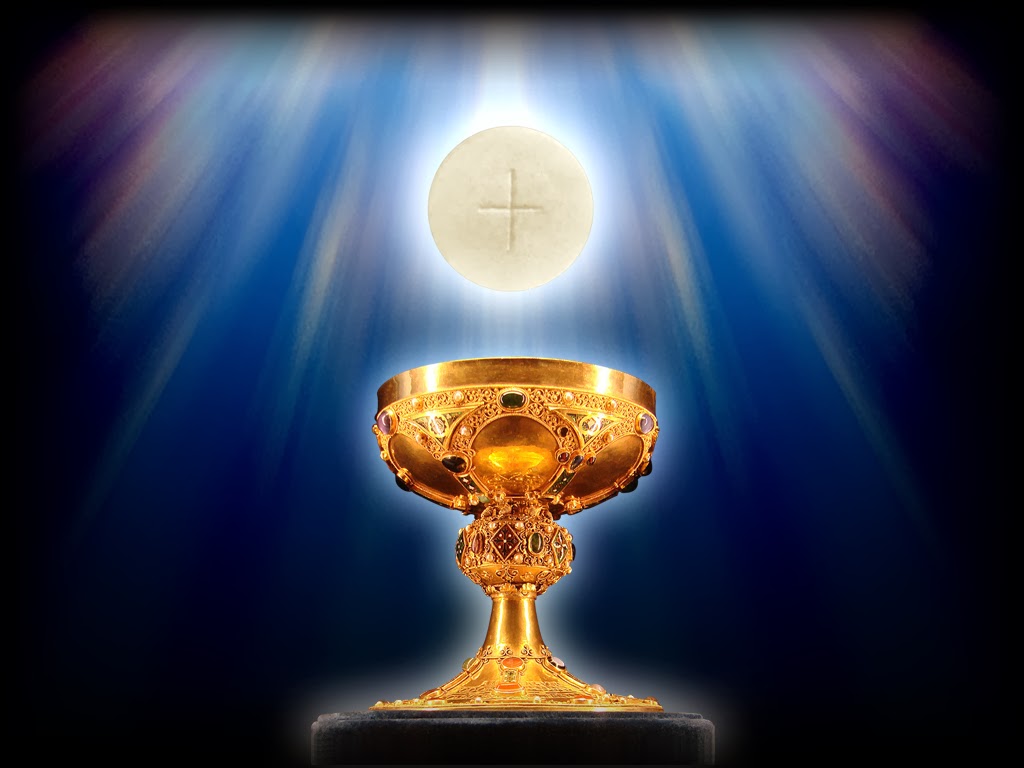
A Priests main role is to administer the Sacraments, which is a free gift that Jesus has given to His Church through His Death, Resurrection and Ascension into Heaven. 

The Sacrament of Reconciliation is such a wonderful and powerful gift.  Every time we leave the confessional box we should be jumping and shouting for joy.  Rejoicing that our sins have been wiped away, and our souls have returned to the same state of purity as from our own Baptism.  God has purified us with his merciful loving kindness, making us whiter than snow. 

Please use this wonderful free gift frequently, as it is one of the Sacraments of the Church.  God seeks out the sinner and calls us by name.  Let us respond faithfully and rejoice in this happiness with God and all his Angels and Saints who are celebrating in the Kingdom of Heaven.  

On this fourth Sunday of Lent, it is a day to stop and reflect on the joys of Easter, Jesus being the ‘Light of the World’, gaining ‘New Life’ with Him at His Resurrection.  Our Lenten colour of purple has been lightened with the Easter colour of White.  So, if we liturgically mix the two colours together, we get today’s colour of Rose. 

The only other day in the church’s calendar where we wear Rose is on the 3rd Sunday of Advent, because we are ‘Joyful’ once again, as we are nearing the big festive celebrations.

Jesus is our Salvation.  He is the source of our light and our hope.  He has made us beacons of His wonderful Divine light.  A light that has been entrusted to us to be kept burning brightly, setting an example for others to follow, as we lead good Christian lives.

This weekend, as we all know is Mothering Sunday.  A time for Mothers and Grandmothers to relax from their duties and to get pampered.  So, Fathers, Sons and Daughters, get your aprons on and prepare the evening meal, with a nice bottle of wine.  Mothers, may you enjoy the rest of the evening that still remains, with your feet up and a glass in hand.    

Today is definitely a day for rejoicing, because like our Mothers who have unconditional love for their children, Our Heavenly Father loves us unconditionally too, a love that lasts for eternity.

Homily – Luke 13:1-9

During this week, we have been very lucky with the weather, it’s been warm and sunny.  Spring is definitely here.  Signs of life from plants to trees, even to the young lambs running around in the fields.  When we see leaves beginning to sprout, we know summer fruit is near.

In the Gospel we hear the parable of the fig tree.  A theme talking about repentance.  Since we hear the people and leaders being urged to repent before they wither and die like the fig tree.  However, Jesus wants the fig tree to have one last chance, allowing the gardener to fertilise it, in hope of it bearing fruit in the future.  This parable shows us that there is still time available for a conversion of heart and saying sorry, asking for our sins to be forgiven through the Sacrament of Penance.  However, time is not endless, there will come a point when the patient gardener will say, that’s enough, I’ll have to cut you down. 

This happened with the Israelites, when they spent 40 years travelling the wilderness.  After they were freed from the Egyptians, they were heading to the Promise Land that God gave to Moses and the Jewish people, this was technically only a few weeks journey away.  However, it took them 40 years, because the Jewish people, lost sight of God’s love, they turned their backs on him, by moulding a Golden Calf to worship.  God said, that this generation will not enter the promise land, so they spent the next 40 years, waiting for that generation to die out in the desert. 

However, we know that God, is all loving, patient and kind.  A love that wills the good of the other, because that is what God is.  He doesn’t go in and out of love, he doesn’t change his mind, he doesn’t love some and not to others.  God indeed like the sun shines on the good and bad alike.  In the words of Jesus:  No act of ours can possibly make him stop loving us.  We are unique in God eyes, we are priceless, there is only one of us … (thank goodness), and we are made perfect, in the image and likeness of God.  Making God the best of parents.

However, we have also free will, a precious gift from God.  We are definitely not God’s puppets, we have the free will to say yes and no to anything we like, even to God’s love.  If we turn towards him in love and repentance, then we open like a flower, radiating God’s love and divine light in our inmost being.

However, time is running out, we do not know the time or the hour, when Jesus will call us by name to depart from this world, or when Jesus will descend on the clouds at his second coming.  The ‘End of the ages’, refers to the age that was opened by Jesus’ Resurrection, which is the final times. 

So, let us use the rest of our Lenten season to renew our Lenten promises, and to turn to him in love and mercy.  We may ask him to release us from the heavy burdens that we carry, because often the Lord does release the pressure from our minds, but all too often his answer is to give us the strength we need to endure the suffering and to turn it into a sacrifice, that is acceptable to the Lord for the service of others. 

St Paul says:  ‘I rejoice in my sufferings for your sake, and in my flesh I am filling up what is lacking in the afflictions of Christ, on behalf of his body, which is the Church.’ 

God does not allow us to be tempted beyond our strength, so when we are tempted, we should turn to God Our Father in prayer, with Mary and Jesus at our side.  Asking for his protection against the evil one, and we will be heard, and our prayers answered.  

Homily – Luke 9:28-36

In the first reading from Genesis, we hear the new covenant being made between God and Abraham, where his descendants will be as numerous as the stars in the night sky. 

Like Abraham we are also called to journey into the unknown, to test our limits, to go that extra mile, and to respond to God’s call at all times.  In our moments of crisis or when life is clouded with despair, it is important to keep on trusting in God, in his Word.  As Christians we walk by faith, since Jesus is the ‘Word of God’, and he is all mighty and powerful, he will always walk along side us. 

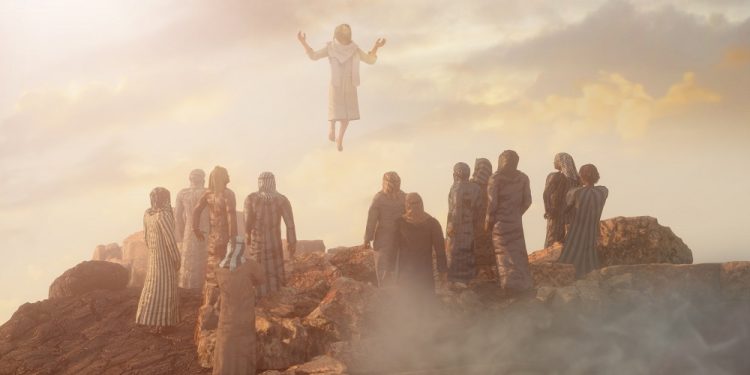
In the gospel, we hear the story of that amazing event in the Lord’s life of the Transfiguration.  I had the privilege to visit Mount Tabor, while on pilgrimage at Seminary college.  I had time to contemplated the bible scene in my head, which gave me an overwhelming and humbling experience.  We hear that the three apostles were also completely overwhelmed when they saw Christ, in all his Divine Glory.

This event came soon after the announcement from Jesus, about his coming Passion and Death.  This Transfiguration is the visible anticipation of what Jesus had revealed to the apostles about his Resurrection and future Glory.  For a brief moment, three of his closest apostles, had the privilege to see Jesus as he really is, human and divine, full of Power and Glory.  It was to establish beyond all doubt that Jesus was the Son of God. 

It was a blessing for these three Apostles, because it gave them the steadfastness of faith they needed, to accompany the Lord through the darkness of Jesus’ arrest at Gethsemane and the humiliation of his Passion and Death.

A cloud covered them and a voice from Heaven saying “This is my beloved Son.  Listen to him.” Clouds have a profound significance for the people of Israel, since it was the means by which God visibly manifested his presence during their wanderings in the desert.  The cloud symbolises the Mystery of God, and it is also a sign of the Holy Spirit, who overshadowed the Virgin Mary at the Annunciation, and dwells in the hearts of all believers.  At the Transfiguration the cloud reveals that God’s new and eternal dwelling place, where heaven and earth meet, is Jesus Christ himself.

For us today and during this Lenten season, we should not be spectators of this wonderful event of the Transfiguration, but like the apostles, we should be encouraged to climb the mountain and to reflect upon his message. 

It is only through his Passion and Death that Christ came to the Glory of his Resurrection.  If he is to transfigure our sinful bodies, to make them into copies of his own glorious body, then the road we should take, is also one of suffering, travelling with Christ, along our own pilgrimage journey here on earth. 

Lent provides us with an excellent opportunity, through prayer, fasting and almsgiving, to put our hearts in order.  It teaches us that the road to heaven is by the sweat of our brow, through our daily frustrations and disappointments.  However, by working through these problems we are able to meet people with kindness, with love and with compassion. 

May this season, help us to overcome our weakness’ and to grow in maturity, through God’s grace and patience.  Because nothing in this world, that is worthwhile or worth waiting for, is ever simple or straightforward. 

May we all grow brighter, the more we turn towards God, since we are created in his image and likeness, furthermore we are meant to reflect his Glory, through our Baptism, being beacons of God’s divine light, for the whole world to see.

Then one day, when we are finally called from this life, we may have the greatest of all privileges to see the Lord’s Glory, by seeing God, face to face, with all the Angels and Saints in his Heavenly Kingdom.

Homily – Luke 4:1-13

APPOINTED TO BE READ AT ALL PUBLIC MASSES IN ALL CHURCHES AND CHAPELS IN THE DIOCESE OF LANCASTER ON THE WEEKEND OF 8-9 March 2025

Pastoral Letter First Sunday of Lent 2025.

My dear people,

With the placing of the blessed ash on our foreheads we have begun once more the Holy Season of Lent, remembering that we are dust, and into dust we will one day return. We may be familiar with Lent, with its penances, its call to more heartfelt prayer and its call to share more generously with the poor, but this is a new Lent for us all. We are asked not merely to repeat what we have done before, but to go deeper into the life of Christ. The world has changed over these past twelve months, not all for the better, and we too have all grown older.

Let us take a moment to pray for our Holy Father, Pope Francis, as he continues to struggle with poor health and the frailty of his years. He still leads us. His example is a rich lesson in Christian discipleship.

Above all, it is Jesus Himself who claims our attention, it always is. As we see Him head off alone into the wild, inhospitable places, let us remember with humility that He does this for each of us. In a true sense, He takes each of us with Him. It is for our good that He does battle with the devil. He overcame His temptations out of hope that we would each come to realise not so much what He has done, but why He has done it.

Am I worth this? After all the good I have wasted, the indifference I have shown, the selfishness that has pervaded my life – and my prayers – am I worth this? His answer is, yes, you are.

What for me would be a successful Lent? Is it to simply keep my resolutions to do without something I enjoy, to spend more time in prayer, to ‘be nicer to others’? Surely what will count is not what I achieve in these disciplines – worthy though they are – but to comprehend a little more deeply why it is worth bothering.

There is much that is wrong in the world. I don’t need to go into any detail – you didn’t come to Mass to dwell on problems. You are already all too well aware of them. Nor do you need reminding that there is much wrong with each of us too. We have others to remind us of that fact!

We come to be reminded of Grace, of the love God has for even the most persistent, wayward of His children. We come to be reminded that there is more to us than we

know, and that the Good Lord has not lost sight of His little ones, nor has He lost Hope that we may yet reach with Him the place of safety, of true and lasting peace, in the arms of the loving Father. He will not allow the tempter to convince Him, or us, that we are a lost cause. But see what it cost Him.

In the wilderness He refused to perform miracles that might have made life easier for Himself, given Him just a little comfort (no one was watching, no one would know).

Later, after His return to society, He would perform miracles, but the purpose of all His miracles was not to solve people’s problems or even to relieve their misfortunes. The true purpose of each miracle was that people might know who He is, and to give them hope, that neither this life, nor their own achievements – so fleeting- could ever give.

I address you as people of Faith, as people who are open to receiving Grace. Imperfect as we are, in this Jubilee year, and also marking the Centenary of the Diocese, we are given new hope that God’s will may be done, even in us. We leave Him to be the judge of what is real success.

I reflect on how Mary must have been aware of what her son was doing when He seemed to turn His back on society. She understood as no one else could, and was inflicted with constant, daily reminders of Him by His very absence from the home He had until this moment, shared with her. Simeon’s words must have haunted each day as she remembered – ‘and a sword shall pierce your own soul too.’ This is the way of the cross, but can it also be the way to heaven?

May this Season of Lent refresh our Faith in a way that has not happened for us before. May we think first of what He has done for us, not what we can do for Him – that will follow in due course. May we be drawn to the beautiful Sacrament of penance where we meet the Lord in a kind of desolation, a true wilderness, and yet experience an enchanting intimacy with Jesus that changes the burden of stones into the taste of freshly baked bread!

There is a way of living our Faith that saps our strength. Jesus shows us another way, a way that feeds us and gives us strength. Let us set ourselves to follow His way, confident that it will lead us to Easter and the tomb, with the stone rolled away.

With my blessing,

+ Rt Rev Paul Swarbrick

Bishop of Lancaster

Homily – Matthew 6:1-6, 16-18

Where has the time gone, one minute it was Christmas, and now we are here at Ash Wednesday, starting our Lenten observances.  The big question is what will happen next week, will we have already failed at the first hurdle, realising how on earth am I going to last for 40 days, if I can’t do the first week.  As the saying goes: ‘at first you don’t succeed, try, try again.’  When we do falter on our Lenten goals, place a line under our failings and start afresh the next day.

Prayer is important, to give us strength in order to endure until Easter.  Prayer, fasting and almsgiving are our three important key words for this season.

We have heard in the Gospel, that our left hand must not know what our right is doing.  This means, all our almsgiving to charity must be done in secret.  We should not be boasting to our friends about how much we have given.  Because all that is done in secret, Our Heavenly Father will reward you.

When we pray, it is important to go somewhere peaceful, so we can ask the Lord for help and guidance.  Saying additional prayers, like the Divine Office, or maybe you want to try a daily Rosary.  Whatever you decide, you will feel the better for it, and all that is done in secret, Our Heavenly Father will reward you.

When you fast and give something up, it is normally something that we really enjoy, for me it will be Chinese takeaways, sweets and deserts, we should not be gloomy, but be happy and know what little food we do eat, Our Heavenly Father will reward you.

Today we put ashes on our foreheads, as a sign that we are sinners, and that we are truly sorry for all the hurt we have caused to others.  This season is a time to correct our faults, purify our hearts, through the Sacrament of Penance, and grow in holiness.

There are many accounts in the Old Testament of people and prophets placing ashes on their heads as a sign of saying sorry.  The prophet Daniel clothed himself in sackcloth and ashes as a sign of repentance.

The sons of Israel assembled for fasting in sackcloth and placed dirt upon themselves.

The people of Nineveh and even the King himself was clothed in sackcloth and sat in ashes when they tried to return to God.

In the book of Genesis, God created Adam from the dust of the earth, and when we die, our bodies will become dust once again.  We cannot take anything with us into heaven, only our immortal souls that will last forever.   

So, let us today prepare ourselves for 40 days and nights, by asking the Lord to give us His grace, strength and stamina to complete the race that we are starting, so we can celebrate as one community in exaltation at end of our Lenten journey, as we rejoice at the Lord’s Resurrection this Eastertide.

Homily – Luke 6:39-45

Today we conclude Jesus’ ‘Sermon on the Plain’, that was divided up into three parts.  The beatitudes and woes, commands on love and mercy, and the teaching on the two ways.  Now, Jesus is setting before his listeners the choice of two ways, either follow him as a teacher, or follow all the rest.

The gospel gives us an image of the splinter in our brother’s eye and the log in our own.  This teaches us the lesson about not judging others of their faults and failings.  It drawers to our attention, a number of practical points, on how to live out good and holy Christian lives.  Following Jesus is a serious occupation and leaves no room for comfortable complacency.  Our words and conversations we use each day, are a true reflection of our own spiritual health.  When we open our lips, we should be intent on praising God and refraining from being hurtful towards our neighbour.

As you know, this is easier said that done.  Many of us, maybe even all of us, including myself, like to listen in and contribute in a good gossip story about someone we know.  Our ears pick up, as we try to memorise every little detail, encase we need to re-tell the story to somebody else.

Deep down we know it to be wrong and sinful, but strangely it hardly gets mentioned in Confession.      

We are also being asked to forgive the faults of others who have sinned against us.  We say the words in the ‘Our Father’ all the time, ‘Give us this day our daily bread, and forgive us our trespasses, as we forgive those who trespass against us; and lead us not into temptation, but deliver us from evil.’  But how many people still hold grudges against people especially family members, or unwilling to let go of arguments they have had in past years, maybe even 5, 10, or 50 years ago.  I am sure many people hold onto these grudges until the day they died.  So, sad that no one had the courage or the strength to say ‘sorry, I forgive you’, before it was too late.  I guess the words ‘sorry & forgive’, are probably two of the hardest words to meaningfully say, that comes straight from the heart. 

Socrates the Philosopher, once said, that nature has given us two ears, two eyes and only one tongue, so that we should hear more than we can speak, and if we cannot say something good about another person, then it is better to remain silent.

It is lovely when occasionally we meet someone and have a great conversation, who isn’t interested in gossip, but only speaks positively about someone and their good habits.

In the Old Testament it teachings, that we should do what God has commanded us.  In the New Testament Jesus says:  ‘Do what I command’.  The Teaching of the Church is always through the authority of Jesus Christ himself. 

The focus on Jesus’ teachings in these last concluding verses of the Gospel passage, reminds us that the ‘Sermon on the Plain’, is more than, a collection of moral teachings.  It involves a way of discipleship in obedience to a divine teacher, allowing us to imitate and become more like him. 

The lesson today is showing us how dangerous it is to pass judgement towards others.  Throughout Jesus’ ministry he used words to heal, restore and to bring back life, joy and hope to the faithful people.  Our striving to imitate the Lord and produce good fruits is seriously hampered when we allow ourselves to be judgemental, since it takes away control, moving us away from the Lord. 

As Christians we need to understand, that it is only through God’s grace and love, that we can overcome our shortcomings in this area of weakness. 

As we approach Lent, may we find time to ponder and reflect on opportunities to ‘do extra’ or maybe ‘to give things up’. 

If you find that gossiping or being judgemental towards others is controlling your life, then cut it out, as we continue to aim high, being good and worthy disciples in the Lord’s eyes, through acts of penance, fasting and almsgiving in this approaching Lenten season.

Homily – Luke 6:27-38

Today we continue with Jesus’ ‘Sermon on the Plain’ teachings, which can be divided up into three parts.  The beatitudes and woes, commands on love and mercy, and the teaching on the two ways.  Last week if you can remember, was the beatitudes and woes, and now we are covering part two, the commands on love and mercy. 

Many Jewish people, expected that the coming of the ‘Messiah’ would lead to a revolt against the Roman authorities, in order to win back their freedom. However, as we can see, Jesus’ teachings, (who is the ‘Messiah’) are completely the opposite to what the Jewish people expected.

Jesus asks his disciples to pray for those who persecute you.  What a challenge this is for most people.  Normally, our enemies are the last people we would want to pray for.  For the Jewish people, ‘those who persecute you’ were foremost the Romans.  The very people who occupy their land, tax them heavily, and treat them with violence and injustice.  However, it is this radical way of love and mercy, Jesus expects of us, in order for us, to be called ‘Children of God’.

We need to be perfect just as our heavenly Father is perfect.  I know what you are all thinking, being perfect is impossible, we are only human after all, and we get tempted to sin all the time.  Is Jesus setting the bar far too high, beyond our reach?  I bet these were also the same thoughts of the Jewish people, as they listened to Jesus’ teachings.  However, Jesus is challenging us to a deeper understanding of the commandments and to go beyond them. 

Jesus tells his disciples to offer no resistance to the person who is doing evil against them.  ‘To the one strikes you on the cheek, offer the other also.’  A slap on the right cheek would have involved a back-handed slap from your enemy.  In the Mishnah documents which contains a list of Jewish oral laws, such a slap was regarded far more insulting than just a normal one, it involved a double penalty of insult.  Yet Jesus challenges his disciples to endure this double insult for a second time, by offering the other cheek as well.

If one of you takes away your cloak, do not withhold your tunic either.’  Jewish men typically wore two garments: an inner tunic, and an outer heavier cloak.  In the O.T one could be sued for his outer cloak, but never for his inner tunic, which was used to keep him warm and to keep his dignity.  But Jesus is saying if someone takes your cloak, then offer them your tunic as well.

Such radical love for your oppressors is what will make us God’s children, as we take on the characteristics of our Heavenly Father.  Jesus now calls his disciples to be perfect and Holy, showing love and mercy towards others, before His Heavenly Father.

The love to which Jesus calls us, is beyond the capacity of our fallen human nature, but by the free gift of the Holy Spirit received through faith and the Sacraments of the Church, this makes it possible. 

Let God’s Divine Wisdom be with us today, giving us the courage to turn the other cheek, and the ability to go beyond the Ten Commandments with Faith, Love and Charity. 

May we imitate the Saints, asking for their intercession as we seek out to lead good and holy lives, because we are members of God’s Holy family here on earth.  

Let us remind ourselves what the Gospel is asking us to do: 

“Be merciful, even as your Father is merciful.  Judge not, and you will not be judged.  Condemn not, and you will not be condemned; forgive, and you will be forgiven.”

LENT 2024 – Part Five

‘an ocean of grace is at our disposal.’

Part five of my Lenten book extracts.
‘Love Unknown’ by Sr Rachel Gregory OCD (Ruth Burrows)

Sr Rachel says: “Our faith must be a rock-like certainty that God, in Christ, has given us everything, guaranteed an inheritance that cannot be spoiled and can never pass away. An ocean of grace is always at our disposal. Our lives should be thanksgiving, and this will mean a realisation that we need not rely so much on ourselves but must look towards him for guidance and strength. We shall cease to worry as to the outcome of our effort, be it success or failure.  Our works will be the works of Christ living in us and acting through us. Firm belief in what God is and has done for us, the riches that are there for us, enables us to stand tall and hold our heads high, whatever storms swirl around our defenceless head.”

God’s grace is unlimited, like Sr Rachel says: ‘an ocean of grace is at our disposal.’
If you spend time watching the waves on the coast, imagine each one of us as a pebble on the shore and watch the sea wash over it. This is like God’s grace in our lives constantly washing over us, giving us strength and guidance.
Fr Philip.

LENT 2024

Part four of my Lenten book extracts.
‘Love Unknown’ by Sr Rachel Gregory OCD (Ruth Burrows)

Sr Rachel says: “Expectancy rose high: was John the Baptist himself the Messiah? John denied it: “I am not the Messiah”; he was nothing but a voice “crying in the wilderness”, urging the people to prepare a way for the Lord.
Can you imagine the excitement, the thrilling expectancy by the news, of a man, bearing all the marks of a prophet, prophesying the coming of the Messiah and his day of Judgement?
His call was for repentance and the acceptance of a baptism in the Jordan as a symbol of repentance. From all parts of the country the famished people flocked to him, captivated by his appearance and his authoritative words. Willingly, they consented to be plunged into the purifying waters.”

Let us find time this Lenten season to purify our hearts through the Sacrament of Reconciliation, wiping our souls clean once again, to prepare ourselves for the glory of Easter.
Fr Philip.