Nativity of Saint John the Baptist – 24 June

Studio_20180624_164906

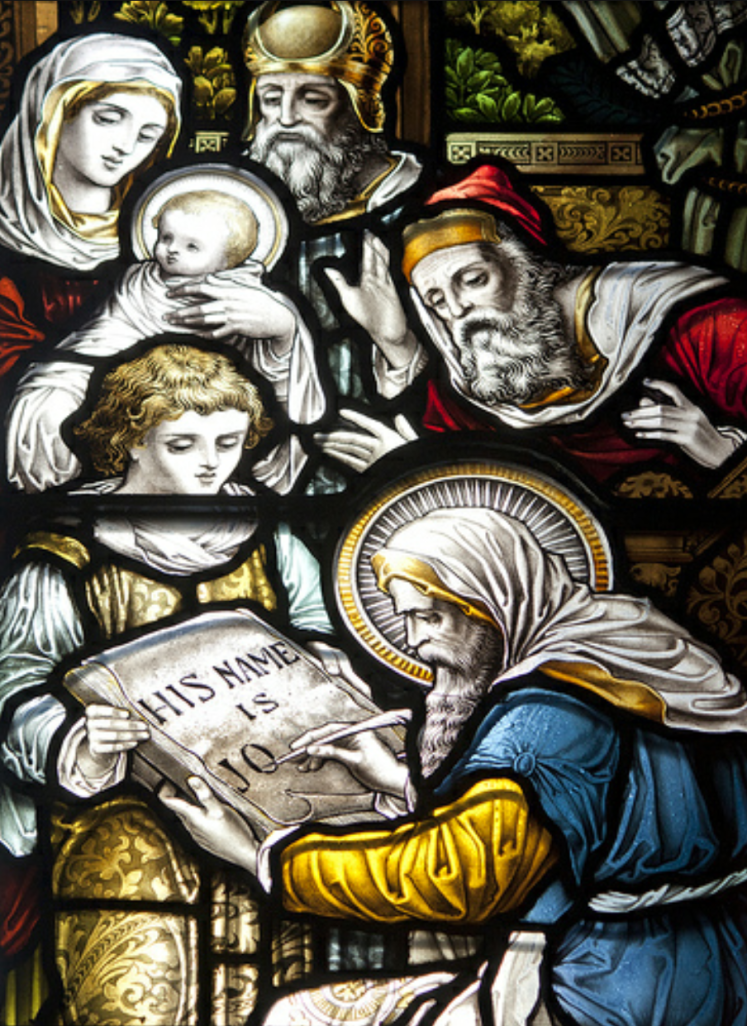
John’s parents were Zachary and Elizabeth. Elizabeth was an elderly cousin of Mary, the mother of Jesus. The archangel Gabriel appeared to Zachary and told him that Elizabeth would have a son, whom he should name John. Zachary doubted the angel, because he and his wife were too old to have children. To show God’s power, the angel told Zachary that he would not be able to speak until everything had happened as the Lord had promised.

Later, Gabriel visited Mary and told her that she would become the mother of the Savior. Gabriel also told Mary that Elizabeth was soon to be a mother. Mary went to visit and help her cousin. Then Elizabeth had her baby. Zachary named him John, as the angel had requested. At that moment, Zachary was able to speak again, and he began praising God.

When the neighbors of Zachary and Elizabeth witnessed this, they began to ask each other, “What will this child become?” They knew that God was calling him to something great. John did have a special calling. He was going to prepare the way for the coming of Jesus.

As a young man, John went into the desert to prepare himself for his mission with silence, prayer and penance. Soon crowds started to come to him. They realized he was a holy man. John warned the people to be sorry for their sins. He told them to change their lives, and he gave them the baptism of repentance. That is why he is called John the Baptist. One day, Jesus himself came to John. He wanted to be baptized with John’s baptism to begin making up for our sins. On that day, John told the crowds that Jesus was the Messiah, the one they had been waiting for. He told them and everyone else to follow Jesus. John said, “Jesus must become more and more important and I must become less and less important.” He said that he was not even worthy to loosen the strap of Jesus’ sandal.

St. John the Baptist was a great prophet. He pointed Jesus out and prepared people to follow Jesus. Let’s listen to St. John’s advice and allow Jesus to become more and more important in our lives.

St. John the Baptist pray for us.

St. John Fisher & St. Thomas More – 22 June

St More and Fisher

St. John Fisher

John Fisher was born in Yorkshire, England, in 1469. He was educated at Cambridge University and became a priest. Father John taught at Cambridge, too. He was a wonderful teacher and helped the students grow in their knowledge of the Catholic faith. But there was a lot of confusion about religion in those days. Father John helped people to know the truth about God and the Catholic Church.

In 1504, he became the bishop of Rochester, England. It was a poor diocese. Bishop John was to remain its shepherd for thirty years. Besides being the bishop of Rochester, he was the head of Cambridge University. Bishop John also heard the confessions of King Henry VIII’s mother.

Bishop John had many friends, including the famous scholar, Erasmus, and the great Sir Thomas More. Bishop John and Thomas More would have never guessed that one day they would be sharing a feast day on the calendar of saints!

King Henry VIII became angry with Bishop John for insisting that his marriage to Queen Catherine was true. Then Henry VIII divorced Catherine and married Anne Boleyn in a civil ceremony. The king demanded that people sign an oath of loyalty to him. He made himself head of the Church in England. Bishop John would not sign the oath. He was arrested in 1534 and sent to the Tower of London. The tower was damp and the treatment was harsh. Bishop John suffered very much, but he would not betray his faith. Even though there were no televisions and radios back then, people found out about what Bishop John, Sir Thomas More and others like them were going through. They were shocked and saddened. On 12th June 1535, Pope Paul III named Bishop John a cardinal. He hoped this would make King Henry set him free. But the king only became more angry and mean. After ten months in prison, Cardinal John was beheaded on 22nd June 1535.

Along with his friend, Sir Thomas More, Cardinal John Fisher was proclaimed a saint by Pope Pius XI in 1935.
Sometimes it’s much easier to go along with the crowd rather than stand up for the truth. But the story of St. John shows that God will always give us the strength we need to do the right thing.

St. John Fisher pray for us.

St. Thomas More

Sir Thomas More was a famous lawyer and writer. He was born in London in 1478. His father had been a lawyer, too, and a judge. Thomas was always grateful to his father for being so loving and for not spoiling him.

Thomas’ first wife, Jane Colt, died when she was very young. Thomas was left with four small children. He got married again to a widow named Alice Middleton. She was a good but simple woman who could not even read or write, even though Thomas tried to teach her. Thomas made home life enjoyable for his family because he was so pleasant to be with. During meals, one of the children would read from the Bible. Then they would have fun and tell jokes. Thomas often invited poorer neighbours to come to dinner, too. He always helped the poor as much as he could. He loved to delight his guests with surprises. He even kept some playful monkeys as pets. But few people could have imagined how deeply religious Thomas really was. He prayed long hours into the night and performed penances, too. He was very much aware that he needed the grace and help of God to live as a true Christian.

Thomas held important government positions in England. For three years he was Lord Chancellor, another name for prime minister. King Henry VIII used to put his arm around Thomas’ shoulder because they were such good friends. Although Thomas was most loyal to the king, he was loyal to God first of all. In fact, when the king tried to make him disobey God’s law, Thomas refused. King Henry wanted to divorce his wife and marry another woman. However, the pope could not give permission, since that is against God’s law. Henry was stubborn and at last he left the Church. He wanted everyone to recognize him as the head of the Church in England. Thomas could not do that. He chose to remain faithful to the Catholic faith and to God. He was condemned to death for that, yet he forgave his judges. Thomas even said that he hoped he would see them in heaven. He really meant it, too.

At the scaffold, where he was to die, Thomas declared himself “the king’s good servant, but God’s first.” He kissed his executioner on the cheek. Then he joked, saying that his beard should not be cut off because it had not done anything wrong. Sir Thomas More was martyred on Tuesday, 6th July 1535, at the age of 57. Sir Thomas More was proclaimed a saint by Pope Pius XI in 1935, together with his friend, Bishop John Fisher. He is the patron saint of lawyers.

St. Thomas risked losing everything: his fortune, his position, his own security and even the safety of his family. But he held fast to his Catholic faith, even to the point of sacrificing his life. Like his friend St. John, Thomas was able to remain strong because he prayed and trusted in God. Let’s try to be like him.

St. Thomas More pray for us.

The Immaculate Heart of Mary – 20 June

A sermon of St Laurence Justinian : ‘Mary kept all these things in her heart’

As Mary pondered all she had learned from reading and from what she had heard and seen, how greatly did she increase in faith, advance in merit and become enlightened with wisdom! More and more she was consumed with burning love. Drawing life and inspiration from the heavenly mysteries which were being unlocked for her, she was filled with joy; she became alive with the Spirit, she was guided towards God and was kept humble in herself. The effects of divine grace are such indeed that they raise one from the depths to the heights, and transform one in an ever greater degree of glory. Entirely blessed was the mind of the Virgin which, through the direction of the Spirit dwelling in her, ever obeyed the command of the Word of God in all things. She was governed not by her own judgement or opinions, but she outwardly performed through her body whatever wisdom had indicated inwardly to her faith. It was surely fitting that divine Wisdom, which had built the house of the Church for its abode, should use most holy Mary as its instrument, where the observance of the law, purification of the heart, the doctrine of humility and spiritual offering were concerned.

Imitate her, O faithful soul. Enter into the temple of your heart that you may be purified in spirit and cleansed of the pollution of your sins. In everything we do God considers our disposition rather than our actions. And so, whether we retire mentally to God in earnest contemplation and remain at rest or whether we are intent on being of service to those around us with good works and worthy undertakings, let our object be that we are motivated only by love of Christ. So the really acceptable offering of purification of the spirit is that which is rendered not in a man-made temple but in the temple of the heart, where Christ the Lord is pleased to enter.

Corpus Christi – Body and Blood of Christ – 14 June.

Gospel reading – John 6:51-58
Jesus said to the crowd:
‘I am the living bread which has come down from heaven.
Anyone who eats this bread will live for ever;
and the bread that I shall give is my flesh,
for the life of the world.’
Then the Jews started arguing with one another: ‘How can this man give us his flesh to eat?’ they said. Jesus replied:
‘I tell you most solemnly,
if you do not eat the flesh of the Son of Man and drink his blood,
you will not have life in you.
Anyone who does eat my flesh and drink my blood
has eternal life,
and I shall raise him up on the last day.
For my flesh is real food
and my blood is real drink.
He who eats my flesh and drinks my blood
lives in me
and I live in him.
As I, who am sent by the living Father,
myself draw life from the Father,
so whoever eats me will draw life from me.
This is the bread come down from heaven;
not like the bread our ancestors ate:
they are dead,
but anyone who eats this bread will live for ever.’

St. Thomas Aquinas – “On the feast of Corpus Christi”.
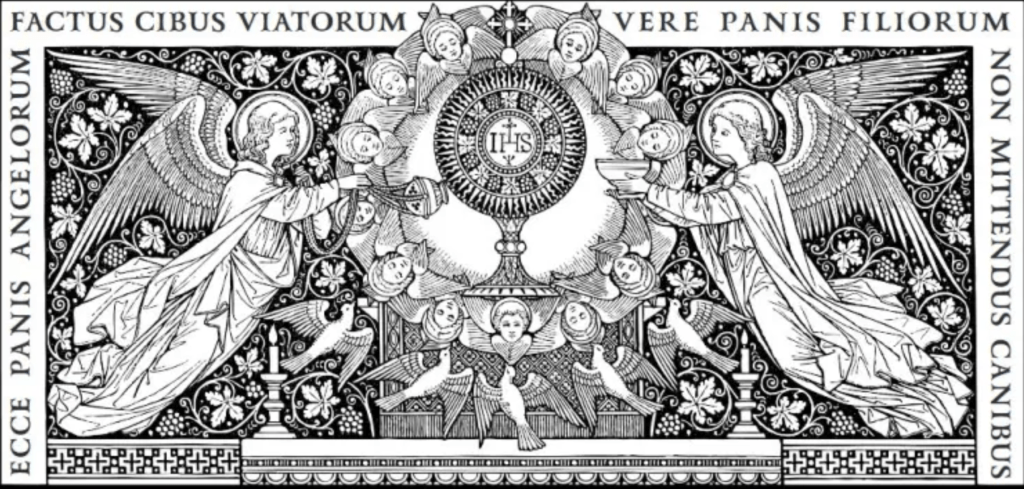
Since it was the will of God’s only-begotten Son that men should share in his divinity, he assumed our nature in order that by becoming man he might make men gods. Moreover, when he took our flesh he dedicated the whole of its substance to our salvation. He offered his body to God the Father on the altar of the cross as a sacrifice for our reconciliation. He shed his blood for our ransom and purification, so that we might be redeemed from our wretched state of bondage and cleansed from all sin. But to ensure that the memory of so great a gift would abide with us for ever, he left his body as food and his blood as drink for the faithful to consume in the form of bread and wine.
    O precious and wonderful banquet, that brings us salvation and contains all sweetness! Could anything be of more intrinsic value? Under the old law it was the flesh of calves and goats that was offered, but here Christ himself, the true God, is set before us as our food. What could be more wonderful than this? No other sacrament has greater healing power; through it sins are purged away, virtues are increased, and the soul is enriched with an abundance of every spiritual gift. It is offered in the Church for the living and the dead, so that what was instituted for the salvation of all may be for the benefit of all. Yet, in the end, no one can fully express the sweetness of this sacrament, in which spiritual delight is tasted at its very source, and in which we renew the memory of that surpassing love for us which Christ revealed in his passion.
    It was to impress the vastness of this love more firmly upon the hearts of the faithful that our Lord instituted this sacrament at the Last Supper. As he was on the point of leaving the world to go to the Father, after celebrating the Passover with his disciples, he left it as a perpetual memorial of his passion. It was the fulfilment of ancient figures and the greatest of all his miracles, while for those who were to experience the sorrow of his departure, it was destined to be a unique and abiding consolation.

St. Anthony of Padua – 13 June

This very popular saint was born in Lisbon, Portugal, in 1195. His baptismal name was Ferdinand. Ferdinand was taught by the Augustinian friars. When he was old enough, he joined their order. At the age of twenty-five, Ferdinand’s life took an exciting turn. He heard about some Franciscans who had been martyred by the Moors in Morocco. These friars were St. Berard and his companions. (We celebrate their feast on January 16.) Ferdinand was so impressed with the courage of the martyrs that he got permission to transfer from the Augustinian Order to the Franciscan Order. This order was very new. St. Francis, its founder, was still alive. Ferdinand took the new name “Anthony.” He went off to Africa to preach about Jesus to the Moors. But he soon became so sick that his superiors called him back to Portugal. On the way there, however, his ship was caught in a terrible storm. It had to land in Italy instead of returning to Portugal.

No one in his new religious order realized how brilliant and talented Anthony was. He never spoke about himself or how much he knew. So the Franciscan superiors assigned him to a quiet friary in Italy. There he washed pots and pans. One day Anthony was unexpectedly asked to preach in front of a crowd of priests and important people. Everyone was surprised at the wonderful things he said about God. From then on, until he died nine years later, Anthony was sent to preach all over Italy. He was so popular that people even closed their stores to go to hear him.

After 1226, Anthony remained in the city of Padua, Italy. There his preaching completely changed the lives of the people. He helped the poor and worked to keep people who couldn’t pay their bills from being thrown into prison. His sermons helped people to not only understand their faith better, but to put it into practice, too.

Anthony died at Arcella, near Padua, Italy, on June 13, 1231. He was only thirty-six years old. Pope Gregory IX proclaimed him a saint just one year later.

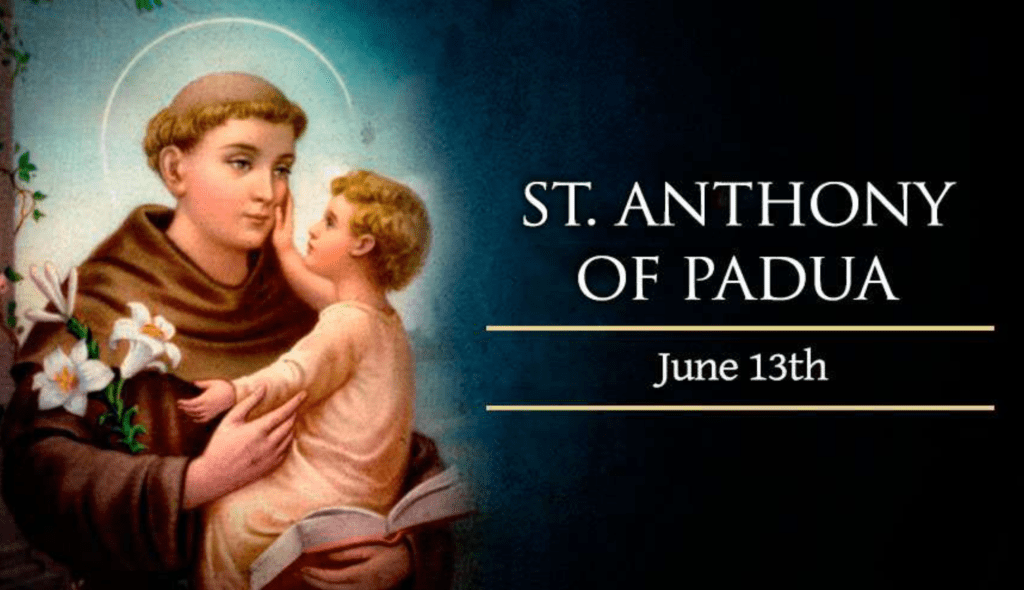
Many people ask St. Anthony to pray to God for them when they need help. And many miracles have taken place through his intercession. Statues of St. Anthony show him holding the Infant Jesus because Jesus once appeared to him as a baby. Other pictures show St. Anthony holding a Bible. This is because he knew, loved and preached the Word of God so well. In fact, St. Anthony knew Scripture so well that Pope Pius XII proclaimed him the “Evangelical Doctor,” or Doctor of Sacred Scripture.

St. Barnabas – 11th June

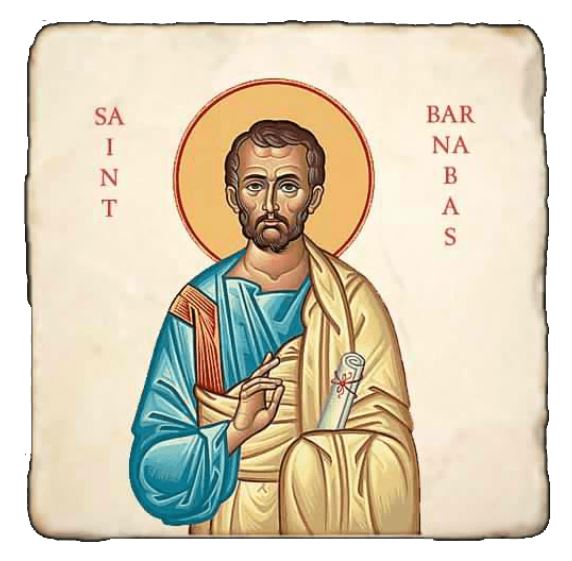
st barnabas

Although he was not one of the original twelve apostles, Barnabas is called an apostle by St. Luke in the Acts of the Apostles. This is because, like Paul the apostle, Barnabas received a special mission from God. He was a Jew born on the island of Cyprus. His name was Joseph, but the apostles changed it to Barnabas. This name means “son of consolation.”

As soon as he became a Christian, Barnabas sold all he owned and gave the money to the apostles. He was a good, kind–hearted man. He was full of enthusiasm to share his belief in and love for Jesus. Barnabas was sent to the city of Antioch to preach the Gospel. Antioch was the third largest city in the Roman Empire. It was where the followers of Jesus were first called Christians. Barnabas realised that he needed help. He thought of Paul of Tarsus, a former persecutor of the Christians who had been converted when Jesus appeared to him. It was Barnabas who convinced St. Peter and the Christian community that Paul really loved Jesus and wanted to spread his Gospel. Barnabas asked Paul to come and work with him. Barnabas was a humble person. He was not afraid of sharing responsibility and power. He knew that Paul, too, had a great gift to give, and he wanted him to have the chance to share that gift.

Sometime later, the Holy Spirit chose Paul and Barnabas for a special assignment. Not long afterward, the two apostles set off on a daring missionary journey. They had many sufferings to bear and often risked their lives. Despite the hardships, their preaching won many people to Jesus and his Church.

Later St. Barnabas went on another missionary journey, this time with his relative, John Mark. They went to Barnabas’ own country of Cyprus. So many people became believers through his preaching that Barnabas is called the apostle of Cyprus. It is commonly believed that this great saint was stoned to death in the year 61.

St. Barnabas received a name that symbolised what he was—a good person who encouraged others to love the Lord. Let’s always try to cheer up those who are sad or lonely. Let’s encourage others to love God by the good example we give.
St. Barnabas pray for us.

Solemnity of the Most Holy Trinity.

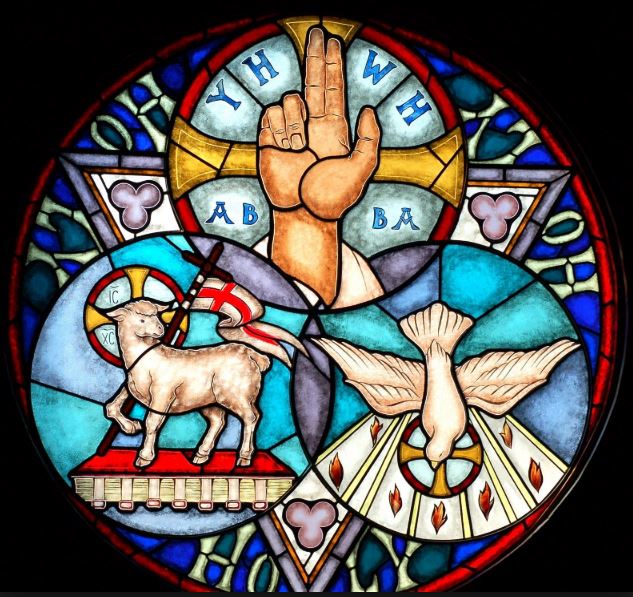
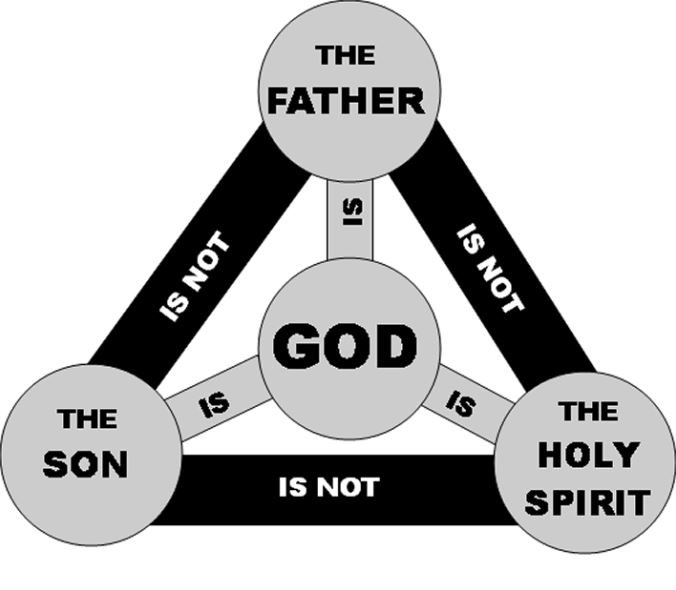
We acknowledge the Trinity, holy and perfect, to consist of the Father, the Son and the Holy Spirit. In this Trinity there is no intrusion of any alien element or of anything from outside, nor is the Trinity a blend of creative and created being. It is a wholly creative and energising reality, self-consistent and undivided in its active power, for the Father makes all things through the Word and in the Holy Spirit, and in this way the unity of the holy Trinity is preserved. Accordingly, in the Church, one God is preached, one God who is above all things and through all things and in all things. God is above all things as Father, for he is principle and source; he is through all things through the Word; and he is in all things in the Holy Spirit.  When we share in the Spirit, we possess the love of the Father, the grace of the Son and the fellowship of the Spirit himself.

God our Father,
you revealed the great mystery of your godhead to men
when you sent into the world
the Word who is Truth
and the Spirit who makes us holy.
Help us to believe in you and worship you,
as the true faith teaches:
three Persons, eternal in glory,
one God, infinite in majesty.
Through our Lord Jesus Christ, your Son,
who lives and reigns with you in the unity of the Holy Spirit,
one God, for ever and ever.
Amen.

St. Norbert – 6 June

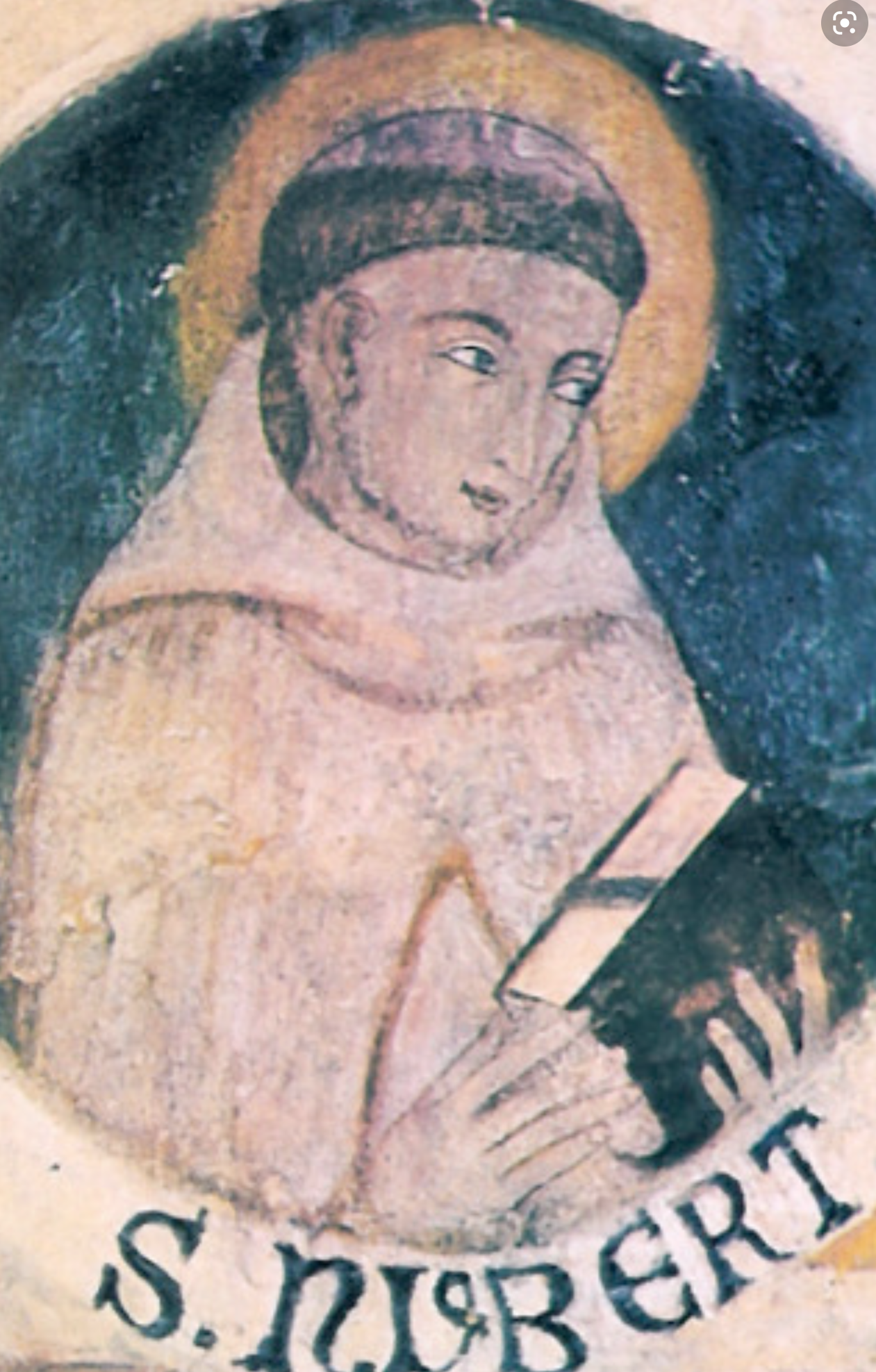
Norbert, the son of Count Heribert, was born in Germany around the year 1080. He was a good child and teenager. But when he went to live at the court of Emperor Henry V, Norbert really changed. He was anxious to be given positions of honor. He was the first to arrive at parties and celebrations. All he ever thought about was having fun.

Then one day, while Norbert was riding across a field, a sudden storm came up. A flash of lightning struck the ground in front of him. His horse bolted. Norbert was thrown to the ground and knocked unconscious. When he woke, he began to think seriously about the way his life was going. He felt that God was very near. Norbert realized that the Lord was offering him the grace to change for the better. He decided to become a priest. He was ordained to the priesthood in 1115.

Father Norbert worked hard to make others turn from their worldly ways. He gave everyone a good example by selling all he had to give the money to the poor. Norbert became the founder of a religious congregation for the spreading of the faith. His original group included thirteen men. They lived as a community in the valley of Premontre. That is why they were called Premonstratensians. Today the members are also called Norbertines, in honor of their founder, Norbert.

Norbert was chosen bishop of the city of Magdeburg. He entered the city wearing very poor clothes and no shoes. The porter at the door of the bishop’s house didn’t know him and refused to let him in. He told the bishop to go and join the other beggars. “But he is our new bishop!” shouted those who knew the saint. The porter was shocked and very sorry. “Never mind, dear brother,” Norbert said kindly. “You judge me more correctly than those who brought me here.”

Norbert had to clarify a false teaching that denied the real presence of Jesus in the Holy Eucharist. His beautiful words about our Lord’s presence in the Blessed Sacrament brought the people back to their holy faith. In March, 1133, Norbert and his great friend, St. Bernard (whose feast is celebrated on August 20) walked in an unusual procession. When Anacletus II claimed to be the pope, they joined the emperor and his army to accompany the true pope, Innocent II, safely to the Vatican.

Norbert died in 1134. Pope Gregory XIII proclaimed him a saint in 1582.

Second Reading

From the life of Saint Norbert, bishop
At ease in the company of the humble and great – (The words in quotation marks have been taken from the biography of Saint Norbert, written by a Premonstratensian canon who was a contemporary of the saint. Pope Innocent’s Apostolic Letter was issued under leaden seal to Saint Norbert on June 5, 1133).

Norbert is deservedly numbered by historians among those who made an effective contribution to the reform movement under Pope Gregory VII. He established a clergy dedicated to the ideals of the Gospel and the apostolic Church. They were chaste and poor. They wore “the clothing and the symbols of the new man; that is to say, they wore the religious habit and exhibited the dignity proper to the priesthood.” Norbert asked them “to live according to the norms of the Scriptures with Christ as their model.” They were “to be clean in all matters pertaining to the altar and divine worship, to correct their faults and failings in their chapter meeting, and to care for and give shelter to the poor.”
The priests lived in community, where they continued the work of the apostles. Inspired by the practice of the early Church, Norbert exhorted the faithful to join the monastic life in some capacity. So many men and women responded to the invitation that many asserted that no man since the apostles themselves had inspired so many to embrace the monastic life.
When Norbert was appointed an archbishop, he urged his brothers to carry the faith to the lands of the Wends. In his own diocese he tried unsuccessfully to convince the clergy of the need for reform and was confronted with noisy protests both in the street and in the church.
One of the principal goals of Norbert’s life was to foster harmony between the Apostolic See and the German empire. At the same time he wanted to maintain Rome’s freedom in the matter of ecclesiastical appointments. Apparently his efforts were so successful that Pope Innocent II thanked him profusely in a letter in which he called him a “devoted son,” and Lothair made him chancellor of the realm.
Norbert did all these things with a steadfast faith: “Faith was the outstanding virtue of Norbert’s life, as charity had been the hallmark of Bernard of Clairvaux’s.” Affable and charming, amiable to one and all, “he was at ease in the company of the humble and the great alike.” Finally, he was a most eloquent preacher; after long meditation “he would preach the word of God, and with his fiery eloquence purged vices, refined virtues and filled souls of good will with the warmth of wisdom.” He spent many hours in contemplation of the divine mysteries and fearlessly spread the spiritual insights which were the fruit of his meditation.