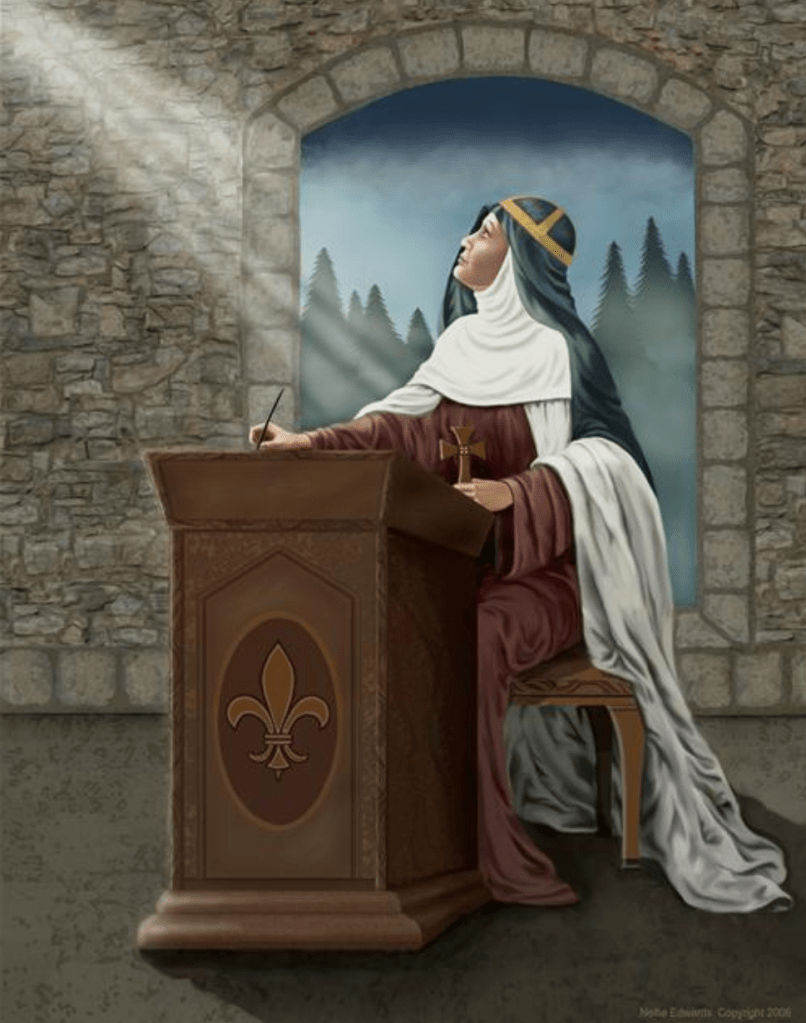
Today Feast of ‘Our Lord Jesus Christ, The Eternal High Priest’

Hebrews 4:14-5:10
Jesus Christ the great High Priest

Since in Jesus, the Son of God, we have the supreme high priest who has gone through to the highest heaven, we must never let go of the faith that we have professed. For it is not as if we had a high priest who was incapable of feeling our weaknesses with us; but we have one who has been tempted in every way that we are, though he is without sin. Let us be confident, then, in approaching the throne of grace, that we shall have mercy from him and find grace when we are in need of help.

The Blessed Virgin Mary, Mother of the Church – 1 June

Our Lady Seat of Wisdom, picture from Oscott college.

The Blessed Virgin Mary has been given the title of Mother of the Church since she gave birth to Christ, the Head of the Church, and she became the Mother of the redeemed people before her Son had given up the spirit on the Cross. Pope Paul VI solemnly confirmed the title in an address to the Fathers of the Second Vatican Council on 21 November 1964 and decreed that the whole Christian people should, by the use of this beautiful title, give still greater honour to the Mother of God.
‘The joyous veneration given to the Mother of God by the contemporary Church, in light of reflection on the mystery of Christ and on his nature, cannot ignore the figure of a woman (cf. Gal 4:4), the Virgin Mary, who is both the Mother of Christ and Mother of the Church. In some ways this was already present in the mind of the Church from the premonitory words of Saint Augustine and Saint Leo the Great. In fact the former says that Mary is the mother of the members of Christ, because with charity she cooperated in the rebirth of the faithful into the Church, while the latter says that the birth of the Head is also the birth of the body, thus indicating that Mary is at once Mother of Christ, the Son of God, and mother of the members of his Mystical Body, which is the Church’ (Decree of the Sacred Congregation for Divine Worship)

Taken from Universalis.

Happy birthday to the Church. Today is Pentecost Sunday.

The name “Pentecost” comes from the Greek word meaning “fiftieth.” Like Easter, it is tied to a Jewish feast. 49 days (7 weeks, or “a week of weeks”) after the second day of Passover, the Jews celebrated the Feast of Weeks (Shavuot).
Passover celebrates the freeing of the Jews from slavery; Shavuot celebrates their becoming God’s holy people by the gift and acceptance of the Law; and the counting of the days to Shavuot symbolises their yearning for the Law.
From a strictly practical point of view, Shavuot was a very good time for the Holy Spirit to come down and inspire the Apostles to preach to all nations because, being a pilgrimage festival, it was an occasion when Jerusalem was filled with pilgrims from many countries.
Symbolically, the parallel with the Jews is exact. We are freed from the slavery of death and sin by Easter; with the Apostles, we spend some time as toddlers under the tutelage of the risen Jesus; and when he has left, the Spirit comes down on us and we become a Church.

Pentecost – 31 May

pentecost

Today, Pentecost is the birthday of the Church, when the Holy Spirit descended upon the Apostles in Jerusalem, and the Church was formed.

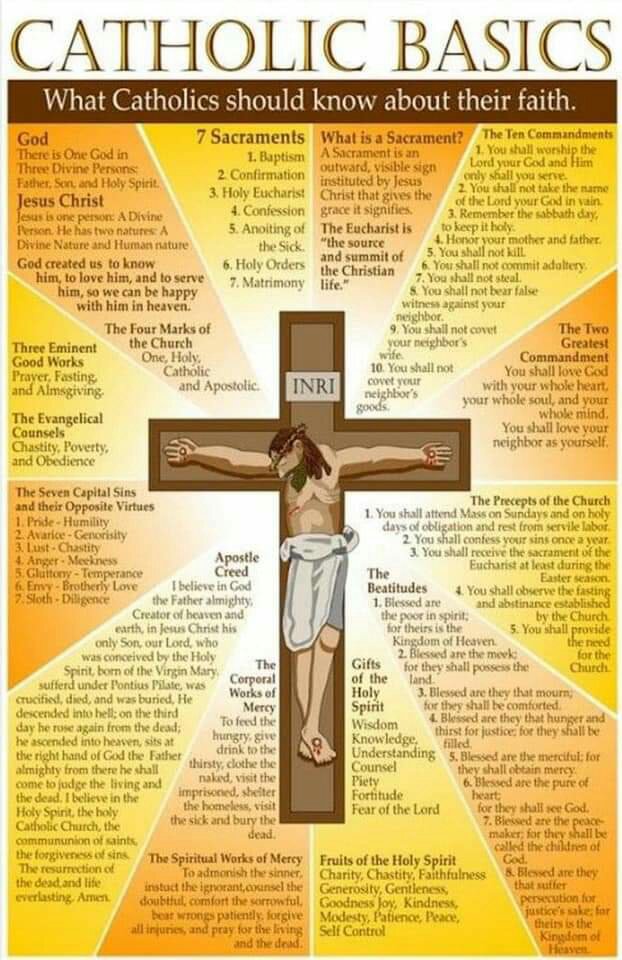
We receive the Holy Spirit throughout our lives, especially at our Baptism, when we are received into the Church, and again in our Confirmation receiving the 7 gifts of the Holy Spirit. (Wisdom, Understanding, Counsel, Fortitude, Knowledge, Piety and Fear of the Lord.)

We need to thank God for these wonderful free gifts that He has given to us. We need to pray and Bless His Holy Name, in thanksgiving and honour.
“Bless the Lord my soul, and bless God’s holy name.
Bless the Lord my soul, who leads me in to life.”
Verse from Taize hymn. Ps 103 (104)
(See YouTube clip of Taize chant)

God loves us so much, that He sent down his only son, Our Lord Jesus Christ to be sacrificed for all mankind on a cross, to wipe away the sins of the world. In order to conquer death, and give us life everlasting with Him in Heaven.

This is God’s steadfast love (in Hebrew – hesed). God’s loving kindness.

Jesus is now ascended into Heaven and is seated at God’s right hand, preparing a place for us, with him.

He sent down the Holy Spirit on His Holy Church at Pentecost, making it flourish and fruitful in faith, love and charity. To make us a Christian community fitting to be called the ‘Body of Christ’.

Remain in the Holy Spirit, remain in God’s love.
Praise and Bless the Holy Trinity, One God – Father, Son, and Holy Spirit.

Today is our birthday party, let us celebrate, with shouts of joy and singing God’s praises.
Come, Holy Spirit, fill the hearts of your faithful
and enkindle in them the fire of your love.
Send forth your Spirit and they shall be created.
And you shall renew the face of the earth.
Let us pray. O God, who by the light of the Holy
Spirit, did instruct the hearts of the faithful, grant us in
the same Spirit to be truly wise and ever rejoice in
His consolation. Through Christ our Lord.
Amen
(Veni, Sancte Spiritus)

New Rector of St. Mary’s College Oscott.

Congratulations to Fr Giles Goward, formally our Pastoral Director at Oscott, has been appointed 24th Rector at St. Mary’s College. He assumes office at the end of June.

More details please visit: https://www.birminghamdiocese.org.uk/news/new-rector-for-st-marys-college-oscott

St. Augustine of Canterbury – 27 May

Augustine was the abbot of St. Andrew’s monastery in Rome. Pope Gregory the Great chose him and forty other monks for an important mission. They were to go and preach the Gospel to the people of England. Abbot Augustine and the monks started on their journey. When they reached southern France, people warned them that the English were fierce. The monks felt discouraged. They asked Augustine to go back and obtain the pope’s permission to give up the whole idea. He did, but the pope wanted the monks to go to England just the same. Pope Gregory knew that the people were ready to accept the Christian faith. And so the monks continued their journey. They arrived in England in 597.

The monks were kindly received by King Ethelbert, whose wife was a Christian princess from France. The monks formed a procession when they arrived. They walked along singing psalms. They carried a cross and a picture of our Lord. Many people welcomed the monks’ message. King Ethelbert himself was baptized on Pentecost, 597. That year Abbot Augustine became a bishop.

Augustine often wrote to the pope. And Pope St. Gregory gave him much holy advice. Speaking about the many miracles Augustine worked, the pope said: “You must rejoice with fear and fear with joy for that gift.” He meant that Augustine should be happy that through the miracles the English people were putting faith in the Gospel. But he should be careful not to take credit for the miracles, because they were from God.

At Canterbury, Augustine built a church and a monastery, which became the most important in England. St. Augustine died on May 26, 604, seven years after his arrival in England.