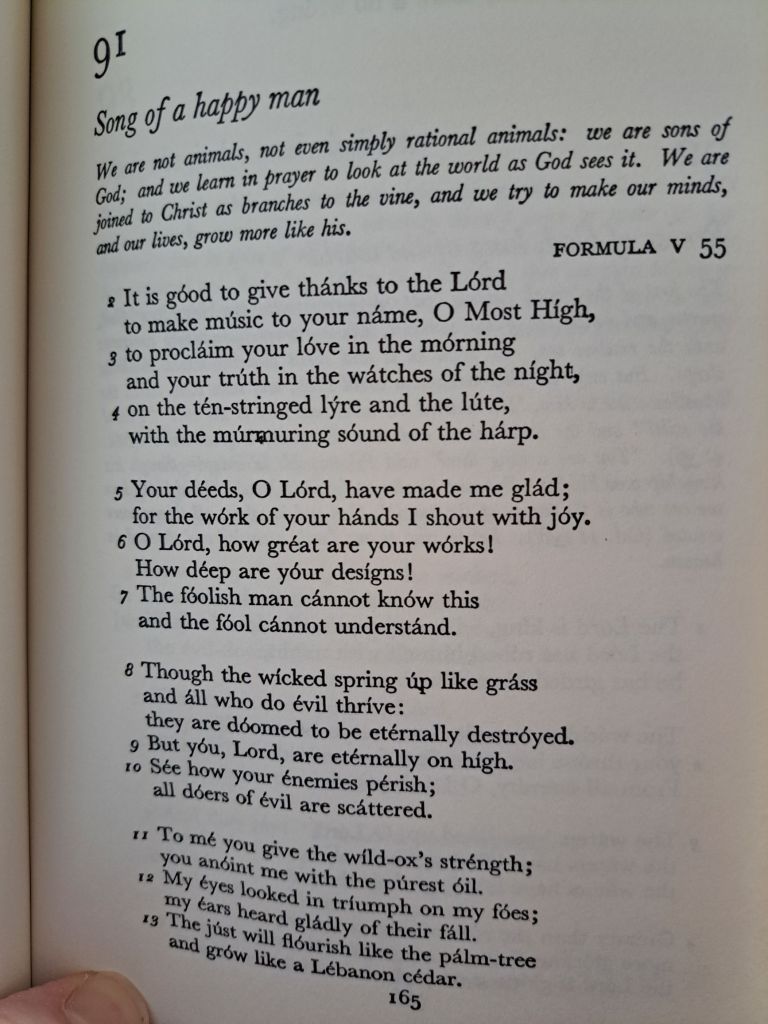
“We are not animals, not even simply rational animals: we are sons of God; and we learn in prayer to look at the world as God sees it. We are joined to Christ as branches to the vine, and we try to make our minds, and our lives, grow more like his.”

Welcome to my blog, here you will find my personal reflections & homilies
“We are not animals, not even simply rational animals: we are sons of God; and we learn in prayer to look at the world as God sees it. We are joined to Christ as branches to the vine, and we try to make our minds, and our lives, grow more like his.”


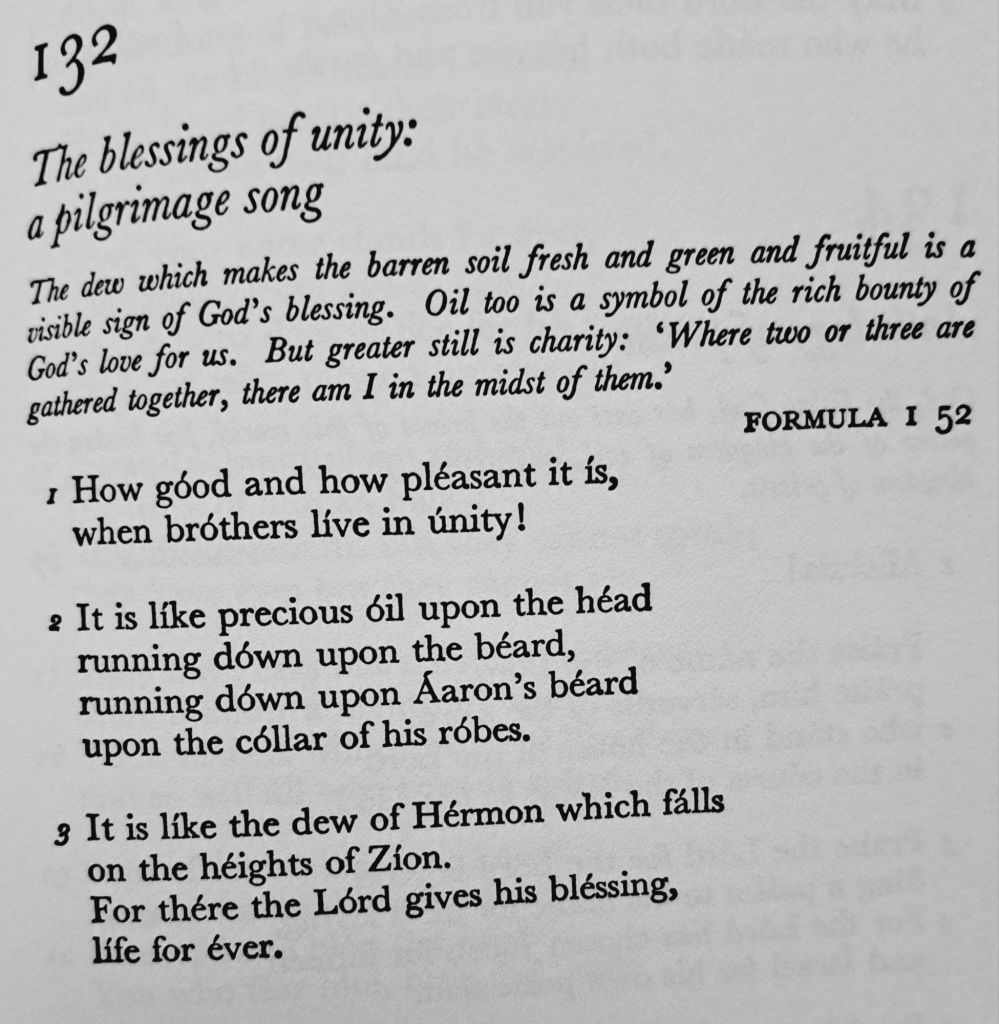
… But greater still is charity…

My Lenten book for this year is ‘Love Unknown’ by Ruth Burrows OCD, over the next few weeks I’ll be posting a small extract from her book that stood out for me.
Ruth says: “As Carmelite nuns, prayer is our life; prayer is our principal work for the Church and for the world. WE HAVE NOTHING ELSE!
Think what it is for a Carmelite to feel such a failure at prayer, not just now and then, but day after day, year after year! I lived with this searing anxiety for many, many years.”
As a priest myself, I feel Ruth’s frustration and anxiety at the failure of daily prayer.

1 / 3
The joy of Advent shines forth with an inspiring message of hope and encouragement in today’s readings, urging us to rejoice and be happy because the Lord is near.
It tells us of our Christian vocation to radiate this joy, however, rejoicing is not normally the hallmark of being a Catholic. A lot of the time we associate the Gospel message of Jesus carrying His Cross and remembering His Passion of pain and suffering. However, what did Jesus say just before His Ascension into Heaven, ‘all these things I have spoken to you, that my joy might be in you, and your joy be complete.’
We were all created for happiness. It is why we spend our lives searching and striving to attain it. Sometimes this happiness seems to escape us as we go searching for it in the wrong places. Our greatest mistake is to look for it in material things, but all the money in the world cannot purchase happiness. Christian joy is something deeper and richer, it comes from an awareness that God is with us and produces a contentment of inner peace that cannot be taken from us. Friendship with God is the source of Christian joy. No trials can drown this joy since it is born of faith. On the first Christmas day when God came down in the flesh, Jesus filled the world with glad tidings of great joy. His life was geared towards God the Father in joy, prayer and thanksgiving. We can be caught up with all our daily problems and fail to reflect upon the joy of that marvellous truth that:
2 / 3
‘God so loved the world that he gave his only Son and whoever believes in him, might not die, but may have eternal life.’ (Jn 3:16)
In the Gospel today, John the Evangelist, introduces us to John the Baptist as a witness to the coming of Christ. We hear the delegation committee coming from Jerusalem to ask John who he is, in order to find out whether John is one of the end-times figures whom the Jews are expecting. They asked him, are you the Messiah? Are you Elijah? Are you a Prophet? John responds by saying ‘no’ to all three questions and replies back saying ‘I am the voice of the one crying out in the desert, make straight the way for the Lord.’
However, as we know, John the Baptist is described in the synoptic Gospels, from the lips of Jesus, who speaks about him as Elijah, in the sense of acting in the spirit and power of Elijah. Also, Jesus speaks about John the Baptist in Matthew’s Gospel, saying: ‘Truly I tell you, among those born of women there has not been anyone greater than John the Baptist.’ (Matthew 11:11)
With John’s response of saying ‘no’, he is pointing towards the dignity of the one who is to come and the fact that he himself is not worthy to undo the strap of his sandals.
Charity is so important at this time, as there is no greater proof of love than to give ourselves to others who are in need. Christmas joy cannot be complete unless we show love and charity, especially to those who have nothing to give back to us in return.
3 / 3
The happiest of people are those who are doing the most for others, and the day will arrive when they will be greeted by the Lord with these words: ‘Well done good and faithful servant, come and join in your master’s happiness.’
I would like to end with the words from one of our favourite comedians of our time, Ken Dodd. The tune that he ends all his shows on, by singing:
“Happiness, Happiness, the greatest gift that I possess, I thank the Lord that I’ve been blessed, with more than my share of happiness.”


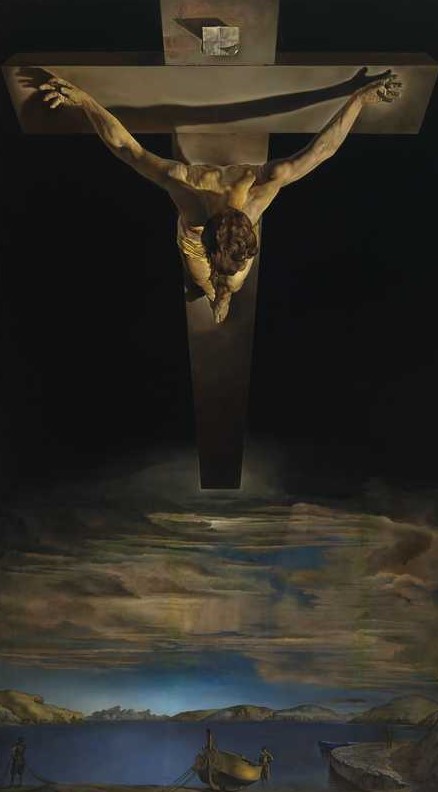
“Above him there was an inscription: ‘This is the King of the Jews.’” The technical term for this inscription is called the ‘Titulus Crucis’, and according to Roman custom it was a board that was carried in front of the condemned person or sometimes put around their neck, so it could be easily attached to the cross. We know from scripture that Pilate was responsible and took the initiative in writing these words, while it would normally be a scribe to commission this type of work. On this Titulus inscription, Pilate had asserted Jesus’ royal status during his trial, as it was written in three languages, Hebrew, Latin and Greek which were the great languages of the cultured world in the Roman empire.
Every nation had something to teach the world. Greece taught the world form and thought in Philosophy. Rome taught the world law and good government, and Hebrews taught world religion in worshipping the one true God.
Jesus was the law of God and the image of God. It is symbolic that the great languages of the nations in the world should claim Him King.
Jesus’ Kingship was ironically universally proclaimed to passers-by, this multi-lingual announcement indicated that Jesus was drawing all people to himself. The ‘Jews’ rejected this title and insisted that Jesus was only a pretender to these claims, but Pilate replied, ‘What I have written, I have written,’ and he would not allow this inscription to be altered.
Since Pilate seemed to crumble to the pressure in the trial by the High Priest and Pharisees’, Pilate is now reasserting his authority, forcing the priests to live with his decision, giving a title which, the Jewish authorities had precisely denied in Jesus’ trial.
In this title of honour, Pilate oddly becomes a witness, confirming Jesus’ Kingship, since the ‘Jews’ were unable to stamp it out.
As we know Jesus was crucified close to the city walls, and as a result, the Titulus inscription publicly became a talking point among the people, about the manifestation of Jesus’ Kingship, which was an undesirable thought for the ‘Jews’. The advantage for having the inscription in three languages, helped to formally announce ‘Jesus is King’ to the whole world.
Originally the Titulus inscription was to charge Jesus as a royal pretender. But now this real enthronement on the cross shows Jesus’ Royal Sovereignty and Kingship which is now acknowledged for all time. Heralded by Pilate as a prophecy, who represented the greatest political power in the world, written in the sacred and secular languages of the era, shows the event of Jesus’ ‘hour’ on the cross, his only sacrifice as High Priest, Prophet and King as an important divinely event that concerns the entire world, giving humanity a last chance of salvation.
We read in the first chapter of John’s Gospel, the ‘Word became flesh, and dwelt amongst us.’ Jesus is the ‘Logos,’ Word of God; He came to earth over 2000 years ago as a child. But Jesus existed longer than that. He has no being and no end like the Father & the Holy Spirit. They are the Alpha and the Omega, the Holy Trinity. Jesus was with God the Father from the very beginning.
When God the Father, thought and spoke about the creation of the universe for the love of mankind, Jesus Christ as God’s Word, made it a reality. Jesus is truly the King of the Universe.
Jesus has opened the doors to everlasting life, through his ‘Hour’ of Glorification and Exaltation on the cross. Through our Baptism in his Death & Resurrection, and by leading a repentant holy life, may we too enjoy his Kingship as anointed ‘Children of God’, singing God’s praises with all the angels and saints in his Heavenly Kingdom.

“Today salvation has come to this house, because this man too, is a son of Abraham; for the Son of Man has come to seek out and save what was lost.” In our first reading from book of Wisdom, teaches us that everything that comes from the hand of God is good through his love and mercy. Our sins are forgiven, they are wiped away. St Paul reminds the community in Thessalonica, to continue to pray in faith and virtue. Now is the time to turn our good intentions into good achievements, while we wait for the second coming of Our Lord Jesus Christ. Our duty is to ‘seek out the lost and to save,’ for the salvation of the world. Good achievements takes time and perseverance, even if these are only little and small.
‘From a little spark it may burst into a mighty flame’ (Dante). ‘If I cannot do great things, I can still do small things, but in a great way’ (J.F. Clarke).
In our Gospel today, we hear the story of Zacchaeus who climbed up a sycamore tree to see Jesus. Jericho is located about 17 miles northeast of Jerusalem. The road close to the town was well travelled by pilgrims and traders. It was near the Roman controlled border of Judea and Perea (p-re-a), on an east to west trading route. Zacchaeus was a chief tax collector overseeing the collection of tolls and duties on the transportation of goods. Zacchaeus was determined to see Jesus after hearing all the wonderfully things is had done, quickly and in haste, he climbed up a sycamore tree.
I have visited Jericho during my 4th year at Oscott college and the sycamore tree is still there. I know what you are all thinking, is it the same tree, and did I climb up it? Sadly, no to both questions, it isn’t the same tree, but it does help to imagine the scene of the story while visiting the town. Unfortunately, the tree is also surrounded by fences so you can’t climb up the tree anyhow.
Jesus sees the tax collector, and senses his natural goodness which must not be lost. This encounter was not just an encounter by chance, but one that occurs by divine necessity in fulfilling God’s plan, to ‘seek and to save’ Zacchaeus from his sinful ways. Visiting his home was something Jesus had to do. Zacchaeus came down the tree and welcomed Jesus into his home, like Abraham welcoming two divinely sent visitors. With haste, and being a descendant of Abraham, Zacchaeus now imitates his hospitality to Jesus. This meeting marks out a turning point in the chief tax collector’s life. Zacchaeus thought that he ‘was seeking’ the Lord, but in reality, it was Jesus who had ‘come to seek him out’ and to ‘save him’ and his household. Zacchaeus responds by changing his life and using his possessions, giving back to the poor, indicating the good fruits that he will produce as evidence of his repentance.
St Augustine compares the sycamore tree that Zacchaeus climbed to Jesus’ cross. And I quote “Climb the tree on which Jesus hung for you, and you will see Jesus.” This quote can be developed further. Whereas Jesus hung on the tree because he was crucified, Jesus told Zacchaeus to come down from the tree. In effect, the sinner is replaced by the Saviour. This is the substitution accomplished by Jesus. He died on the cross in our place, giving us salvation of eternal life, through his merciful grace and loving kindness.
Zacchaeus was ‘touched’ by God while he was watching in the tree, this single meeting with Christ was enough to move him into the right direction. Jesus saw his good intentions, but Zacchaeus couldn’t put them into practice due to his weight of sin and shame.
Let us today wipe away our sin and shame, that is holding us back from completing our good works and good intentions. Our encounter with the Lord is also through God’s divine plan, through his love and mercy towards us. As we approach Advent and Christmas, let us start to complete little good intentions, the more we do, the bigger our overall success will be.
We have all been asked to build up the Kingdom of God, through our actions, may we ‘seek out the lost’ and bring them to the Lord.
During my priestly ordination the words in the Rite echo the words of Jesus: “keep always before your eyes the example of the Good Shepherd, who came to seek out and to save what was lost.”
Through our Baptism we have been called to be Priests, Prophets, and Kings, by our Holy anointing. May the grace that we have received, allow us to accomplish many good fruits for the Kingdom of Heaven, bringing salvation to our home, while we await the second coming of our Lord and Saviour Jesus Christ.

“Finding himself cured, one of them turned back praising God and thanked him.” Today’s theme is about giving gratitude to God.
Are we grateful to God for what he has done in our lives? Do we manage to say thank you during our night-time prayers? These are important questions to ask ourselves during the coming weeks, and to see if there are any areas we can improve on.
It is so easy to take things for granted. Good health, good friends, good food. All these have been given by God as a gift, and it only takes a second to say ‘thank you’ from the bottom of our hearts.
I should have been more grateful when I was studying in seminary college. Good company of friends, cheap beer in the bar, and sausages every Sunday for breakfast, with the customary HP Sauce. The good old days. In parish life it is lucky if I have time for toast and a coffee before the phone rings or the door knocks. I didn’t appreciate the time I had, set aside for prayer, study and relaxation. The only thing on seminarians minds was the countdown to ordination and leaving the college to start parish life.
Ingratitude is probably the most common of all human failings. Being taken for granted without a word of thanks can be so hurtful. What causes most pain is the neglect and coldness of those, for whom we have done our best for.
I remember when I was a young boy, at Christmas my Mum would say to me, make sure you note down everybody’s names who had given you these Christmas presents, so you can write to them and say thank you. Even though it was time consuming and slightly boring, I did write those letters of thanks, saying how grateful I was to receive my presents.
If neglect and ingratitude are painful to our own friends and family, how much more is it painful to the Lord, who has given us everything? In the Gospel ten lepers in their misery, cried out for mercy to the Lord. These lepers were treated as outcasts and isolated from their community. Jesus answered their prayers and all ten were cleansed, but only one came back to say thank you, just one.
Jesus expressed genuine disappointed towards the attitude of the other nine, they missed the great richness and inner joy that comes from giving thanks. The Samaritan man returned glorifying God, who Jesus refers to as being a foreigner. By doing this Jesus is overcoming the barrier between Jews and non-Jews, thus fulfilling Isaiah’s prophecy:
“Foreigners who join themselves to the Lord, will be brought to my holy mountain. They will be joyful for my house shall be called a house of prayer for all peoples.”
Jesus says to the Samaritan, your faith has saved you. This suggests that the Samaritan received more than a physical healing, like the other nine lepers, but for the Samaritan who returned, his faith in the Lord Jesus led him to salvation.
In our first reading today, we hear about Naaman an Aramean officer who also suffered from leprosy. He was instructed by his King to see the prophet, Elisha. When he arrived at an unimpressive location, Naaman half-heartedly agrees to bathe in the river Jordan. But his efforts were rewarded, and he was cured. In gratitude Naaman returns to the prophet now convinced in Israel’s God is the One true God and asks Elisha if he could take back some Israeli soil, so he could offer sacrifices to God on Holy Land.
God has brought us out of darkness into his most wonderful light. Jesus as conquered Sin for all humanity, by His Death, Resurrection and Ascension into Heaven. That is more than enough to be grateful.
We are God’s holy people, he has done so much for each and everyone of us. Let us take the Samaritan’s example today, by returning to the Lord, giving praise and glory for his steadfastness of love and mercy.