St. Matthias – 14 May

st mathias


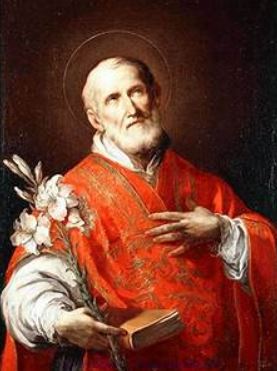
St. Matthias was one of the Lord’s seventy-two disciples. He had been a follower of Jesus before the crucifixion. While waiting for the coming of the Holy Spirit, 120 of Jesus’ followers gathered to pray. St. Peter asked them to choose an apostle to replace Judas. This was very important because that man would be a bishop, as the other apostles were. Peter said that they should choose someone who had been with Jesus from his baptism in the Jordan River until his resurrection.  The first chapter of the Acts of the Apostles tells us what happened. The group proposed two names. One was Matthias, the other was Joseph, also called Barsabbas. Then everyone prayed and asked the Lord to let them know which of the two men should take the place of Judas. Next they cast lots, and Matthias’ name was chosen. He became one of the twelve apostles.

St. Matthias was a dedicated apostle. He preached the Good News in Judea, Cappadocia (modern-day Turkey), and on the Caspian seashore. Many people listened to Matthias. They believed his wonderful message. The enemies of Jesus grew furious when they saw how people listened to Matthias. They decided to stop him by putting him to death. Matthias died a martyr at Colchis.   The story of St. Matthias reminds us that we are fortunate to be followers of Jesus and members of his Church. Let’s ask St. Matthias to show us how to be more grateful for all that we have received.

St. Matthias pray for us.

Our Lady of Fatima – 13 May

fatima1

On 13th May 1917, three children were watching their sheep in a valley called the Cova da Iria, near the town of Fatima, in Portugal. They were ten-year-old Lucia dos Santos, and her cousins, nine-year-old Francisco and seven-year-old Jacinta Marto.

A flash of lightning suddenly startled them. The children thought a storm was coming, so they quickly began herding their sheep toward home. A second flash made them look around. They saw a beautiful young woman standing above a small oak tree. “Don’t be afraid,” she called reassuringly. “Come closer.” The woman wore a robe and mantle of white, with gold trim. Her hands, joined in prayer, were holding a rosary.  She shone with a light that was brighter than the sun.  Lucia asked the woman, “Who are you? What do you want?”  She answered, “I am from heaven. Come here on the thirteenth of each month for five months.

On 13th October, I will give a sign that will make everyone believe.”  The Blessed Mother kept her promise. The children saw her once more on 13th June and 13th July.  The mayor of the nearby town of Ourem didn’t like this story of a heavenly lady appearing to children. On the morning of 13th August, he offered Lucia and her cousins a ride to the Cova, where they were supposed to meet the lady again. But once he had them in his car, he brought them to the police station instead, and kept them in custody for two days. He couldn’t outsmart the Blessed Virgin, though. She simply appeared to the children several days later!

A priest of the diocese questioned Lucia about the visions. How many times had they seen the Blessed Virgin? How long did she stay with them? What did she look like? Lucia answered all the questions. The priest also knew that Mary had told the children a secret. But he did not pressure Lucia to tell him what it was. Lucia told the priest a little prayer that Mary had taught them: “My Jesus, forgive us our sins. Save us from the fires of hell. Lead all souls to heaven, especially those in most need of your mercy.”  The Blessed Virgin again visited the children at the Cova on 13th September.

On 13th October 1917, 70,000 people came to the Cova to witness the miracle that Mary had promised. It was a rainy day. But Lucia asked the people to close their umbrellas. The rain stopped. Mary appeared to the children. Suddenly, the clouds left the sky and the sun came out. The crowds saw it spinning and shooting out flames like a fireworks display. One by one the sun took on all the colours of the rainbow. This happened three times and the scene lasted for ten minutes. Then the sun seemed to fall from the sky toward the earth. The people fell to their knees. Many thought it was the end of the world. They wept and asked forgiveness for their sins. Suddenly the sun stopped its fall and returned to its normal colour and its usual place in the sky.

While the sun had been spinning and changing colours, only Lucia, Francisco and Jacinta had seen Mary appear as Our Lady of the Rosary, with St. Joseph beside her holding the Child Jesus. Then Jesus alone appeared and blessed the crowd. Mary also appeared as Our Lady of Sorrows and then dressed as Our Lady of Mount Carmel. Mary told the children what she wanted: She asked that people pray the rosary and change their lives. They should ask forgiveness for sins. She also asked that a chapel be built at the Cova da Iria. The chapel was begun in 1919. Together with Lourdes, Fatima has become the most popular place of pilgrimage for Christians.

In December 1918, both Francisco and Jacinta became very sick with the flu. In those days they didn’t have the medicines we have today, and Francisco’s illness turned into pneumonia. He died on 4th April 1919. A few months later, Jacinta’s sickness developed into pleurisy, a disease which seriously affected her lungs. She underwent surgery, but died on 20th February 1920. Lucia entered the convent in 1928, becoming a Sister of St. Dorothy. In 1948 she transferred to the Carmelite monastery in Coimbra, Portugal. As of the date this book was printed, she is still living there as a Carmelite nun.

Our Lady came to Fatima as a loving mother. She wants us to be truly happy and reminds us that this can only happen when we live as Jesus taught.

Let’s pray the rosary often, thinking about the lives of Jesus and Mary.

Our Lady of Fatima pray for us.

Reflection on the Gospel reading for 7th Sunday of Easter.

love

“They do not belong to the world, any more than I belong to the world”.

John 17:11-19

Throughout Eastertide we hear in our church readings how much God loves us, and how much we need to remain true to God’s commandments.

In today’s Gospel of St. John, Jesus prays to the Father: “Keep those you have given me true to your name, so that they may be one like us”.

Just contemplate that statement, and think about the honour we have as Christians being called brothers and sisters of God.

But being a Christian is not easy, many are persecuted and killed all around the world because of their faith in Christ Jesus.

Jesus said “I passed your Word on to them and the world hated them”.

This is the sacrifice Christians have to bear in the world today, in picking up our own cross.  Being a witness to Jesus, and proclaiming the Good News.  We have the Martyrs of the Church as our role models, seeing how much they had to suffer but still remaining true to their faith to the very end.

“God is love, and anyone who lives in love lives in God, and God lives in him”.

We need to remain faithful and true, by praying and reading scripture – the Word of God.  In order to keep evil at bay and to help us lead fruitful and holy lives.

Remain steadfast in God’s love and He will remain with you for all eternity.

God bless.

St. Pancras – 12th May.

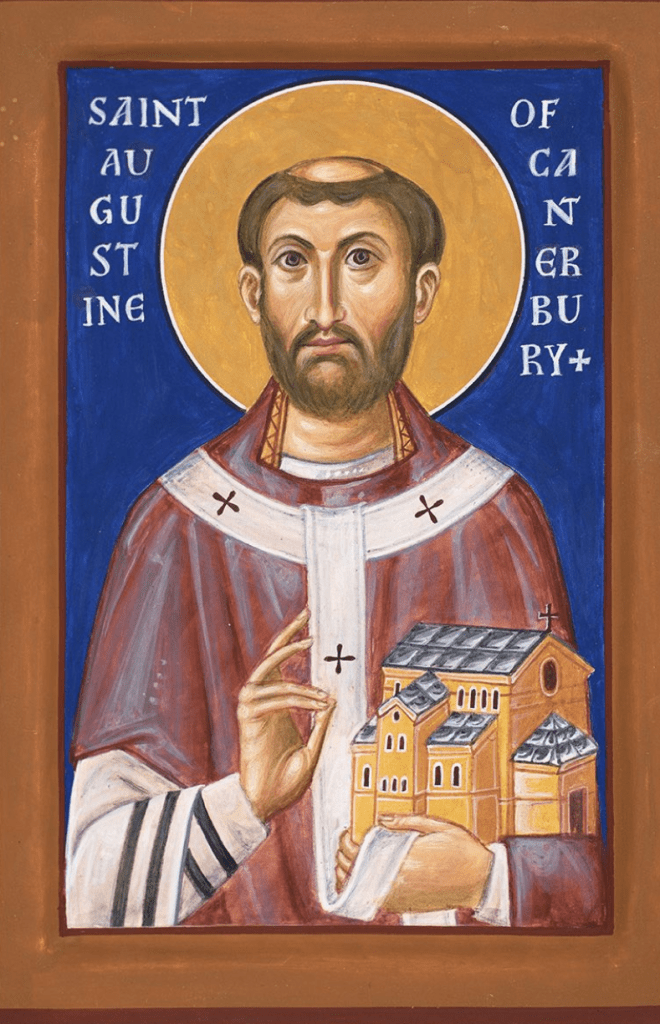
Saint Pancras, a fourteen-year-old orphan, lived in the late third century. He was not a native of Rome. He was brought there by his uncle who looked after him. Pancras became a follower of Jesus and was baptised. Although just a boy, he was arrested for being a Christian during the reign of the emperor Diocletian. Pancras refused to give up his faith. For that, he was sentenced to death and was beheaded. He became a very popular martyr in the early Church. People admired him for being so young and so brave. In 514, a large church was built in Rome to honor him. In 596, the famous missionary, St. Augustine of Canterbury, went to bring the Christian faith to England. He named his first church there after St. Pancras.

St. Pancras and the other martyrs we remember today remind us of the importance of our Catholic faith. It should mean as much to us as it did to each of them. If we need to grow stronger in our faith, let’s ask St. Pancras to help us.

St. Pancras pray for us.

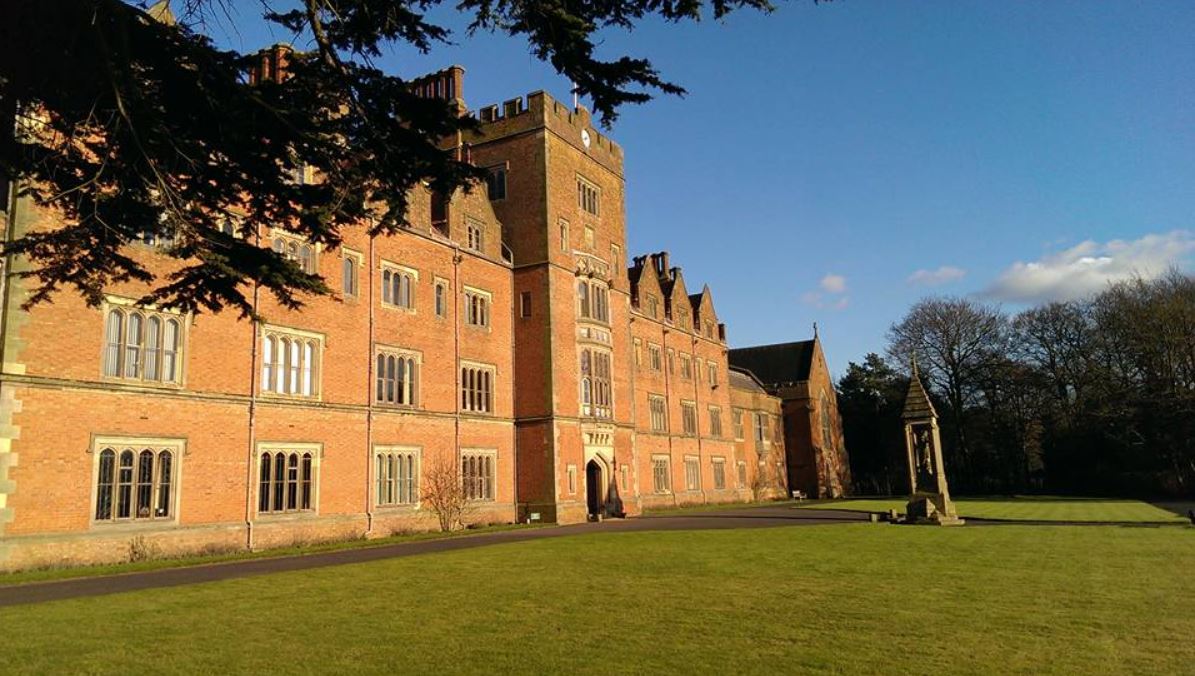
Visit to St. Joseph’s care home by Seminarians of St. Mary’s College Oscott

It was nice to visit the care home on Thursday afternoon, the choir sang:

Glory to thee, my God, this night.

New praises be give to Christ newly crowned.

Soul of my Saviour.

Hail Queen of Heaven.

Gloria in mass settings RE.

Credo I.

All enjoyed the sing along, and we spent some quality time with the residences over tea and biscuits.

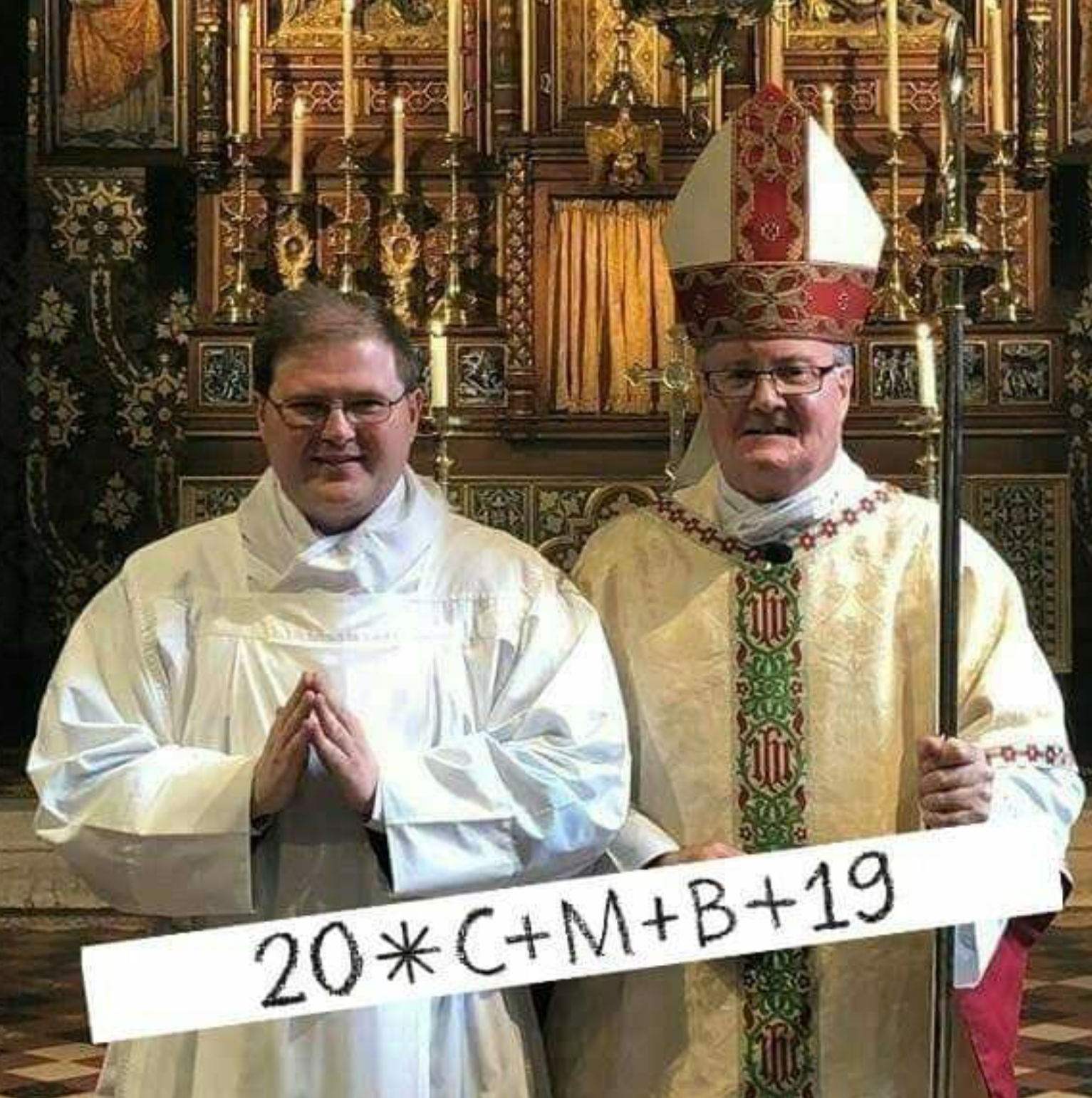
Minor Ministry of Lector.

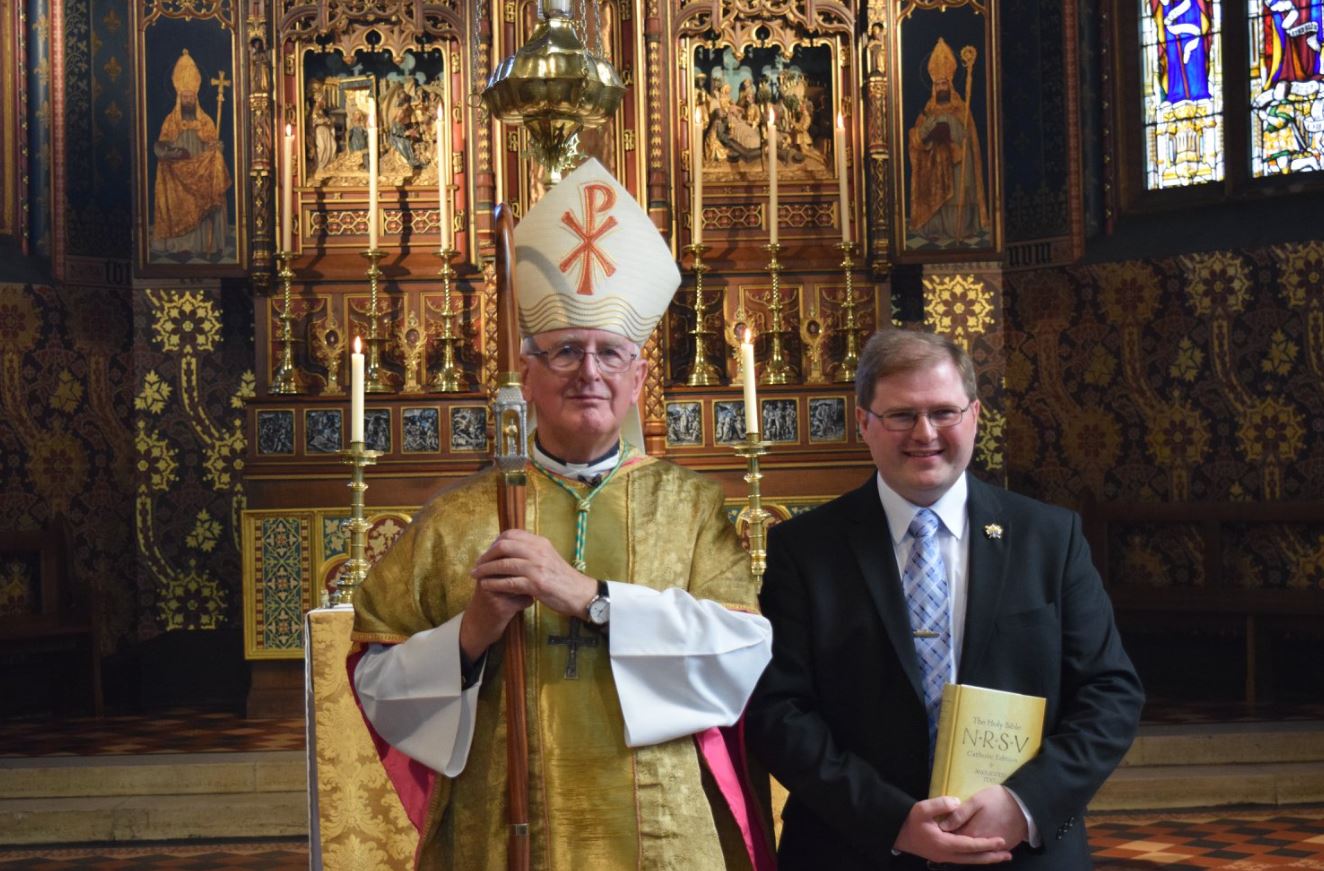
Sunday 6th May 2018, I received the ministry of Lector at St. Mary’s College Oscott.  The Right Reverend Thomas Burns, Bishop of Menevia, was the celebrant.

Below is the prayer taken from the institution of Readers.

“Brothers and sisters, let us ask God our Father to bless these servants who have been chosen for the ministry of reader.  Let us pray that they may be faithful to the work entrusted to them, proclaim Christ to the world, and so give glory to our Father in heaven.”

“Lord God, source of all goodness and light, you sent your only Son, the Word of life, to reveal to mankind the mystery of your love.  Bless our brothers, who have been chosen for the ministry of reader.  Grant that as they meditate constantly on your word they may grow in its wisdom and faithfully proclaim it to your people.”

“Take this book of holy Scripture and be faithful in handing on the word of God, so that it may grow strong in the hearts of his people.  Amen.”

IMG_20180506_152804_471